 租赁移动电源,共享移动电源制造商
If you want to expand your shared power bank business into Southeast Asia, what is the market like in Thailand? Does the country have an established user base, a mature payment environment, and the commercial conditions needed to launch and operate a project?
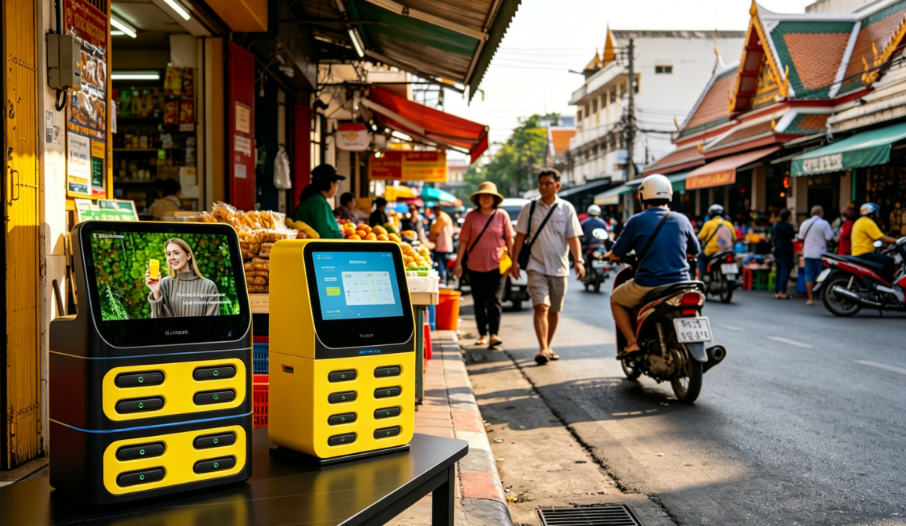
Market data indicates that Thailand’s shared power bank market still offers considerable room for expansion. According to data released by Thailand’s Ministry of Tourism and Sports, the country welcomed 32.974 million international visitors in 2025, generating tourism revenue of THB 1.53 trillion. Meanwhile, its mobile internet and digital payment ecosystems are well developed, providing a solid foundation for shared power bank projects.
Thailand’s key market advantages include:
(1) Market size: Thailand has a population of approximately 71.6 million, with 67.8 million internet users and an internet penetration rate of 94.7% (DataReportal, Digital 2026: Thailand, October 2025).
(2) Tourism consumption: Thailand received 32.974 million international visitors in 2025, generating THB 1.53 trillion in tourism revenue (Thailand’s Ministry of Tourism and Sports, 2025).
(3) Payment maturity: PromptPay has more than 82.21 million registered accounts and processes 2.38 billion transactions per month, demonstrating the maturity of local QR payment infrastructure (Xendit, citing data from the Bank of Thailand and National ITMX, 2025).
然而, entering the Thai market requires more than identifying tourist demand. Businesses must also understand NBTC wireless communication equipment certification, TISI lithium battery safety standards, local payment integration, and suitable operating locations. This article examines the practical opportunities for launching a shared power bank project in Thailand, covering market data, certification, payments, city selection, and equipment operations.
I. Thailand Shared Power Bank Market Data: Four Key Figures
When evaluating whether a country is suitable for a shared power bank business, population size alone is not enough. Mobile phone usage, tourist traffic, 交通枢纽, and the competitive landscape must also be considered.
1. 67.8 Million Internet Users and 94.7% Internet Penetration
According to DataReportal’s Digital 2026: Thailand, Thailand had a population of approximately 71.6 million as of October 2025, with 67.8 million internet users and an internet penetration rate of 94.7%. The country also had 96.6 million mobile connections, equivalent to 135% of its total population.
These figures indicate that Thailand has a well-established mobile internet environment, with smartphones deeply integrated into everyday life. The shared power bank business model, which relies on mobile QR code scanning, online payments, and app-based rentals, therefore has a solid potential user base.
Source: DataReportal, Digital 2026: Thailand, October 2025.
2. 32.974 Million International Visitors and THB 1.53 Trillion in Tourism Revenue
According to data released by Thailand’s Ministry of Tourism and Sports, the country welcomed 32.974 million international visitors in 2025, generating THB 1.53 trillion in tourism revenue. Major source markets included Malaysia, China, India, Russia, and South Korea. Visitors from Malaysia accounted for approximately 4.52 million arrivals, followed by 4.47 million from China and 2.49 million from India.
Tourism spending generates demand not only for hotels, 餐馆, and transportation, but also for mobile phone charging when visitors are sightseeing, 购物, and enjoying leisure activities. For shared power bank operators, international tourists and local consumers together represent a potential customer base.
Source: Thailand’s Ministry of Tourism and Sports (via Nation Thailand), 2025.
3. 3.63 Million Visitors in December: Peak Tourism Seasons Drive Equipment Demand
According to tourism indicators published by the Bank of Thailand and compiled using data from the Ministry of Tourism and Sports, Thailand’s monthly international visitor numbers showed clear seasonal patterns in 2025. December recorded the highest number of international visitors, at 3.63 million, followed by 3.04 million in January. September recorded 2.52 million visitors. Hotel occupancy reached 78.05% in December 2025.
Thailand’s peak tourism season generally runs from November through January of the following year. Winter travelers from Europe and North America, Chinese New Year travel, and international tourism events can all increase foot traffic in commercial areas. Operators can deploy equipment ahead of peak seasons and adjust station quantities, locations, and operating strategies according to seasonal demand.
Source: Bank of Thailand tourism indicators (via TourismThailand), 2025.
4. Leading Brands Are Expanding, but the Market Has Not Reached Absolute Dominance
According to Thai mainstream media outlet Thairath English, CHARGESPOT, a brand under Japan’s INFORICH, has become a leading participant in Thailand’s shared power bank market. In 2026, the brand announced its transition toward becoming a lifestyle infrastructure brand and plans to use Thailand as its base for ASEAN market expansion, with the goal of making Thailand its second-largest market in Asia by 2027.
This indicates that international shared power bank companies are paying close attention to Thailand. 然而, the industry has not yet reached a state of absolute market dominance. Operators with strengths in hardware manufacturing, software systems, payment integration, and local channel resources can still build competitive advantages through differentiated locations, brand operations, and regional market development.
Source: Thairath English, 2026.
II. Certification Requirements for Shared Power Banks in Thailand
When entering the Thai market, shared power bank equipment must be assessed according to its actual configuration to determine which wireless communication certifications and battery safety standards apply. For smart shared power bank cabinets equipped with Bluetooth, Wi-Fi, or 4G connectivity, manufacturers and operators must plan certification in advance rather than focusing only on appearance and hardware specifications.

1. NBTC Wireless Communication Equipment Certification
Thailand’s National Broadcasting and Telecommunications Commission (NBTC) is responsible for regulating wireless communication equipment. For shared power bank cabinets equipped with wireless modules such as Bluetooth, Wi-Fi, or 4G, businesses must confirm whether NBTC type approval and related requirements apply based on the specific equipment configuration.
According to NBTC-related certification information cited by SINO Shipping, the relevant certification process in 2025–2026 takes approximately 2–6 weeks, with estimated fees of THB 20,000–80,000 per model. Actual costs may vary depending on the testing organization, product category, and certification route.
另外, some certification procedures require assistance from a local representative in Thailand. Overseas manufacturers should therefore determine the local partner and party responsible for certification in advance.
2. TISI Lithium Battery Safety Certification
The Thai Industrial Standards Institute (TISI) is responsible for managing relevant industrial product standards. For products containing lithium batteries, businesses should carefully verify which battery safety standards apply. One relevant standard listed in Thai data sources is TIS 1561-2556, which covers lithium battery safety requirements.
As shared power banks are products used directly by consumers for mobile charging services, operators and manufacturers should pay particular attention to cell quality, battery protection, electrical safety, and product testing documentation.
Before exporting equipment, businesses should confirm the applicable certification scope according to the battery model, product structure, and intended use. This helps avoid situations in which additional testing or certification documents are required only after the equipment has arrived in Thailand.
3. Should You Handle Certification Independently or Use an Agency?
For operators entering Thailand for the first time, it is advisable to prioritize manufacturers or local testing service providers familiar with Thai certification procedures.
Independent application: Suitable for operators that already have a local company, certification personnel, and access to testing resources. 然而, they must coordinate product documentation, samples, testing, and local representatives themselves.
Outsourced application: Suitable for businesses entering the Thai market for the first time without local certification experience. This approach can reduce the workload associated with cross-border communication and document preparation. 然而, the scope of services and fees should be clearly defined.
Existing certification sources provide different cost estimates, so certification fees for different product models should not be treated as fixed prices. Before starting a project, businesses should confirm the cabinet’s communication configuration, battery specifications, and applicable certification scope, then obtain a formal quotation.
III. Payment and Localization Requirements for Shared Power Banks in Thailand
The payment system is an important factor in determining whether a shared power bank project can operate successfully. After scanning a QR code to rent a power bank, users need to complete payment through familiar local payment methods. If the available payment options do not match consumer habits, rental conversion rates may suffer even when equipment is placed in high-traffic locations.
1. PromptPay Is an Important Payment Channel for Shared Power Banks in Thailand
Thailand has a well-developed instant transfer and QR payment ecosystem. One of its most important local payment systems is PromptPay.
According to data cited by Xendit from the Bank of Thailand and National ITMX, PromptPay had more than 82.21 million registered accounts in December 2025. It processed 2.38 billion transactions that month, with a total transaction value of THB 4.70 trillion.
In the e-commerce and offline payment landscape, account-to-account (A2A) payments, including PromptPay and mobile banking, accounted for 44% of e-commerce payments and 43% of POS payments, respectively. This indicates that Thai consumers have developed mature habits around mobile banking and QR payments. Integrating PromptPay QR payments into shared power bank equipment can therefore help operators better meet local payment preferences.
2. Mainstream Payment Methods in Thailand
Shared power bank projects in Thailand can integrate the following payment methods according to their target customers and operating scenarios:
- PromptPay: An important local QR payment system in Thailand, suitable for local residents and long-term residents.
- TrueMoney: A widely recognized Thai digital wallet that can serve as a local wallet payment option.
- ShopeePay: One of the digital wallets familiar to local consumers.
- Visa and Mastercard: Suitable for international tourists and consumers who prefer bank card payments.
- Alipay and UnionPay: Can be integrated for Chinese tourists, subject to the support of local payment service providers.
Thailand has also established cross-border QR payment connectivity with countries and regions such as Malaysia, 新加坡, and Japan, making digital payments more convenient for international consumers.
For shared power bank operators, the number of supported payment methods is not the only consideration. More importantly, QR codes, payment gateways, order systems, and equipment control systems must work together reliably.
3. Litapower’s Localized Payment Solutions
Zhongdian Hexin shared power bank factory: Shared power bank equipment, phone charging stations, and smart rental devices.
Litapower 公司, the overseas brand under Zhongdian Hexin’s shared power bank manufacturing business, provides integrated hardware and software solutions for overseas operators. For the Thai market, payment integration can be planned around PromptPay, TrueMoney, ShopeePay, and international bank card payments. The actual integration process depends on the interfaces provided by local payment service providers, merchant account qualifications, and available partnership arrangements.
4. Voltage and Plug Standards
According to power supply specifications published by People’s Daily’s Popular Science China, Thailand uses a 220V, 50Hz electricity standard. Common socket types include Type A, Type B, Type C, and Type O.
When deploying shared power bank cabinets in Thailand, operators should pay attention to the following:
- Ensure that power adapters support the local 220V, 50Hz power supply.
- Confirm that plugs and power cables are compatible with the sockets at the installation locations.
- Ensure that charging interfaces support the needs of users with different smartphone brands.
- Choose equipment with reliable heat dissipation and power protection designs.
Some areas of Thailand experience high temperatures and distinct rainy seasons. For equipment installed in semi-outdoor locations, operators should also consider water resistance, dust protection, heat dissipation, and structural stability.
Sources: Xendit (citing the Bank of Thailand, National ITMX, and Global Payments Report 2026), 2025; People’s Daily’s Popular Science China, long-term reference information.
IV. Shared Power Bank Market Opportunities in Thailand: Chiang Mai, Khon Kaen, Phuket, and Hat Yai
Shared power bank projects in Thailand should not focus exclusively on well-known tourist destinations such as Bangkok and Pattaya. For operators entering the market, areas with rich tourism resources and established commercial facilities but relatively limited shared power bank coverage may also offer development opportunities.
Based on tourist traffic, city functions, and regional commercial characteristics, Chiang Mai, Khon Kaen, Phuket, and Hat Yai are worth considering. These cities represent northern cultural tourism, northeastern commercial and educational activity, southern international tourism, and border trade markets, respectively.
Source: Airports of Thailand (AOT), via TravelMole, 2025.
1. Chiang Mai and Khon Kaen: Northern Cultural Tourism and Northeastern Commercial and Educational Markets
1.1 Chiang Mai: A Major Tourism, Cultural, and Educational City in Northern Thailand
Chiang Mai is an important tourism, cultural, and educational city in northern Thailand. It features an old city, temples, universities, night markets, and a wide range of dining and leisure facilities. The city attracts not only international tourists but also students, young consumers, and long-term foreign residents.
According to 2025 data released by Airports of Thailand (AOT), Chiang Mai Airport handled 9.38 million passenger movements during the year. Stable tourist traffic and commercial activity provide diverse potential usage scenarios for shared power bank equipment.
Recommended deployment locations:
- 旅游景点: Chiang Mai Old City, Tha Phae Gate, Wat Chedi Luang, and surrounding cultural tourism districts.
- Commercial areas: Nimman Road, Maya Lifestyle Shopping Center, and Central Chiangmai.
- Educational areas: Around Chiang Mai University, university commercial streets, and locations with high student traffic.
- Transportation and accommodation: Chiang Mai International Airport, 酒店, guesthouses, and tourist service centers.
1.2 Khon Kaen: A Commercial, Educational, and Regional Transportation Hub in Northeastern Thailand
Khon Kaen is located in northeastern Thailand and serves as an important commercial, educational, and regional transportation center in the Isan region. Compared with established international tourist destinations, Khon Kaen receives less attention from international visitors. 然而, it has universities, 购物中心, dining areas, and regional transportation resources.
For shared power bank operators, Khon Kaen’s potential lies in its relatively limited market competition. Businesses can establish an initial equipment network by partnering with shopping centers, restaurant operators, 酒店, and local channel partners.
Recommended deployment locations:
- Commercial centers: Central Khon Kaen and local commercial districts.
- Educational areas: Khon Kaen University and nearby student-oriented businesses.
- 交通枢纽: Khon Kaen Airport, long-distance bus terminals, and transportation interchange areas.
- Leisure and consumption areas: Night markets, restaurant streets, 酒店, and entertainment venues.
2. Phuket and Hat Yai: International Tourism and Southern Border Trade Markets
2.1 Phuket: One of Thailand’s Most Important International Tourist Destinations
Phuket is one of Thailand’s most important international tourist destinations. It features beaches, resort hotels, nightlife, 购物中心, and extensive tourism services.
According to 2025 data released by AOT, Phuket International Airport handled 17.34 million passenger movements during the year. International tourists, long-stay holidaymakers, and local consumers provide a broad potential user base for shared power bank services.
Recommended deployment locations:
- 旅游景点: Patong Beach, Karon Beach, Kata Beach, and surrounding tourist districts.
- Commercial areas: Jungceylon Shopping Center and Central Phuket.
- Nightlife areas: Patong night markets, 餐馆, and entertainment venues around Bangla Road.
- Accommodation and transportation: Phuket International Airport, resort hotels, and tourist service centers.
2.2 Hat Yai: A Southern Commercial City Connecting Thailand and Malaysia
Hat Yai is located in southern Thailand and is an important commercial city connecting southern Thailand with the Malaysian market. It has well-established hotels, 餐馆, shopping facilities, and night markets. Cross-border traffic between Thailand and Malaysia also creates ongoing consumer demand in commercial areas.
Unlike Phuket, which is primarily driven by international resort tourism, Hat Yai is more suitable for shared power bank network development around local trade, cross-border visitors, and regional transportation.
Recommended deployment locations:
- Commercial centers: Central Hatyai, Lee Garden Plaza, and surrounding commercial districts.
- Tourism and consumption areas: Hat Yai Floating Market, local night markets, and restaurant streets.
- 交通枢纽: Hat Yai International Airport, railway station, and long-distance bus terminals.
- Accommodation areas: Hotels, guesthouses, and accommodation areas popular with cross-border visitors.
V. Zhongdian Hexin’s Thailand Market Entry Solutions: OEM Customization and 900+ Deployed Devices
For businesses preparing to enter Thailand’s shared power bank market, the real challenge is not simply purchasing equipment. It also involves product certification, payment integration, software systems, local channel development, and ongoing operations management.
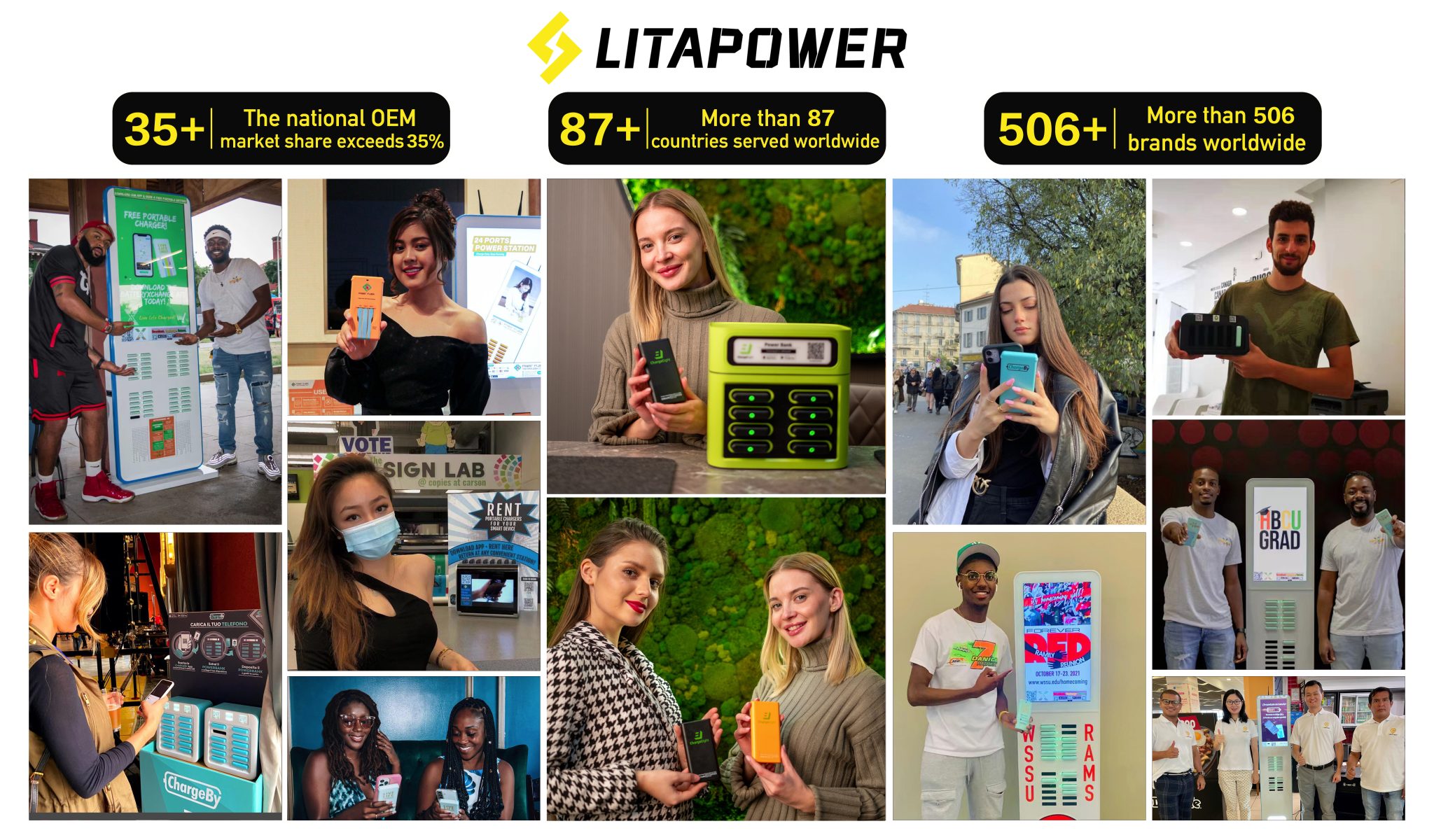
Litapower 公司, the overseas brand under Zhongdian Hexin’s shared power bank manufacturing business, has served eight Southeast Asian countries. More than 900 terminal devices have been deployed in Thailand. The company provides shared power bank hardware, software systems, OEM/ODM brand customization, and technical support for overseas projects.
Its five-chain approach supports overseas operators across five key areas: the supply chain, operations chain, compliance chain, service chain, and funding chain. This helps customers move from equipment procurement toward establishing their own independent brands and local operating systems.
For the Thai market, project implementation can be advanced in three main areas.
1. Choose an OEM/ODM Manufacturer with Overseas Project Experience
A shared power bank project involves cabinets, batteries, rental devices, payment systems, and backend management platforms. For operators without an established technical team, working with a manufacturer that has a complete product portfolio and overseas project experience can reduce early-stage development and supply chain coordination costs.
Supported by Zhongdian Hexin’s manufacturing capabilities, Litapower can provide:
(1) Hardware equipment: Shared power bank cabinets, portable power banks, and customized equipment with different capacities and interface configurations.
(2) Software systems: User rental apps, management backends, equipment monitoring, 订单管理, data analytics, and operations management systems.
(3) Payment integration: Interface adaptation and technical integration for PromptPay, TrueMoney, ShopeePay, and international bank card payments according to the needs of the Thai market.
(4) Brand customization: OEM/ODM private-label services, including brand logos, cabinet appearance, app interfaces, and operating system customization.
(5) 技术支持: Equipment installation guidance, system deployment, API support, operational training, and project launch assistance.
For certification, businesses should prepare product documentation and testing plans in advance according to the specific applicable NBTC and TISI requirements in Thailand. CE, FCC, and other certifications issued in different markets should not simply be treated as substitutes for local Thai certification.
2. Equipment Deployment: Build an Initial Network Around High-Quality Locations
The key to equipment deployment is not simply maximizing the number of devices. It is finding locations with stable foot traffic, reasonable rental demand, and suitable partnership conditions.
Thai operators can establish their location networks through two approaches:
(1) Direct expansion: Negotiate directly with shopping centers, 酒店, 餐馆, entertainment venues, 旅游景点, and transportation hubs to obtain equipment installation and operating permissions.
(2) Channel partnerships: Work with local distributors, venue operators, and partners with established commercial resources. Revenue-sharing arrangements can help accelerate equipment coverage by leveraging existing venue networks.
During the initial stage, operators can prioritize market research in target cities such as Chiang Mai, Khon Kaen, Phuket, and Hat Yai. The first deployment scale should be determined according to actual location resources, equipment costs, and user demand.
For revenue-sharing partnerships, the parties should clarify equipment ownership, revenue settlement, daily maintenance, responsibility for damaged equipment, and the partnership term in advance to prevent operational disputes.
A shared power bank business is an ongoing operation rather than a one-time equipment deployment project. Deployment is only the beginning. Equipment utilization, rental frequency, and operating costs are the factors that ultimately influence project profitability.
Thai operators should focus on the following areas:
- Dynamic operations: Adjust equipment distribution and rental prices according to peak tourism seasons, holidays, and the consumption patterns of different areas.
- Brand promotion: Use local social media, short videos, influencer partnerships, and commercial events to increase brand awareness.
- Equipment management: Monitor device connectivity, available power bank inventory, order data, and abnormal operating conditions through the backend system.
- Revenue analysis: Regularly review rental frequency, revenue, maintenance costs, and equipment utilization at each location.
- Regional expansion: Optimize locations with strong performance before expanding into surrounding cities and commercial districts.
For customers who already have a local company, commercial channels, or venue resources in Thailand, more detailed equipment deployment and software integration plans can be developed based on local payment accounts, merchant qualifications, and actual operating conditions.
VI. Frequently Asked Questions About Thailand’s Shared Power Bank Market
Q1: How Large Is Thailand’s Shared Power Bank Market?
Thailand’s shared power bank market is at a stage where international brands are continuing to establish their presence and regional expansion is progressing.
According to DataReportal’s Digital 2026: Thailand, the country has a population of approximately 71.6 million, with 67.8 million internet users and an internet penetration rate of 94.7%. In 2025, Thailand welcomed 32.974 million international visitors and generated THB 1.53 trillion in tourism revenue.
另外, Thairath English reported in 2026 that CHARGESPOT was positioning Thailand as a base for its ASEAN market expansion. Although reliable statistics on the total size of Thailand’s shared power bank market are currently limited, its digital user base, tourism consumption, and industry developments indicate considerable room for further market development.
Q2: What Certifications Are Required to Deploy Shared Power Banks in Thailand?
The applicable certifications for shared power bank equipment in Thailand must be determined according to the actual hardware configuration.
Equipment with Bluetooth, Wi-Fi, or 4G communication functions should be checked against Thailand’s NBTC wireless communication equipment certification requirements. Products containing lithium batteries should also be assessed to determine whether the relevant TISI standard, TIS 1561-2556, applies.
According to information cited by SINO Shipping, the NBTC certification process takes approximately 2–6 weeks, with estimated fees of THB 20,000–80,000 per model. Actual costs depend on the product configuration and certification plan.
Q3: Which Payment Methods Are Commonly Used by Tourists and Local Consumers in Thailand?
Local consumers in Thailand widely use PromptPay QR payments and mobile banking. They also use digital wallets such as TrueMoney and ShopeePay.
According to data cited by Xendit from the Bank of Thailand and National ITMX, PromptPay had more than 82.21 million registered accounts and processed 2.38 billion transactions in December 2025.
International tourists may also use Visa, Mastercard, 支付宝, and UnionPay, depending on the payment service provider’s support. Shared power bank operators should prioritize PromptPay and add other payment channels according to their customer demographics.
Q5: What Cooperation Cases and Experience Do Chinese Shared Power Bank Brands Have in Thailand?
One industry development that can currently be referenced is the announcement by Japanese company Ixxx’s brand Cxxx in 2026 that Thailand would serve as its base for ASEAN expansion.
Among Chinese manufacturers, Litapower 公司, the overseas brand under Zhongdian Hexin’s shared power bank manufacturing business, has served eight Southeast Asian countries, with more than 4,000 terminal devices deployed across the region. In Thailand, 超过 900 devices have already been deployed.
Businesses preparing to enter the Thai market can develop independent brand operating plans based on their local company qualifications, venue resources, and payment conditions.
VII. References
- DataReportal – Digital 2026: Thailand (October 2025)
https://datareportal.com/reports/digital-2026-thailand - Thailand’s Ministry of Tourism and Sports – 2025 International Tourism Data (via Nation Thailand, 2025)
https://nationthailand.com/news/40060860 - Bank of Thailand Tourism Indicators – Thailand Tourism Statistics (via TourismThailand, 2025)
https://tourismthailand.com/blog/thailand-tourism-statistics.html - Xendit – Top Local Payment Methods in Thailand: How Thais Pay (citing the Bank of Thailand, National ITMX, and Global Payments Report 2026, 2025)
https://www.xendit.co/en/blog/top-local-payment-methods-in-thailand-how-thais-pay/ - SINO Shipping – Thailand TISI & NBTC Certification Guide (2025–2026)
https://www.sino-shipping.com/zh/country-guides/freight-from-china-to-thailand/tisi-nbtc-certification/ - People’s Daily Popular Science China – Thailand Power Plug and Voltage Specifications
https://kpzg.people.com.cn/BIG5/n1/2016/1003/c404214-28755593.html - Airports of Thailand (AOT) – 2025 Airport Passenger Traffic Data (via TravelMole, 2026)
https://api.travelmole.com/?p=308619 - Thairath English – CHARGESPOT’s Development in Thailand and ASEAN Expansion Plans (2026)
https://en.thairath.co.th/money/business_marketing/trends/2921300 - World Bank Open Data – Thailand GDP (NY.GDP.MKTP.CD, 2025)
https://api.worldbank.org/v2/country/THA/indicator/NY.GDP.MKTP.CD?format=json&mrnev=1