 租赁移动电源,共享移动电源制造商
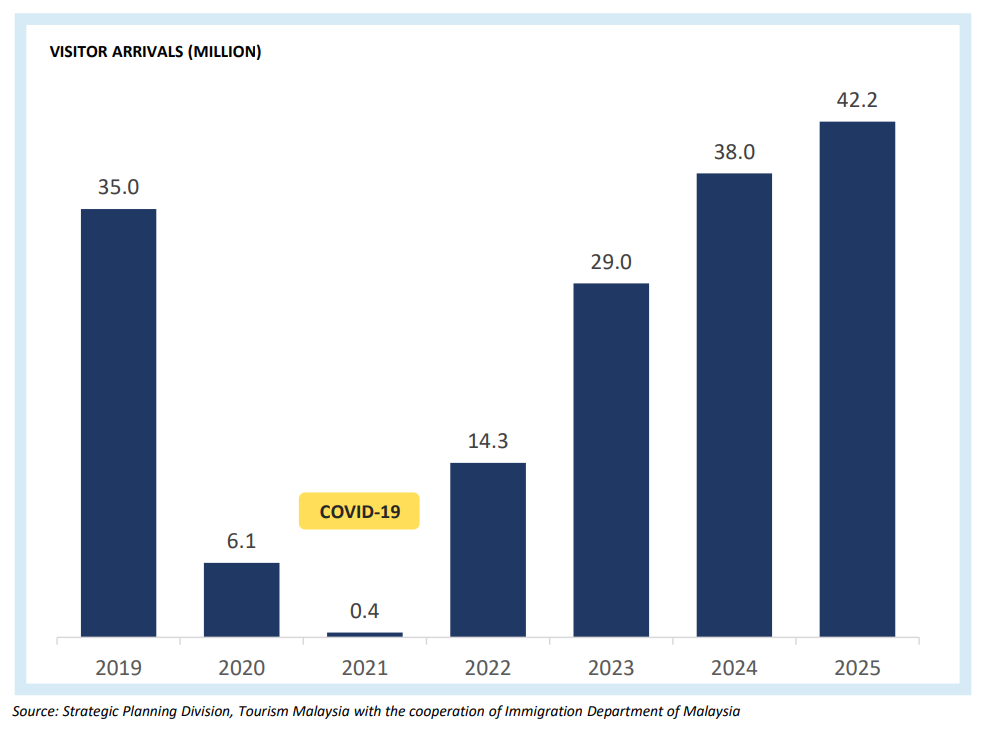
How promising is the Malaysian market for businesses looking to launch shared power bank services? Malaysia is becoming a promising market for shared power banks, supported by mature digital infrastructure, active tourism, and growing demand for mobile payments. According to Tourism Malaysia, the country welcomed 42.197 million international tourist arrivals in 2025, representing an increase of 11.2% year over year. Tourism spending and mobile payment demand continue to grow.
The Malaysian shared power bank market offers several key advantages:
(1) Market Size: Malaysia recorded 42.197 million international tourist arrivals in 2025, creating substantial demand for mobile charging services at tourist attractions, 商场, 酒店, 和交通枢纽. (Source: Tourism Malaysia, 2025)
(2) Mature Payment Infrastructure: DuitNow QR processed 3 billion transactions throughout 2025, with more than 3 million merchant acceptance points nationwide. (Sources: Bank Negara Malaysia and PayNet, 2025)
(3) Manageable Compliance Requirements: Depending on the product category, wireless communication devices may apply for SDoC or CoA certification. The typical certification process takes approximately 2–6 weeks. (Source: MCMC/SIRIM-related certification information, 2026)
This article examines the investment opportunities and implementation process for shared power bank projects in Malaysia, covering market data, compliance and certification, local payment methods, city-level deployment opportunities, and OEM manufacturer solutions.
1. Malaysia Shared Power Bank Market: 4 Key Data Points
Malaysia has a high internet penetration rate, a mature cashless payment ecosystem, and a growing international tourism market. These conditions provide a solid foundation for the development of the shared power bank business model.
1.1 Population and Internet Penetration: A Mature Digital User Base
According to DataReportal’s Digital 2026: Malaysia report, Malaysia has a population of approximately 36.1 million and 35.4 million internet users, representing an internet penetration rate of 98.0%. The country has 44 million mobile connections, equivalent to 122% of its population. Social media users total 30.7 million, accounting for 85.0% of the population.
(Source: DataReportal, Digital 2026: Malaysia, October 2025)
High internet penetration means that consumers are generally familiar with mobile apps, QR code payments, and online rental services. Shared power bank operators can lower the barrier to use through QR code rentals, 移动支付, and online order management.
1.2 International Tourism: More Than 42 Million Tourist Arrivals Annually
According to Tourism Malaysia’s 2025 KPI Report, Malaysia recorded 42.197 million international tourist arrivals in 2025, an increase of 11.2% compared with 38 million in 2024.
From January to February 2025, the major source markets included Singapore, China, Indonesia, Thailand, and Brunei. Visitors from Singapore reached 3.14 million, while arrivals from China and Indonesia reached 817,000 和 775,000, respectively.
(Source: Tourism Malaysia, 2025 KPI Report)
The large number of international visitors creates favorable conditions for shared power bank services at airports, 酒店, 旅游景点, 商场, 餐馆, and entertainment venues. Commercial areas popular with visitors from China, 新加坡, and Indonesia are particularly worth considering, with multilingual services and cross-border payment options helping improve the user experience.
1.3 Cashless Payments: DuitNow QR Reaches 3 Billion Transactions
According to relevant data from Bank Negara Malaysia and PayNet, DuitNow QR recorded 3 billion transactions in 2025, double the figure in 2024. The network covered more than 3 million merchant acceptance points nationwide, approximately 80% of which were small and micro businesses.
Meanwhile, the average number of cashless payment transactions per person reached 538 annually, while QR payment adoption reached 61.5%, ranking second globally.
(Sources: Statements by the Governor of Bank Negara Malaysia and relevant PayNet data, 2025)
These figures indicate that Malaysian consumers are already accustomed to QR code payments. Shared power bank operators can integrate DuitNow QR into their services to reduce cash transactions and manual collection costs.
1.4 GDP and Economic Foundations: A Sustainable Business Environment
According to World Bank Open Data, Malaysia’s GDP reached USD 472.2 billion in 2025, with a GDP per capita of USD 13,125. In 2024, the number of mobile connections reached 139.7 per 100 people.
(Source: World Bank Open Data, 2025)
Malaysia has a mature business services sector, an active retail market, and a high level of mobile device usage. Shared power bank services can expand beyond tourist attractions into restaurants, entertainment venues, 购物中心, 和交通枢纽, where consumers frequently use their phones.
整体, Malaysia’s advantages go beyond tourism traffic. Its internet infrastructure, mobile connectivity, and digital payment ecosystem work together to create favorable conditions for shared power bank projects.
2. Compliance and Certification Requirements for Shared Power Banks in Malaysia
When entering the Malaysian market, businesses need to consider not only device manufacturing and software systems but also local compliance requirements for wireless communication, power adapters, and lithium batteries.
Communication equipment in Malaysia is primarily regulated by the Malaysian Communications and Multimedia Commission (MCMC), while SIRIM QAS serves as a certification body. Different devices may require different certification procedures depending on their communication functions and product risk classifications.
2.1 MCMC and SIRIM Certification Requirements
Wireless communication devices in Malaysia generally involve the following certification pathways:
2.1.1 SDoC (Supplier’s Declaration of Conformity): A common compliance approach for certain consumer wireless devices. Under applicable conditions, some existing CE and FCC test reports may be reused, although additional documentation may be required to address differences in Malaysian frequency bands and relevant technical requirements.
2.1.2 CoA (Certificate of Approval): Applicable to devices that require a higher level of type approval. The specific requirements should be confirmed according to the product’s communication functions and risk category.
2.1.3 MTSFB Technical Specifications: Devices must also comply with applicable Malaysian technical standards and technical requirements.
If a shared power bank cabinet includes Wi-Fi, Bluetooth, or other communication modules, its certification category must be determined according to the actual hardware configuration. It cannot be established solely by the device’s appearance or product name.
According to information from ETR Standard and related certification organizations, the typical certification process for wireless devices in Malaysia takes approximately 2–6 weeks. Some certificates may have validity periods of 3–5 years. Projects may also need a local Malaysian certificate holder.
2.2 Power Adapter and Lithium Battery Safety Requirements
Shared power banks involve lithium battery storage and power conversion. In addition to communication equipment certification, operators should review the relevant safety requirements for power adapters and lithium batteries under the regulatory framework of Malaysia’s Energy Commission (ST).
It is important to distinguish between MCMC communication certification and ST electrical safety certification. They belong to different regulatory systems, and obtaining one does not automatically satisfy all product compliance requirements.
2.3 Relationship Between International and Local Certifications
For Chinese shared power bank manufacturers, international test reports and certifications such as CE, FCC, CB, RoHS, and UN38.3 can form part of export compliance preparations.
Some CE and FCC reports may be used to support a Malaysian SDoC application when the applicable conditions are met. 然而, they do not automatically replace MCMC/SIRIM requirements.
因此, operators are advised to confirm the specific certification requirements for communication modules, power adapters, and lithium batteries before placing bulk orders. Testing and local certification applications should then be arranged accordingly to reduce potential customs clearance and commercial deployment risks.
3. Payment and Localization Requirements for Shared Power Banks in Malaysia
Payment methods directly affect the conversion rate of shared power bank users. Malaysia has a relatively mature cashless payment ecosystem. Operators should prioritize local QR code payments and consider adding cross-border payment options and bank card services according to the composition of international visitors.
3.1 Mainstream Payment Methods: DuitNow QR and E-Wallets
Major payment methods in Malaysia include:
- DuitNow QR: Malaysia’s mainstream unified QR payment system, suitable for QR code scanning, shared power bank rentals, and automated payment scenarios.
- Touch ‘n Go eWallet (TNG): An e-wallet with a substantial local user base. Integration can be considered according to project requirements.
- Bank Card Payments: International cards such as Visa and Mastercard provide convenient payment options for international visitors and consumers who prefer card payments.
- GrabPay: A commonly used local e-wallet that operators may consider integrating, subject to partnership conditions.
- Cross-Border QR Payments: Malaysia has established cross-border payment connections with markets including Singapore, Thailand, Indonesia, and China, offering additional payment convenience for international visitors.
According to Bank Negara Malaysia and PayNet, DuitNow QR recorded 3 billion transactions in 2025, with more than 3 million merchant acceptance points nationwide. This demonstrates the extensive commercial adoption of QR code payments.
For shared power bank operators, DuitNow QR should be a priority, supplemented by TNG eWallet, bank cards, and other e-wallets to create a payment system suited to both local consumers and international visitors.
Litapower can provide payment integration solutions based on operators’ local payment accounts, payment service providers, and API requirements. The actual payment channels available for deployment depend on local partnership qualifications and interface authorization.
3.2 Power Specifications: UK-Style Plugs and Equipment Compatibility
Malaysia primarily uses Type G three-pin UK-style power sockets, with a voltage of 230–240V and a frequency of 50Hz.
(Source: People’s Daily Online, Science China, long-term reference information)
Compared with the plugs commonly used in China, Malaysia’s Type G sockets have a different design. 因此, shared power bank equipment exported to Malaysia should take the following factors into account:
(1) Power Cables: Prioritize Type G three-pin power cables that meet local usage requirements.
(2) Power Adapters: Confirm that the input voltage range is compatible with the local power supply.
(3) Device Interfaces: Configure commonly used charging connectors, such as USB-C and Lightning, according to local smartphone user needs.
(4) Equipment Safety: Consider frequent rentals, continuous operation, and public-space environments. Ensure adequate heat dissipation, power protection, and structural protection.
Malaysia has a tropical climate. Some tourist attractions and semi-open commercial areas are exposed to high temperatures, humidity, and rainfall. Equipment should therefore prioritize water resistance, moisture protection, heat dissipation, and long-term operational stability.
4. Malaysia Shared Power Bank Market: 4 High-Potential Cities and Scenarios
Shared power bank deployment in Malaysia should not be limited to established commercial centers such as Kuala Lumpur. Operators entering the market can also consider Johor Bahru, Malacca, Ipoh, and Kota Kinabalu.
These cities offer different characteristics, including cross-border consumption, cultural tourism, food-related commercial activity, and island tourism. They provide opportunities to explore different customer groups and location-based business models.
4.1 Johor Bahru and Malacca: Cross-Border Commerce and Cultural Tourism
4.1.1 Johor Bahru: A Cross-Border Consumption and Commercial Services Hub
Located in southern Malaysia and adjacent to Singapore, Johor Bahru is an important commercial and transportation area connecting the two markets.
Cross-border consumers, shopping tourists, and local residents together create an active consumer market. According to Malaysian shared power bank industry information, URNA has established a localized operations center in Johor Bahru and expanded into markets including Malaysia, 新加坡, Thailand, 和越南.
This indicates that Johor Bahru has attracted attention as a potential shared power bank market and highlights the importance of local operational and warehousing resources.
Priority deployment locations:
- Shopping malls, 购物中心, and large retail areas
- Cross-border transportation hubs and nearby commercial areas
- Hotels, restaurant streets, and cafés
- Entertainment centers and areas popular with younger consumers
4.1.2 Malacca: Historical Tourism and Nighttime Consumption
Malacca is an important historical and cultural tourism city in Malaysia, featuring historic architecture, cultural attractions, and distinctive commercial streets.
Visitors often spend extended periods walking, taking photos, 购物, and dining in the historic city center, creating concentrated demand for mobile phone charging.
Compared with large commercial centers, Malacca offers opportunities to explore shared power bank demand around tourist attractions, 酒店, and nighttime consumption areas.
Priority deployment locations:
- Jonker Street and surrounding night markets
- Dutch Square and historical attractions
- Commercial areas along the Malacca River
- Hotels, 餐馆, and specialty cafés in the historic city center
4.2 Ipoh and Kota Kinabalu: Regional Commerce and Tourism
4.2.1 Ipoh: Food Tourism and Regional Commercial Activity
Ipoh is the capital of Perak and has an established local business ecosystem, food tourism resources, and consumer markets serving surrounding towns.
The old town, food streets, and shopping centers attract a steady flow of consumers. For shared power bank operators, 餐馆, 购物, and leisure venues provide practical starting points for gradually establishing a regional device network.
Priority deployment locations:
- Ipoh Old Town and specialty food streets
- Concubine Lane and surrounding tourist areas
- Shopping malls, cinemas, and large dining venues
- Hotels, cafés, and commercial leisure areas
4.2.2 Kota Kinabalu: A Tourism Gateway to Sabah and Island Destinations
Kota Kinabalu is an important tourism gateway in Sabah, offering island tours, seaside leisure, hotel resorts, and distinctive night markets.
During island trips, sightseeing, photography, navigation, online bookings, and mobile payments, tourists rely heavily on their smartphones. Shared power bank services can therefore be developed around the airport, 酒店, ferry terminals, and tourism-related commercial areas.
Priority deployment locations:
- Kota Kinabalu International Airport and surrounding transportation service areas
- Kota Kinabalu Central Market and Gaya Street
- Filipino Market and seaside night markets
- Hotels, island tour service centers, and shopping malls
For these four cities, operators are advised to conduct on-site research into the existing coverage of shared power bank brands before deployment. Priority should be given to areas with relatively low device density, stable customer traffic, and merchants willing to cooperate. This helps avoid entering highly competitive locations without sufficient preparation.
5. Zhongdian Hexin’s Malaysia Expansion Solution: OEM Private-Label Customization
Shared power bank projects in Malaysia involve local communication certification, payment integration, device deployment, channel development, and ongoing operations.For overseas investors planning to enter the local market, working with an OEM/ODM manufacturer that has manufacturing capabilities and a complete technical system can reduce initial development and supply chain coordination costs.
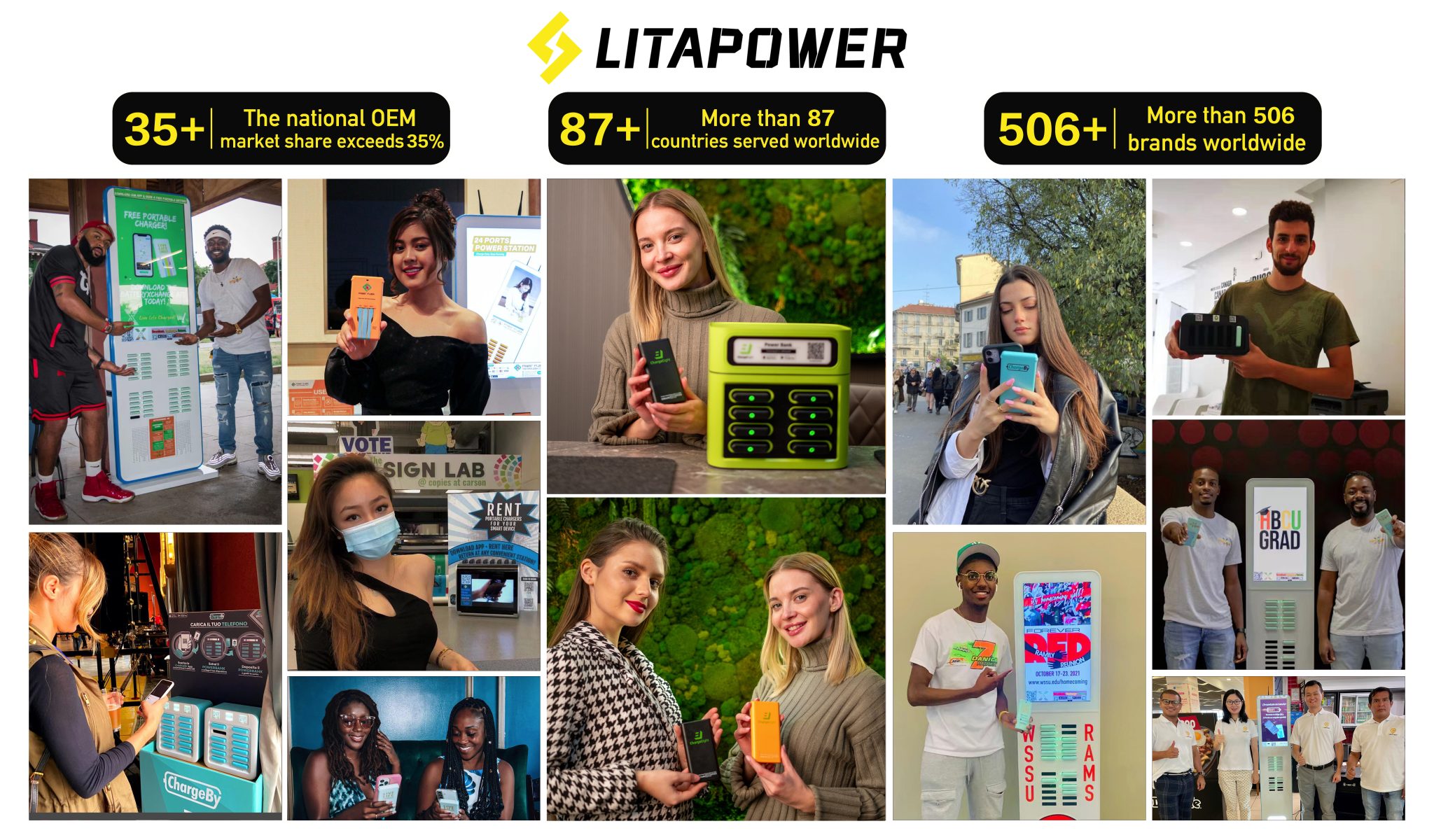
Litapower 公司, the overseas brand under Zhongdian Hexin’s shared power bank manufacturing business, has served more than eight Southeast Asian countries. More than 700 terminal devices have been deployed in Malaysia.
A Malaysia shared power bank project can be developed through the following steps.
5.1 Choose an OEM/ODM Manufacturer with Overseas Project Experience
A shared power bank project requires more than hardware. It also needs supporting software systems, payment interfaces, and ongoing operational management capabilities.
When evaluating manufacturers, operators should focus on the following areas:
Manufacturing Capabilities: Does the manufacturer have its own production facilities, quality inspection systems, and the ability to deliver equipment in bulk?
Certification Support: Does it understand MCMC, SIRIM, and ST-related product compliance requirements? Can it assist with preparing test reports and certification documents?
Payment Systems: Can it plan payment integration for DuitNow QR, TNG eWallet, GrabPay, and bank cards according to local partnership conditions?
Software Capabilities: Does it provide mobile apps, an operations backend, device management systems, order management systems, and API interfaces?
Brand Customization: Does it support OEM/ODM private labeling, LOGO customization, device appearance design, app UI customization, and independent backend deployment?
Relying on Zhongdian Hexin’s manufacturing capabilities, Litapower provides overseas operators with shared power bank hardware, software systems, payment interfaces, and OEM brand customization services.
For clients who already have their own software development teams, Litapower can also provide API interfaces and technical integration support according to project requirements.
For equipment selection, operators should consider Malaysia’s Type G power sockets, tropical climate, and commercial usage scenarios. Shared power banks use a dual-card-slot structure with two locking points to improve the stability of power bank storage and theft resistance. Combined with drop protection, heat dissipation, and water-resistant design, these features help meet the requirements of long-term operation in public spaces.
5.2 Device Deployment: Establish a Local Network of Venue Partnerships
Before deploying equipment, operators need to define their target cities, commercial scenarios, and channel partnership models.
Operators in Malaysia can prioritize the following areas:
(1) Johor Bahru: Cross-border commercial centers, 商场, 酒店, 和交通枢纽.
(2) Malacca: Historical and cultural attractions, night markets, 酒店, and tourist commercial streets.
(3) Ipoh: Food streets, 购物中心, 餐馆, and entertainment venues.
(4) Kota Kinabalu: Airports, 酒店, seaside commercial areas, and island tourism service centers.
Operators can work with local shopping malls, 酒店, restaurant businesses, and channel partners to establish a network of locations through venue revenue sharing, equipment partnerships, or independent operations.
Investors who already have a local company and commercial venue resources can move directly toward equipment deployment. Those without local channels should first look for partners with merchant relationships and the ability to develop new locations.
5.3 Management and Operations: Build a Long-Term Revenue Management System
Shared power bank projects require continuous analysis of equipment usage and location performance. Operators should establish the following operational practices:
(1) Initial Device Deployment: Plan the first batch of equipment according to the investment budget, number of locations, and market feedback. Expand the operating network gradually.
(2) Brand Promotion: Increase brand awareness through local influencers, 社交媒体, short videos, and commercial events.
(3) Dynamic Pricing: Adjust rental prices according to consumer spending patterns in different commercial districts, 旅游景点, and hotels.
(4) Equipment Management: Use the backend system to monitor device online status, power bank inventory, 订单, and equipment faults.
(5) Profitability Analysis: Review location revenue, venue revenue sharing, maintenance expenses, and operating costs monthly to optimize equipment deployment.
6. Frequently Asked Questions About the Malaysian Shared Power Bank Market
Q1: How large is the shared power bank market in Malaysia?
现在, authoritative statistics on the overall market size and penetration rate of shared power banks in Malaysia remain limited. 然而, the market has a favorable foundation for development.
According to Tourism Malaysia, the country recorded 42.197 million international tourist arrivals in 2025, an increase of 11.2% year over year. DataReportal reports that Malaysia’s internet penetration rate has reached 98.0%.
另外, the Malaysian shared power bank market includes both international brands and local operators, and no single brand has established absolute market dominance.
Q2: What certifications are required to deploy shared power banks in Malaysia?
The certification requirements for shared power banks in Malaysia depend on the devices’ communication functions and may involve MCMC and SIRIM requirements.
For certain consumer wireless devices, an SDoC may be applicable, while devices in higher-risk categories may require CoA type approval.
Power adapters and lithium batteries also need to be assessed against the relevant safety requirements of Malaysia’s Energy Commission (ST).
According to certification organization information for 2026, the typical certification process for wireless devices takes approximately 2–6 weeks, while some certificates may remain valid for 3–5 years.
Q3: Which payment methods are commonly used by tourists and local consumers in Malaysia?
Malaysian consumers widely use DuitNow QR, Touch ‘n Go eWallet, GrabPay, and bank card payments.
According to Bank Negara Malaysia and PayNet, DuitNow QR recorded 3 billion transactions in 2025, with more than 3 million merchant acceptance points nationwide. QR payment adoption reached 61.5%.
Malaysia has also established cross-border payment connections with markets including Singapore, Thailand, Indonesia, and China, making QR payments more convenient for international visitors.
Q4: How long does it take to recover the investment in a shared power bank business in Malaysia?
Based on Litapower’s shared power bank project experience in Southeast Asia, the estimated investment payback period for a shared power bank project in Malaysia is approximately 3.5–6 months.
The actual payback period depends on equipment procurement costs, certification expenses, rental orders at each location, venue revenue sharing, payment processing fees, and maintenance costs.
Operators are advised to begin with pilot deployments at shopping malls, 酒店, and tourist attractions with stable customer traffic. They can then expand the equipment network based on actual operating data.
Q5: Are there any examples of Chinese shared power bank brands entering the Malaysian market?
The Malaysian market currently includes both international brands and local shared power bank operators.
Among them, Uxxx has established a localized operations center in Johor Bahru and expanded into markets including Malaysia, 新加坡, Thailand, 和越南. This demonstrates the importance of local operations and regional channel development.
On the manufacturing side, Litapower 公司, the overseas brand under Zhongdian Hexin’s shared power bank manufacturing business, has completed shared power bank deployments in Malaysia, with more than 700 terminal devices deployed to date.
Litapower provides Malaysian clients with shared power bank hardware, software systems, payment interfaces, and OEM/ODM brand customization services.
7. References
- DataReportal, Digital 2026: Malaysia (October 2025)
https://datareportal.com/reports/digital-2026-malaysia - Tourism Malaysia, KPI Report 2025 (2025)
https://data.tourism.gov.my/frontend/pdf/2025/publications/kpi/kpi_2025.pdf - Malaysia Airports, 2025 Airport Passenger Traffic (2025)
https://corporate.malaysiaairports.com.my/en/media-centre/news/1678 - TechNode Global, Malaysia’s DuitNow QR More Than Doubled in 2025 to Three Billion Transactions (2026)
https://technode.global/2026/05/05/malaysias-duitnow-qr-more-than-doubled-in-2025-to-three-billion-transactions/ - ETR Standard, Malaysia Wireless Communication Equipment Certification Information (2026)
https://www.etrtest.com/product-item-77.html - People’s Daily Online, Science China, Malaysia Power Plug and Voltage Specifications (Long-term reference)
https://kpzg.people.cn/BIG5/n1/2016/1003/c404214-28755593.html - Tencent Cloud Developer Community, Malaysia Shared Power Bank Market Industry Information (2026)
https://cloud.tencent.com/developer/news/4383566 - World Bank Open Data, Malaysia GDP (NY.GDP.MKTP.CD) (2025)
https://api.worldbank.org/v2/country/MYS/indicator/NY.GDP.MKTP.CD?format=json&mrnev=1 - Tourism Malaysia, Visit Malaysia 2026 Kicks Off at TRAVEX in Conjunction with ASEAN Tourism Forum (ATF) 2026 (2026)
https://www.tourism.gov.my/media/view/visit-malaysia-2026-kicks-off-at-travex-in-conjunction-with-asean-tourism-forum-atf-2026