 Rental power bank,Shared power bank manufacturer
As one of the most highly digitized countries in Northern Europe, Denmark has a solid foundation for development in the sharing economy. As a typical on-demand service product, Shared Power Banks in Denmark are gradually gaining traction in the European market, and Denmark is regarded as a key country with both stable demand and growth potential.
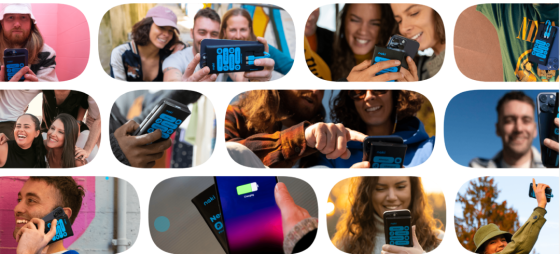
This article will provide a systematic analysis of the Shared Power Banks in Denmark market and Europe from multiple perspectives, including market development stages, user behavior, payment environments, competitive landscapes, and future trends.
I. The European Market: From Early Adoption to Accelerated Growth
The European Shared Power Banks in Denmark market is currently transitioning from the introduction phase to the growth phase, with strong expansion momentum. Data shows that the European Shared Power Banks in Denmark market is expected to achieve a compound annual growth rate (CAGR) exceeding 25% from 2023 to 2028, with the total market size projected to surpass 3.5 billion euros by 2028.
Compared with China’s first- and second-tier cities, where penetration is close to 50%, Europe remains below 5%. Within this context, Denmark stands out as a high-potential but low-penetration market, making it a typical blue ocean opportunity for Shared Power Banks in Denmark expansion.
II. Denmark Market Overview: A Highly Digitalized Pilot Country
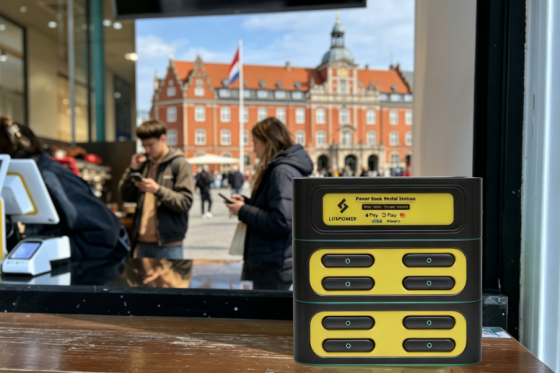
Denmark is widely recognized as one of the most digitalized and cashless societies in the world, making it an ideal environment for Shared Power Banks in Denmark development. With high income levels, advanced infrastructure, and strong consumer adaptability, Denmark serves as a strategic entry point for the Nordic region.
(1) Market Foundation: High Digital Adoption and Strong User Quality
Smartphone penetration in Denmark exceeds 92%, while mobile internet usage accounts for more than 65% of total traffic. Consumers rely heavily on mobile devices in daily life, creating strong natural demand for Shared Power Banks in Denmark services.
(2) Demand Scenarios: Stable and Concentrated Usage
The demand for Shared Power Banks in Denmark is mainly concentrated in high-traffic and long-stay scenarios. Airports, train stations, and ports provide consistent short-term demand, while shopping malls, cafés, and restaurants support continuous usage scenarios.
(3) Competitive Landscape: Early Stage Market Opportunity
The Shared Power Banks in Denmark market is still in its early development stage, with limited competitors and no dominant brand structure. This allows new entrants to rapidly establish presence through strategic deployment and efficient operations.
III. Key Challenges in the Development Process
Although the Shared Power Banks in Denmark market has strong growth potential, several challenges still exist. Payment system integration, language localization, and merchant cooperation models remain key operational barriers.
Without a structured system and local adaptation capability, operational efficiency may decline and investment payback cycles may be extended.
IV. Litapower: Accelerating Market Entry in Denmark
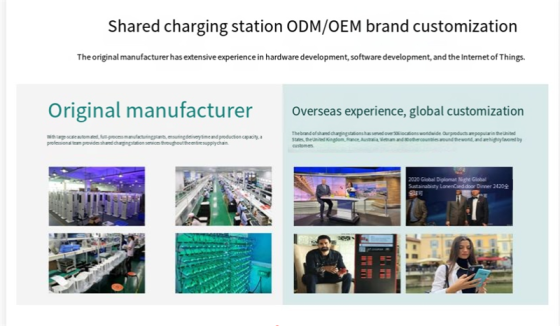
Entering the Shared Power Banks in Denmark market requires a partner with EU compliance capability, integrated hardware and software systems, and local operational experience.
Litapower, a subsidiary of Zhongdian Core, provides a complete solution for Shared Power Banks in Denmark, including EU-certified hardware, multi-language system support, integration with MobilePay and other local payment methods, and flexible deployment strategies.
The hardware is designed to meet EU safety standards and withstand Nordic environmental conditions, ensuring stable long-term operation.
V. Conclusion
By capturing the current development window of Shared Power Banks in Denmark and leveraging a systematic operational approach, businesses can establish a stable revenue model in the Danish market and further expand into the broader Nordic and European regions.