 Rental power bank,Shared power bank manufacturer
As the smallest sovereign state in the world, Vatican City covers only 0.44 square kilometers and has a permanent population of fewer than one thousand people, yet it welcomes over 7.5 million visitors annually. The high density of foot traffic and long visitor dwell times make Shared Power Banks in Vatican one of the rarest and highest-return blue ocean opportunities in Europe. Currently, the Vatican market for Shared Power Banks is nearly empty, with penetration approaching zero, very few local brands, and tourists experiencing prominent “battery anxiety.” The demand for Shared Power Banks in Vatican is urgent, and the growth potential is enormous. This article analyzes the Vatican Shared Power Bank market from three perspectives: market development prospects, local brand presence, and deployment scenarios, while also introducing the integrated hardware and software solutions provided by Litapower, a brand under Zhongdian Core.
I. Market Potential and Development Prospects of Shared Power Banks in Vatican
The potential of the Vatican Shared Power Bank market stems from four key advantages: zero competition, high visitor traffic, high spending power, and strong demand. This makes it a rare low-risk, high-return opportunity in Europe.
Large tourist base with strong demand
Vatican City receives over 7.5 million visitors annually, with a visitor-to-resident ratio exceeding 7000:1. Average dwell time per visitor is 4–6 hours. Tourists concentrate in areas such as St. Peter’s Basilica, the Vatican Museums, and the Sistine Chapel, frequently using their smartphones for photography, navigation, ticketing, and social media. With very few public charging facilities available, Shared Power Banks in Vatican have become a necessity, with a significant supply gap.
Market gap with zero competition
Currently, the penetration of Shared Power Banks in Vatican is nearly 0. Local brands are almost non-existent, and only a few Italian border brands have conducted limited pilot tests near the Vatican Museums and border cafes, with sparse coverage and limited units. Visitors often face the problem of “no battery, nowhere to charge,” making the Vatican a classic early-stage blue ocean market where first movers can quickly secure core locations and establish a monopoly advantage.
Strong willingness to pay and high revenue per unit
Vatican visitors are primarily high-net-worth individuals, cultural enthusiasts, and pilgrims with strong purchasing power and low price sensitivity. Based on European tourist site pricing, Shared Power Banks in Vatican can be priced at €2–4 per hour, with a daily cap of €8–12. Visitors generally accept these rates, generating daily revenue of €15–25 per unit, with a payback period of just 6–9 months. The profitability far exceeds that of Asian markets.
These factors indicate that the Vatican Shared Power Bank market not only offers short-term profit opportunities but also possesses long-term development potential.
II. Local Brands and Market Presence of Shared Power Banks in Vatican
Currently, the Vatican Shared Power Bank market is still in its early stages, with some local and international brands entering. Italian brands (such as ChargeBull) leverage geographical proximity to expand from the Rome border into Vatican City, deploying a small number of tabletop units near the Vatican Museums and border cafes. These units are dispersed, limited in quantity, and lack scalable operational capabilities, resulting in poor user experience.
Litapower, under Zhongdian Core, has completed pilot deployments in Vatican City, using real-time operations and data analysis to optimize device placement and significantly improve device utilization and user satisfaction. With mature hardware-software systems, reliable product quality, and extensive overseas operational experience, Litapower quickly adapts to the Vatican payment systems, consumer habits, and business environment, providing standardized solutions and high-quality services for the local Shared Power Bank market.
III. Deployment Scenarios for Shared Power Banks in Vatican
In Vatican City, deployment primarily focuses on tourist attractions, hotels, dining establishments, and transportation hubs, including:
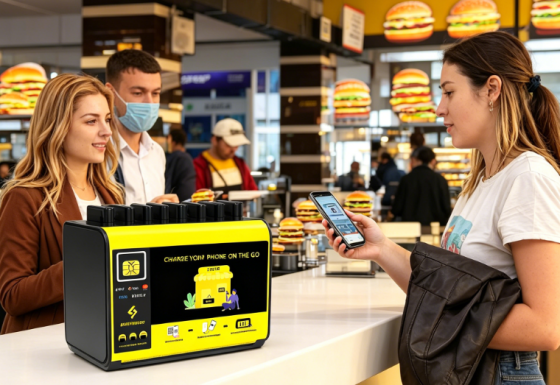
- Tourist Attractions: High-traffic areas such as St. Peter’s Square and the Vatican Museums, where QR code rentals allow visitors to charge conveniently.
- Hotels and Dining: Providing added services in collaboration with premium hotels and restaurants, enhancing customer experience and increasing revenue.
- Transportation Hubs: Airports, train stations, and bus terminals offer instant charging solutions for short-distance travelers.
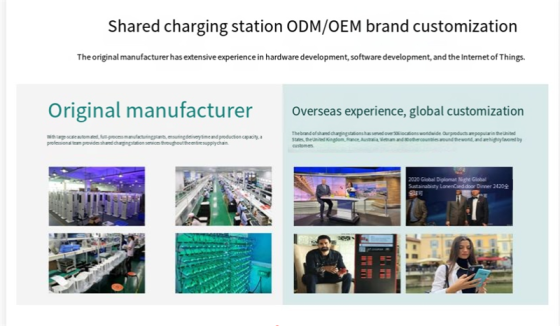
Litapower’s integrated hardware and software solutions for Shared Power Banks provide multiple device models and customizable services to support multi-scenario, scalable deployments. Devices support QR code rentals, automatic settlement, multilingual interfaces, and multi-currency payment options, enabling businesses to rapidly expand operations and improve efficiency in Vatican City.
The Vatican Shared Power Bank market is rapidly developing, with growing demand from tourists and residents for mobile charging. Through strategic device placement, flexible deployment scenarios, and advanced hardware-software systems, Shared Power Bank projects can achieve efficient operations and sustainable profitability. Litapower offers end-to-end support—including devices, backend management, payment integration, and operational guidance—helping businesses quickly enter and scale in Vatican City’s blue ocean sharing economy.