 Bank tal-enerġija tal-kiri,Manifattur tal-bank tal-enerġija kondiviż
The Norwegian portable charger sharing market is currently in its early blue-ocean phase. As a high-income, highly digitized country in Northern Europe, it possesses four core advantages: “inelastic demand, mature payment systems, low competition, and stable tourism dividends,” making it an exceptionally valuable target market for expansion in Northern Europe.
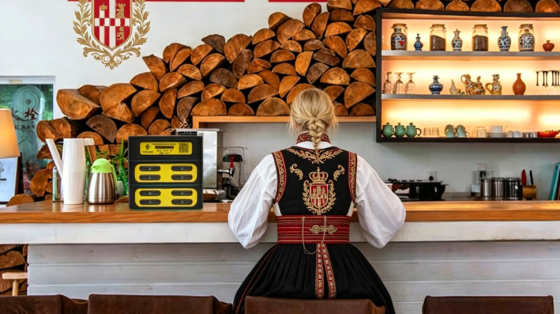
Analysis of Norway’s Shared Power Bank Market_Prospects for the Development of Shared Power Banks in Europe
I. Digitalization and Device Penetration: A Solid Foundation of Essential Demand
Norway ranks among the world’s most digitally advanced nations, with 99% internet coverage, full 4G/5G network coverage, a smartphone penetration rate exceeding 90%, and a penetration rate of nearly 98% among the 15–64 age group. Residents heavily rely on their smartphones for daily activities such as socializing, work, Navigazzjoni, and mobile payments. Coupled with low winter temperatures that accelerate battery drain and a scarcity of free outdoor charging points, “battery anxiety” has become a widespread pain point for the entire population. In key cities like the capital Oslo and the second-largest city Bergen, young people and business professionals spend over 5 hours a day on their smartphones, providing a stable user base for Norway’s shared power bank market.
II. Abundant Tourist Traffic and Concentrated Scenario Demand
Norway is a top European tourist destination, attracting over 12 million international visitors annually, with concentrated demand in scenarios such as cruises, fjord hiking, and aurora viewing. Tourists consume significant battery power while using navigation apps, taking photos, and sharing content on social media, creating strong demand for on-the-go charging. They demonstrate a high willingness to pay and low price sensitivity. Key locations for portable charger services in Norway include Oslo Airport and Train Station, Bergen’s Bryggen Wharf, the Geiranger Fjord scenic area, downtown commercial districts, and upscale hotels and chain restaurants—all of which feature high foot traffic and extended visitor dwell times, making them ideal for deploying portable chargers.
III. Market Competition Landscape: High Untapped Potential, Optimal Entry Window
The shared power bank industry in Norway is currently in its infancy. There are no leading national brands; only a few small local operators have established scattered deployments in Oslo and Bergen, with location coverage below 10%. Second- and third-tier cities and popular tourist attractions remain virtually untapped. Market competition is loose, with no price wars, and entry barriers are low. For overseas companies, this represents a high-quality market entry point characterized by “low competition and high returns,” allowing for the rapid establishment of brand barriers.
Norway’s shared power bank market is a “high-quality blue ocean market,” but it remains in its early stages. Market competition has not yet fully matured, and user education costs are low.
IV. Norway’s mature payment and consumer environment ensures zero barriers to entry for shared power banks
Cash payments account for over 95% of transactions locally, while digital payment penetration exceeds 88%. The market fully supports Visa, Mastercard, Apple Pay, Google Pay, and local e-wallets. Users are accustomed to scanning QR codes for payments, making them perfectly suited to the “scan-to-rent, automatic settlement” model of Norwegian shared power banks. With a per capita GDP exceeding $80,000, residents possess strong purchasing power and high acceptance of rental rates of 3–5 euros per hour. The average transaction value and profit margins are significantly higher than in typical Western European markets.
VI. Litapower’s Market Strategy in Norway
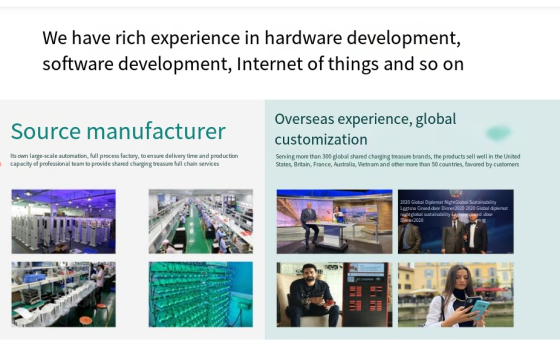
Analysis of Norway’s Shared Power Bank Market_Prospects for Shared Power Banks in Europe
Norway’s shared power bank market presents ample short-term untapped potential and clear long-term growth, driven by key factors including: high demand for digital services, stable tourist traffic, a mature payment ecosystem, and a low-competition environment. Market penetration is estimated to be only 4%–6% in 2026, but is projected to rise to 12%–15% over the next 3–5 years, with a potential market size exceeding 80 million euros.
Within Norway’s shared power bank market, Litapower—a brand under Zhongdian Core—is rapidly emerging as a major player. Pilot deployments have been completed in Oslo’s business districts, shopping centers, and co-working spaces. Through real-time operations and data analysis, the company continuously optimizes device distribution to enhance utilization rates and user experience. Leveraging mature hardware and software systems, consistent product quality, and extensive overseas operational experience, Litapower has successfully adapted to and integrated with Norway’s local payment systems, consumer habits, and business environment, and is progressively scaling up its presence across multiple scenarios.