 Penyewaan bank daya,Produsen bank daya bersama
The US shared power bank market has a large consumer base, but competition is also relatively mature. Investment opportunities are more concentrated in high-dwell-time locations such as tourist attractions, Restoran, entertainment venues, campuses, exhibitions, and transportation hubs.
According to the US Travel Association, domestic and international visitors generated approximately US$1.4 trillion in direct spending in the United States in 2025, contributing around US$3 trillion in total economic output. Mobile navigation, social media, photography, and mobile payments have become deeply integrated into everyday consumer activities, creating clear demand for shared power bank services across various scenarios.
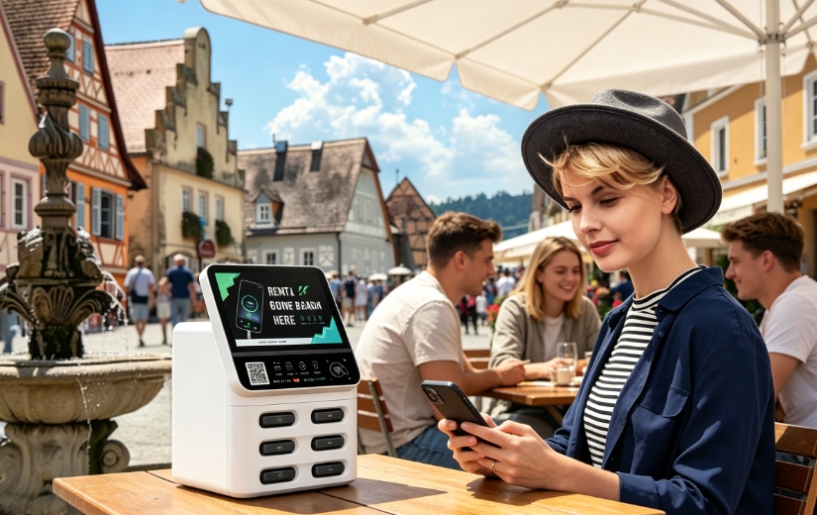
1. US Shared Power Bank Market Analysis
Key advantages of the US shared power bank market:
Advantage 1: A large tourism and consumer market — According to the US Travel Association, visitor direct spending reached US$1.4 trillion in 2025. Domestic leisure travel, business trips, and international tourism jointly drive spending on hotels, Restoran, entertainment, and tourist attractions. Visitors often spend extended periods at theme parks, shopping districts, music festivals, and tourist areas. Their need for mobile navigation, photography, and social media creates immediate demand for charging services.
Advantage 2: High mobile internet penetration — By the end of 2025, the United States had approximately 324 million internet users, representing an internet penetration rate of 93.1%, and around 417 million mobile connections (DataReportal, 2026). Widespread mobile network access and multi-device usage have made smartphones essential tools for travel, entertainment, and everyday life.
Advantage 3: Mature mobile and bank card payment systems — According to the Federal Reserve’s 2025 Diary of Consumer Payment Choice, consumers made an average of 11 mobile payments per month. Mobile payments accounted for 23% of all payment transactions, while credit cards and debit cards accounted for 35% dan 30% of consumer payment transactions, respectively (2024 data). Shared power bank services can support bank cards, contactless payments, and mobile payment options such as Apple Pay and Google Pay, making rentals more convenient for users.
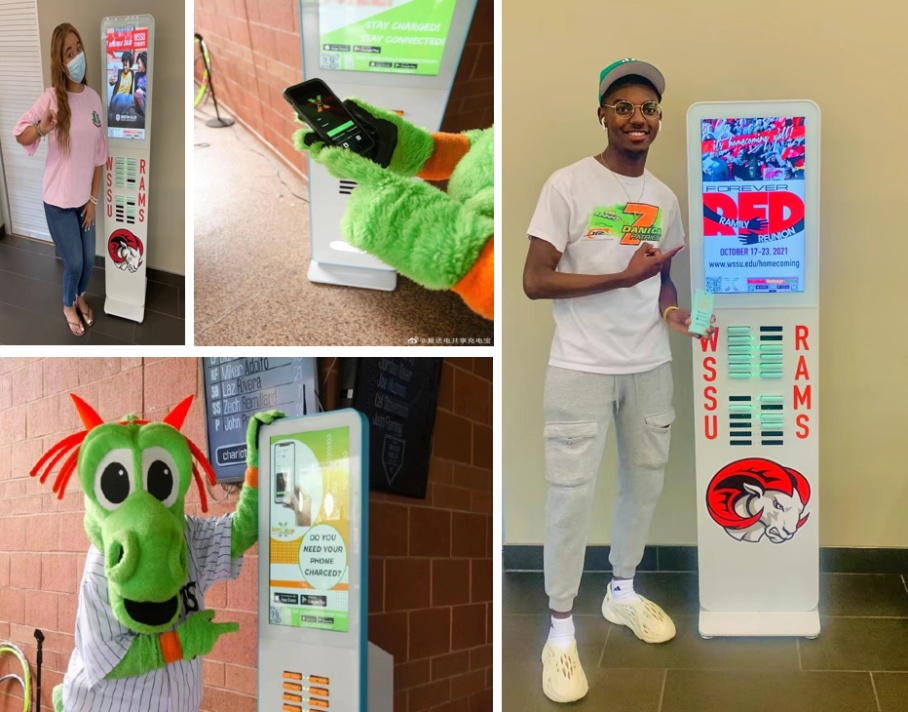
Kekuatan Litapower, a brand under Shenzhen Zhongdian Hexin Technology, provides one-stop solutions for global partners through its established OEM and private-label customization services. These solutions include shared power bank software, hardware equipment, and operational support. Many local entrepreneurs and investors in the United States choose suppliers from Shenzhen, Cina, importing equipment through OEM private-label customization services and launching shared power bank businesses under their own local brands.
2. Profit Strategies for the US Shared Power Bank Market
Competition in the US shared power bank market is relatively mature. Investors are advised to avoid entering highly competitive central business districts in major cities such as New York and Los Angeles directly. Instead, they can initially explore mid-sized cities with established tourism demand and focus on specific high-potential scenarios.
Misalnya, Savannah, Georgia, offers opportunities worth investigating. Potential locations include restaurants, cafés, bars, and hotels around the Historic District, River Street, City Market, and Plant Riverside District. Priority should be given to partnerships with venues that can provide indoor installation space or privately managed premises, reducing the management difficulties associated with deploying equipment in public areas.

A market operating strategy should begin with building brand awareness for the shared power bank business in the United States. Promotional activities can include social media videos, collaborations with local influencers, music festivals, and commercial district events.
The profit model can combine rental income, membership programs, and advertising partnerships. By analyzing equipment usage rates, peak usage periods, and user consumption habits through the management backend, operators can continuously optimize equipment placement and pricing strategies.
Profit Models:
(1) Rental Revenue
Adopt hourly or time-based pricing and support credit cards, contactless payments, and mainstream digital wallets. During the initial launch, operators can offer first-time rental discounts or limited-time free trials to attract users. Pricing can then be adjusted dynamically according to local demand, venue traffic, and operating costs in different cities.
(2) Membership Programs
Introduce monthly memberships, discounts for consecutive rentals, loyalty point rewards, and co-branded promotions with local merchants. These initiatives can increase repeat rentals and help build a stable customer base.
(3) Advertising Revenue
Use station screens, rental pages, and online applications to display advertisements for local restaurants, hotels, entertainment events, and commercial brands, creating additional revenue streams beyond rental fees.
References
US Travel Association (2026)
2025 US Travel Industry Economic Impact Data
US Bureau of Economic Analysis (2026)
GDP: Fourth Quarter and Year 2025
DataReportal (2026)
Digital 2026: The United States of America
Federal Reserve (2025)