 Huur powerbank,Fabrikant van gedeelde powerbanks
Introduction: Why Syria Is an Emerging Restart Market Worth Watching for Shared Power Bank Expansion
Syria is going through a period of tourism recovery, reconnection with the international financial system, and gradual restoration of urban commercial activities. For shared power bank investors, the uniqueness of this market lies not only in the return of tourists but also in the long-standing shortage of electricity, which makes mobile device charging an ongoing daily necessity.
The answer is Syria. From January to November 2025, Syria received 867,743 Arab and foreign tourists, representing an increase of 80% year over year (Arab News, 2025). During the same period, total visitor arrivals, including Syrian expatriates, reached 3.56 million, up 18% year over year (official figures from the Syrian Ministry of Tourism, as reported by Arab News, 2025). Meanwhile, most areas received only 2–4 hours of electricity from the national grid per day (The New Arab, 2025). The recovery of tourism consumption, combined with everyday charging needs, creates a market combination worth watching.
This article focuses exclusively on Syria, examining shared power bank market opportunities and implementation strategies across four dimensions: three market advantages, SASMO and SY-TPRA compliance requirements, the cash and digital payment ecosystem, and urban deployment scenarios in Damascus and Aleppo.
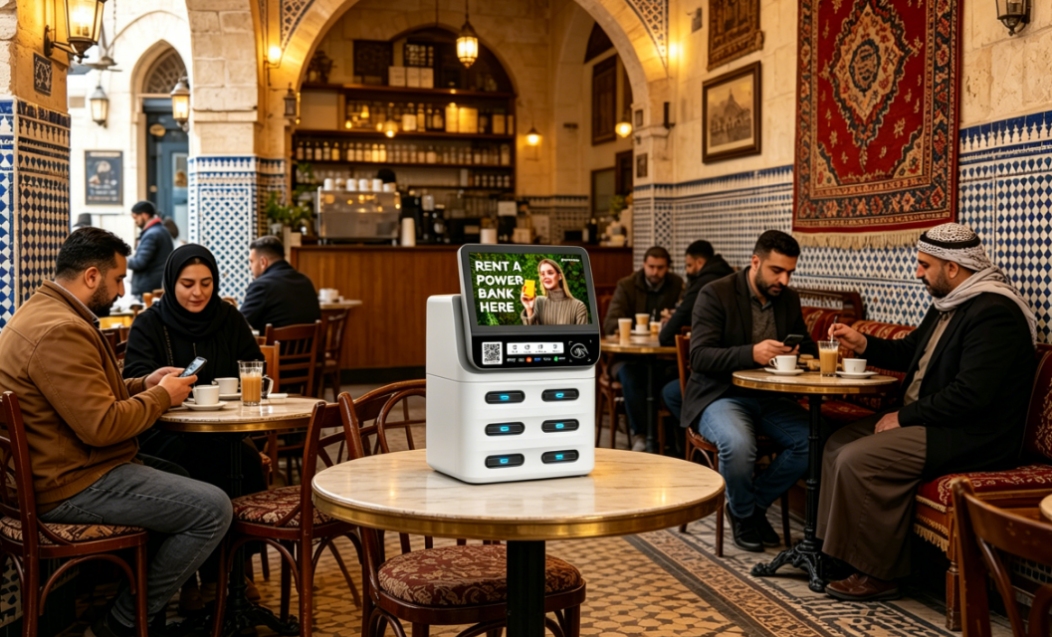
1. Syria Shared Power Bank Market: Three Key Advantages Worth Watching
Syria has three notable advantages for shared power bank market development:
Advantage 1 | Recovering Tourism and Growing International Visitor Numbers
From January to November 2025, Arab and foreign tourists visiting Syria reached 867,743, an increase of 80% year over year. Among them, non-Arab foreign visitors accounted for 376,726, up 79% (official figures from the Syrian Ministry of Tourism, Arab News, 2025).
Visitors are returning to tourist destinations such as Old Damascus and the Aleppo Citadel, creating new mobile charging demand at airports, Hotels, historical attractions, traditional markets, and restaurants.
Advantage 2 | Widespread Mobile Device Usage and a Young Population
Syria has a population of approximately 25.8 million, with 20.1 million mobile connections, equivalent to 77.7% of the population. The median age is 23.3 years (DataReportal, 2025).
Although internet penetration stands at only 35.8%, the number of mobile connections indicates that smartphones remain essential tools for residents to access information, communicate, and use everyday services. Shared power bank services can develop around frequent mobile phone usage scenarios without relying entirely on a mature online consumer ecosystem.
Advantage 3 | Charging Demand Driven by Insufficient Electricity Supply
Most areas receive only 2–4 hours of electricity from the national grid each day (The New Arab, 2025). Long-term electricity shortages mean residents and merchants need to rely on private generators and energy storage equipment to maintain everyday power supplies.
For restaurants, cafés, Hotels, and transportation hubs, mobile phone charging is not just a tourist requirement but also a practical need for local consumers.
2. Market Compliance: SASMO and SY-TPRA Are Key Entry Requirements
Importing shared power bank equipment into Syria requires particular attention to the SASMO Certificate of Conformity (CoC) and SY-TPRA wireless equipment type approval.
SASMO, the Syrian Arab Organization for Standardization and Metrology, oversees conformity requirements for electrical and electronic products included in its controlled product categories. The CoC is an important document for customs clearance of applicable products.
Charging stations containing Bluetooth, Wi-Fi, or cellular communication modules must also meet the relevant type approval requirements of the Syrian Telecommunications and Post Regulatory Authority (SY-TPRA).

2.1 Three Key Requirements for Equipment Entry into Syria
① Scope of Application
SASMO CoC requirements primarily apply to electrical and electronic products included in controlled product categories. Eligible shared power bank stations and related equipment must undergo pre-shipment conformity assessment according to their applicable product classifications.
VOR procedures involve importer valuation and verification of the country of origin.
② Wireless Equipment Type Approval
Equipment containing Bluetooth, Wi-Fi, or cellular communication modules needs to comply with SY-TPRA type approval requirements.
According to relevant compliance service providers, this certification generally accepts international CE/FCC test reports, takes approximately 4–6 weeks, and remains valid for three years (Nano Technology Solutions, 2024–2026).
③ Customs Clearance Documentation
The SASMO CoC is a batch-specific conformity document. When all required documentation is complete, issuance takes approximately 10 working days (SNBTEST, 2024).
For controlled products requiring this document, CE or FCC certificates issued for other markets cannot directly replace Syria’s customs clearance requirements.
2.2 Additional Compliance Information
(1) Wireless Communication Equipment Type Approval
SY-TPRA requires wireless equipment to obtain the relevant type approval before importation. Certificates are valid for three years, with a standard processing period of approximately 4–6 weeks (Nano Technology Solutions, 2024–2026).
Relevant equipment must also display its certification registration number as required.
(2) Conformity Assessment and Customs Clearance
Since 2010, SASMO has implemented pre-shipment conformity assessment for controlled products. CoCs are valid on a batch basis, and issuance takes approximately 10 working days when all documentation is complete (SNBTEST, 2024).
Importers must also complete VOR valuation and country-of-origin verification procedures. Missing applicable documents can directly affect customs clearance.
2.3 Zhongdian Hexin Compliance Certifications
All shared power bank stations and portable power banks under Zhongdian Hexin Litapower have obtained market access certifications including CCC, CE, FCC, and PSE.
The batteries comply with the IEC 62133 portable lithium battery safety standard. The products also come with CB (IECEE) mutual recognition test reports, meet RoHS hazardous substance restriction requirements, and are supplied with UN38.3 transportation test reports.
3. Payment Ecosystem: Cash Dominates While International Bank Cards and Digital Payments Gradually Recover
Syria remains a cash-dominated economy. Banking services have limited coverage, and depositors face restrictions on withdrawing their funds. Electronic payments are gradually recovering, but a mature and widely adopted cashless consumer environment has not yet been established.
Shared power bank projects need to consider cash collection, ShamCash, Paymera, and the gradually recovering international bank card payment system.
3.1 Three Characteristics of Syria’s Payment Ecosystem
① Cash Remains the Primary Payment Method
Banking penetration remains relatively low, and cash continues to play an important role in everyday consumer spending, tourism services, and offline commercial transactions.
For shared power bank operators, it is not practical to simply copy the business models of mature markets that rely heavily on credit cards or QR-code payments. Actual operations need to consider offline payment collection and alternative rental arrangements.
② National Digital Payment Platforms Are Gradually Developing
ShamCash is a government-promoted electronic wallet in Syria. The Ministry of Finance requires government institutions to distribute salaries through this platform.
Paymera, meanwhile, is the national electronic payment platform, connecting banks, payment service providers, and merchants.
These two platforms represent the development of government-backed electronic wallets and national payment infrastructure, respectively (Al-Monitor, 2025–2026).
③ International Bank Card Payments Are Resuming
On November 21, 2025, the Central Bank of Syria reconnected to SWIFT after a 14-year interruption (Global Finance Magazine, 2025).
In August 2026, Syria began processing its first international Mastercard payment. In September 2026, domestic Mastercard cards began being issued to eligible customers (Al-Jumhuriya, 2026).
This indicates that Syria is reconnecting with the international financial system. Echter, actual merchant acceptance of international bank cards remains at an early stage.
3.2 Litapower’s Payment Integration in Syria
For projects in Syria, Zhongdian Hexin Litapower has worked with local operators to complete payment onboarding and API integration testing for ShamCash and Paymera. Payment integration with the rental system’s mobile app has also been completed.
Customers independently select their payment service providers, and the contracting entity is the customer’s own company.
4. Key City and Deployment Scenarios for Shared Power Bank in Syria
Initial shared power bank projects in Syria can prioritize Damascus and Aleppo.
The two cities have different traffic patterns and user demographics. Damascus focuses on capital-city commerce, traditional markets, and international transportation hubs, while Aleppo offers opportunities through the reopening of historical attractions, the recovery of Old City commerce, and returning tourism traffic.
In 2025, Damascus and Aleppo airports handled more than 1.6 million passengers combined, with approximately 11,700 international flights, representing year-over-year growth of around 300% (Karam Shaar Advisory, 2025).
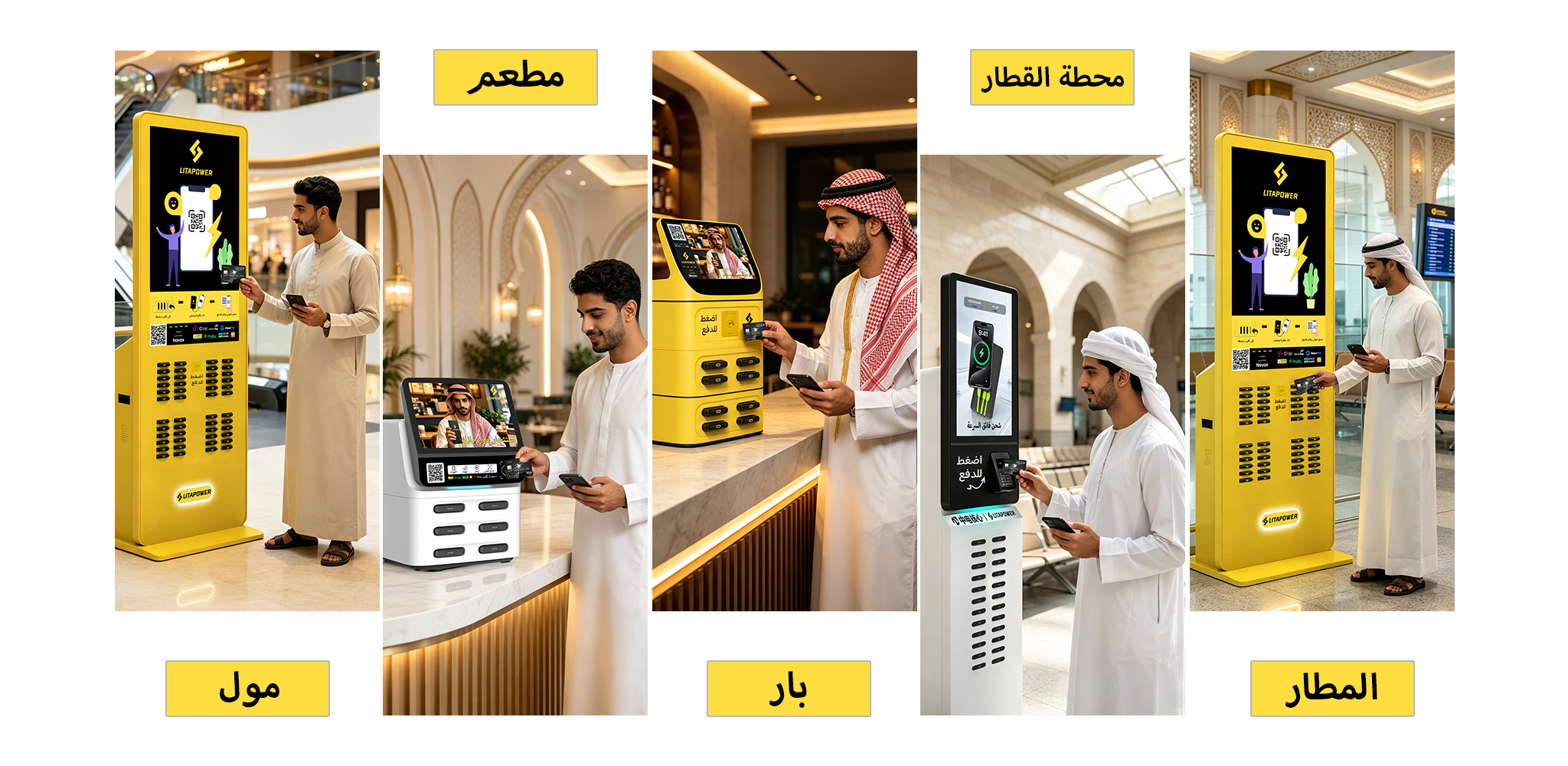
4.1 Damascus: Capital City Commerce and Old City Consumption Scenarios
Damascus is Syria’s capital and an important center for traditional commerce, Hotels, and international transportation.
In mid-2025, Damascus International Airport handled approximately 22–25 flights per day, with an average of 3,500–4,000 passengers daily (Syrian Guides, 2025).
The Old City’s traditional markets, heritage cafés, and airport create different types of mobile charging consumption scenarios.
(1) Traditional Markets + Nighttime Social Activities
Souq al-Hamidiyah
Souq al-Hamidiyah is one of the main commercial routes in Old Damascus, with daily operating hours of approximately 7:15 AM–9:00 PM (City Buddy, 2024–2026).
The market contains a concentration of shops selling spices, clothing, souvenirs, and other products. Local consumers and international tourists together generate consistent shopping traffic.
Visitors consume considerable phone battery power while walking, shopping, and taking photographs for extended periods. Shared power bank stations are suitable for commercial venues near market entrances, exits, and main walkways.
Al-Nawfara Café
Al-Nawfara Café, a traditional café near the Umayyad Mosque, operates approximately from 8:00 AM to 10:00 PM daily (Wanderlog, 2024–2026).
The café is located near a traditional tourist route in the Old City. Its evening Hakawati storytelling performances create a strong social atmosphere.
Customers typically stay for extended periods. Drinking tea, socializing, and using mobile phones create overlapping charging needs, making the café’s seating area and entrance suitable locations for shared power bank stations.
(2) Boutique Hotels + International Transportation Hubs
Al Shahbandar Palace Hotel Courtyard Café
The courtyard café at Al Shahbandar Palace Hotel is located on Al Qemaryeh Street in the Bab Touma Christian Quarter. It is part of a hotel and dining venue converted from a traditional Ottoman mansion (SalaamAlykum, 2024–2026).
Boutique hotels, courtyard cafés, and Old City neighborhoods are interconnected through tourism consumption. International visitors, hotel guests, and local consumers may all need to recharge their phones.
Hotel lobbies, courtyard café areas, and dining spaces are suitable locations for shared power bank rental stations.
Damascus International Airport
Damascus International Airport is an important international transportation hub for the capital. It handles approximately 3,500–4,000 passengers and operates around 22–25 flights daily (Syrian Guides, 2025).
During departures, arrivals, and transit, passengers need to use their phones continuously to manage transportation, accommodation, communications, and travel information.
This makes departure lounges, waiting areas, and passenger service facilities suitable locations for shared power bank deployment.
4.2 Aleppo: Tourism Reopening and Old City Commercial Recovery
Aleppo is Syria’s second-largest city and a traditional commercial and trading center. Its tourism market is gradually recovering as historical buildings are restored and commercial districts resume operations.
The Aleppo Citadel reopened to visitors on September 27, 2025. Following its reopening, it received up to 5,000 visitors per day on weekends (The National, 2025).
Historical attractions and traditional markets form Aleppo’s representative tourism and consumption routes.
(1) Historical Heritage Attractions + Religious Tourism Scenarios
Aleppo Citadel
The Aleppo Citadel is one of the city’s most important historical tourist attractions. It reopened in September 2025 following restoration work.
The citadel receives up to 5,000 visitors per day on weekends (The National, 2025). Visitors typically need to use their phones continuously while exploring, taking photographs, and visiting the historic site.
The attraction’s entrances, visitor service areas, and nearby commercial facilities are potential locations for shared power bank stations.
Great Umayyad Mosque of Aleppo
The Great Umayyad Mosque of Aleppo reopened on October 8, 2026, marking the reopening of an important historical building after 13 years of closure (Simsem, 2026).
Together with the Aleppo Citadel and surrounding Old City districts, the mosque forms part of the city’s historical tourism route.
Visitor services, Restaurants, and commercial venues around the attraction can provide shared power bank usage scenarios beyond the boundaries of a single tourist attraction.
(2) Traditional Markets + International Transportation Hubs
Souq al-Madina
Souq al-Madina is an important commercial district in Aleppo’s Old City. The traditional market contains approximately 15 kilometers of alleyways.
Through gradual restoration, the Aga Khan Trust for Culture has completed restoration work in eight sections, bedekking 277 shops, with some alleyways returning to commercial operations (SIMA Insights, 2025–2026).
Traditional businesses selling olive oil soap, spices, copperware, and other products are gradually returning. Equipment deployment can focus on the market’s main walkways, concentrated shopping areas, and dining locations.
Aleppo International Airport
Aleppo International Airport resumed civilian flight operations on March 18, 2025. Approximately 84% of its routes connect with Türkiye and Jordan (Karam Shaar Advisory, 2025).
As international flights resume, the airport is gradually regaining its role in serving returning expatriates, business travelers, and international visitors.
Airport waiting areas and passenger service facilities have clear mobile charging needs, making the airport a potential transportation hub deployment location for shared power bank projects.
4.3 Deployment and Operations
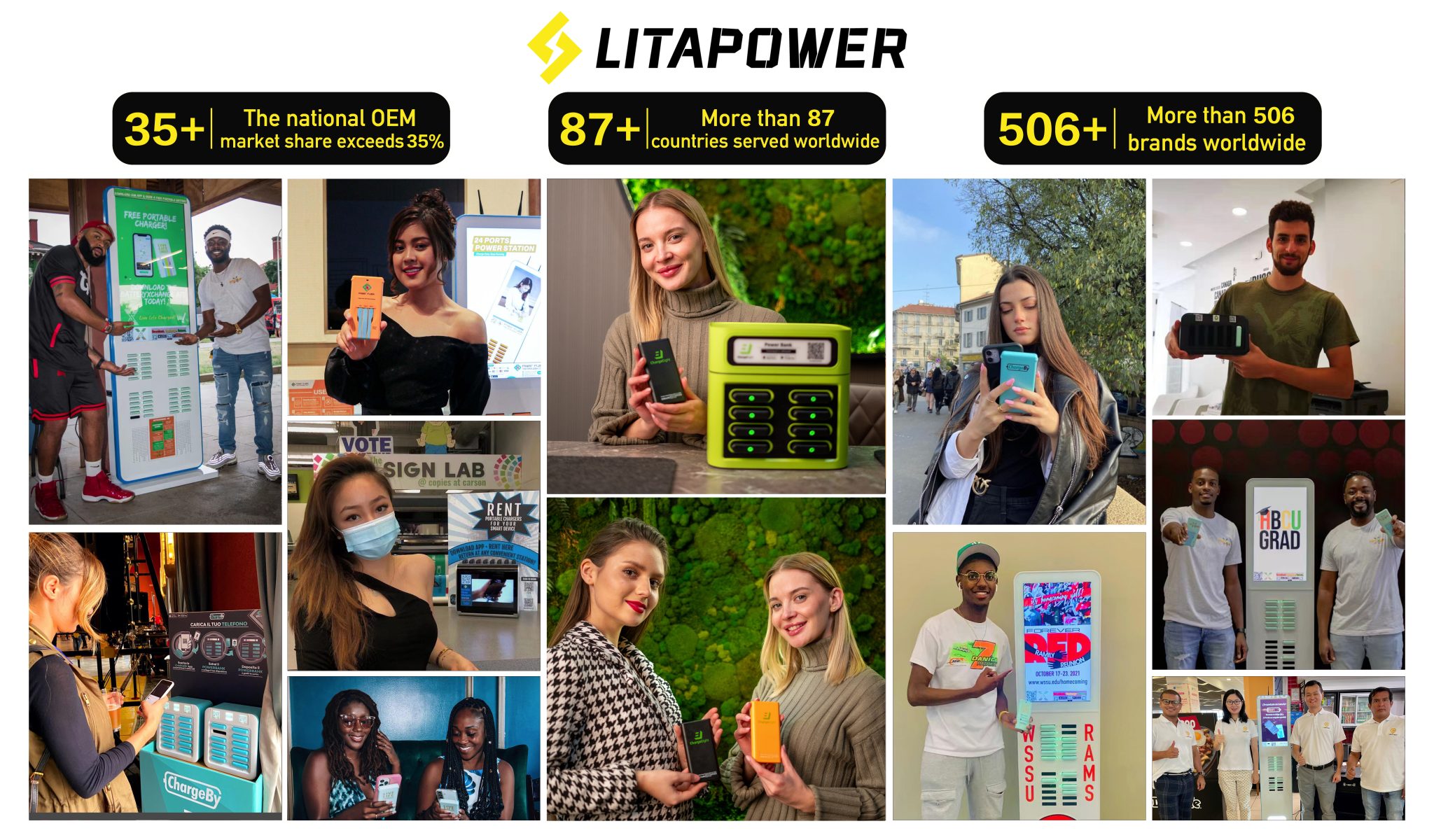
Zhongdian Hexin Litapower provides overseas brands with shared power bank software and hardware solutions, as well as OEM private-label customization services.
Based on its Middle Eastern shared power bank project experience, an initial Syria project can start in Damascus and Aleppo, deploying 8-slot charging stations around shopping venues and locations with strong nighttime foot traffic.
During operations, venue management, backend data analysis, and dynamic pricing can be combined to improve equipment utilization.
The estimated project payback period is approximately 4–8 months.
5. FAQ
Q1. How large is the shared power bank market in Syria?
Demand for shared power bank services in Syria mainly comes from tourism recovery, mobile device usage, and everyday charging needs.
From January to November 2025, Arab and foreign tourist arrivals reached 867,743, representing an increase of 80% year over year. Total visitors, including Syrian expatriates, reached 3.56 million, up 18% (official figures from the Syrian Ministry of Tourism, Arab News, 2025).
Additionally, Syria has a population of approximately 25.8 million, with 20.1 million mobile connections, equivalent to 77.7% of the population (DataReportal, 2025).
Most areas receive only 2–4 hours of electricity from the national grid per day (The New Arab, 2025). Tourism, commercial activities, and everyday charging needs among residents together create potential demand for shared power bank services.
Q2. What certifications or registrations are required to deploy shared power banks in Syria?
Importing shared power bank equipment into Syria requires particular attention to two types of market entry requirements.
The first is the Certificate of Conformity (CoC) issued under the requirements of the Syrian Arab Organization for Standardization and Metrology (SASMO). It applies to electrical and electronic products included in controlled product categories. When all required batch documentation is complete, certificates can generally be issued within approximately 10 working days (SNBTEST, 2024).
The second is wireless equipment type approval from the Syrian Telecommunications and Post Regulatory Authority (SY-TPRA).
Equipment containing Bluetooth, Wi-Fi, or cellular communication modules needs to meet the relevant requirements. The processing period is approximately 4–6 weeks, and certificates are valid for three years (Nano Technology Solutions, 2024–2026).
Q3. What payment methods can Syrian residents and tourists use to rent shared power banks?
Syria currently relies primarily on cash transactions, while its electronic payment system is gradually recovering.
Local digital payment services include the government-backed electronic wallet ShamCash and the national electronic payment platform Paymera.
Regarding international bank cards, Syria reconnected to SWIFT on November 21, 2025, and began processing its first international Mastercard payment in August 2026 (Al-Jumhuriya, 2026).
For shared power bank operators, cash collection, local digital payments, and international bank cards can serve as payment options at different stages of market development. Actual availability depends on merchant coverage and acceptance capabilities provided by local payment service providers.
Q4. How can investors build their own shared power bank brand in Syria?
Many local entrepreneurs and investors in Syria use China’s supply chain to establish their own OEM private-label brands. China’s SaaS systems are among the world’s leading solutions, allowing investors to import equipment, customize it with their local brand identity, and operate independently.
Zhongdian Hexin Litapower serves shared power bank customers in 162 countries and regions worldwide, with more than 800 partner brands.
Q5. How long does it take to recover an investment in a shared power bank project in Syria?
Based on Zhongdian Hexin Litapower’s shared power bank project experience in the Middle East, a project deploying 8-slot charging stations in Damascus and Aleppo has an estimated payback period of approximately 4–8 months.
The project primarily targets high-traffic locations such as traditional Old City markets, cafés, Toeristische attracties, Hotels, and airports. Venue management, equipment utilization optimization, and dynamic pricing can help improve operational efficiency.
References
1. Syria Population, Internet Penetration, and Mobile Connections (DataReportal, 2025)
https://www.datareportal.com/reports/digital-2026-syria
2. Growth in Arab and Foreign Tourist Arrivals in Syria, January–November 2025 (Arab News, 2025)
https://www.arabnews.com/node/2630946/business-economy
3. Syria SASMO Certificate of Conformity and CoC Requirements (SNBTEST, 2024)
https://snbtest.com/news/xw/187.html
4. Syria SY-TPRA Wireless Equipment Type Approval Requirements (Nano Technology Solutions, 2024–2026)
https://www.nanotechsol.com/syria-sytpra-type-approval
5. Syria’s International Financial System and SWIFT Reconnection (Global Finance Magazine, 2025)
https://gfmag.com/economics-policy-regulation/with-lifting-of-us-sanctions-syrian-banks-reconnect/
6. Syria’s Banking System, International Bank Cards, and Financial Payment Recovery (Al-Jumhuriya, 2026)
https://aljumhuriya.net/en/2026/11/16/who-owns-syrias-banks-now
7. Electronic Payments and Banking System Reconstruction in Syria (Al-Monitor, 2025–2026)
https://emailcampaign.al-monitor.com/t/t-i-wkdiikl-l-o