 Huur powerbank,Fabrikant van gedeelde powerbanks
Jordan has a well-established mobile internet infrastructure, a recovering tourism market, and an increasingly developed digital payment system. For investors planning to enter the Middle Eastern shared power bank market, Jordan offers both mobile charging demand driven by tourism and the infrastructure needed to support device rentals and online payments through local digital payment channels.
The answer is Jordan. According to data from Jordan’s Ministry of Tourism and Antiquities, the country received 7.04 million international visitors in 2025, generating approximately JOD 5.52 billion in tourism revenue (2025, Jordan’s Ministry of Tourism and Antiquities and related official data reports). Meanwhile, Jordan had 10.6 million internet users, with an internet penetration rate of 92.5% at the end of 2025 (DataReportal, 2025). The combination of tourism spending and widespread smartphone use provides a practical demand foundation for shared power bank services.
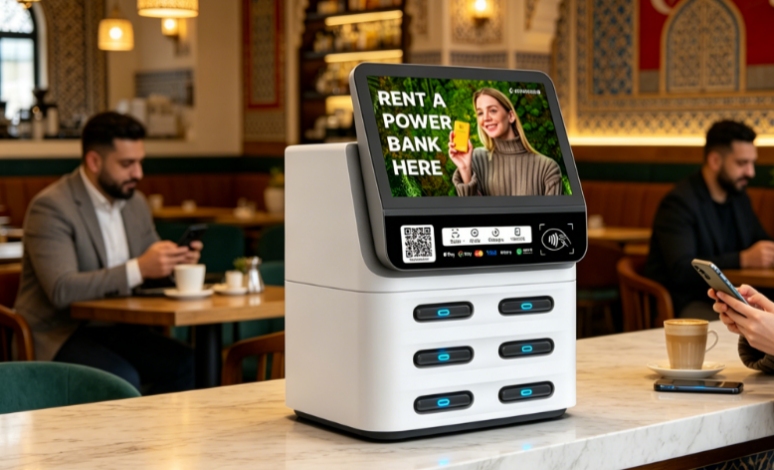
1. Jordan’s Shared Power Bank Market: Three Key Advantages
Jordan has three important advantages worth considering in the development of its shared power bank market.
Advantage 1 | A mature foundation for mobile internet and smartphone use — Jordan has a population of approximately 11.5 million, with 10.6 million internet users and an internet penetration rate of 92.5%. The country had 10.1 million mobile connections, equivalent to 87.7% of its total population (DataReportal, 2025). High internet penetration means consumers are generally equipped to scan QR codes, make online payments, and rent shared power banks through mobile applications. For shared power bank operators, this creates favorable digital conditions for user acquisition, QR-code rentals, and online order management.
Advantage 2 | Tourism recovery is driving demand for mobile charging — Jordan received 7.04 million international visitors in 2025, generating approximately JOD 5.52 billion in tourism revenue, representing year-on-year growth of 7.6% (data from Jordan’s Ministry of Tourism and Antiquities, 2025). Petra welcomed 582,550 visitors throughout the year, an increase of 27%, including 373,752 international visitors, up 45% (official PDTRA statistics reported by Petra News Agency, 2025). Tourist attractions, Hotels, Restaurants, and transportation hubs form continuous visitor routes. Activities such as mobile navigation, photography, social media sharing, and online ticket booking consume battery power, creating demand for shared power banks across multiple locations.
Advantage 3 | A relatively mature local digital payment system — According to the 2025 payment systems report published by Jordan Payments and Clearing Company (JoPACC), its payment systems processed 363.8 million transactions throughout the year, with a total value of JOD 93.26 billion. Among these, the CliQ instant payment system recorded 167.92 million transactions and reached 2.13 million users. Mobile wallet users totaled 2.81 million (JoPACC, 2025). This provides a foundation for shared power bank operators to establish digital collection systems using local instant payments and mobile wallets, reducing the operational management burden associated with cash rentals.
2. Market Compliance: JSMO and TRC Are Essential Requirements for Entering Jordan
Shared power bank equipment entering the Jordanian market is primarily subject to product conformity certification and wireless communication equipment type approval. The Jordan Standards and Metrology Organization (JSMO) is responsible for relevant product standards and conformity management. Electrical products imported into Jordan must obtain a Certificate of Conformity (CoC) where applicable.
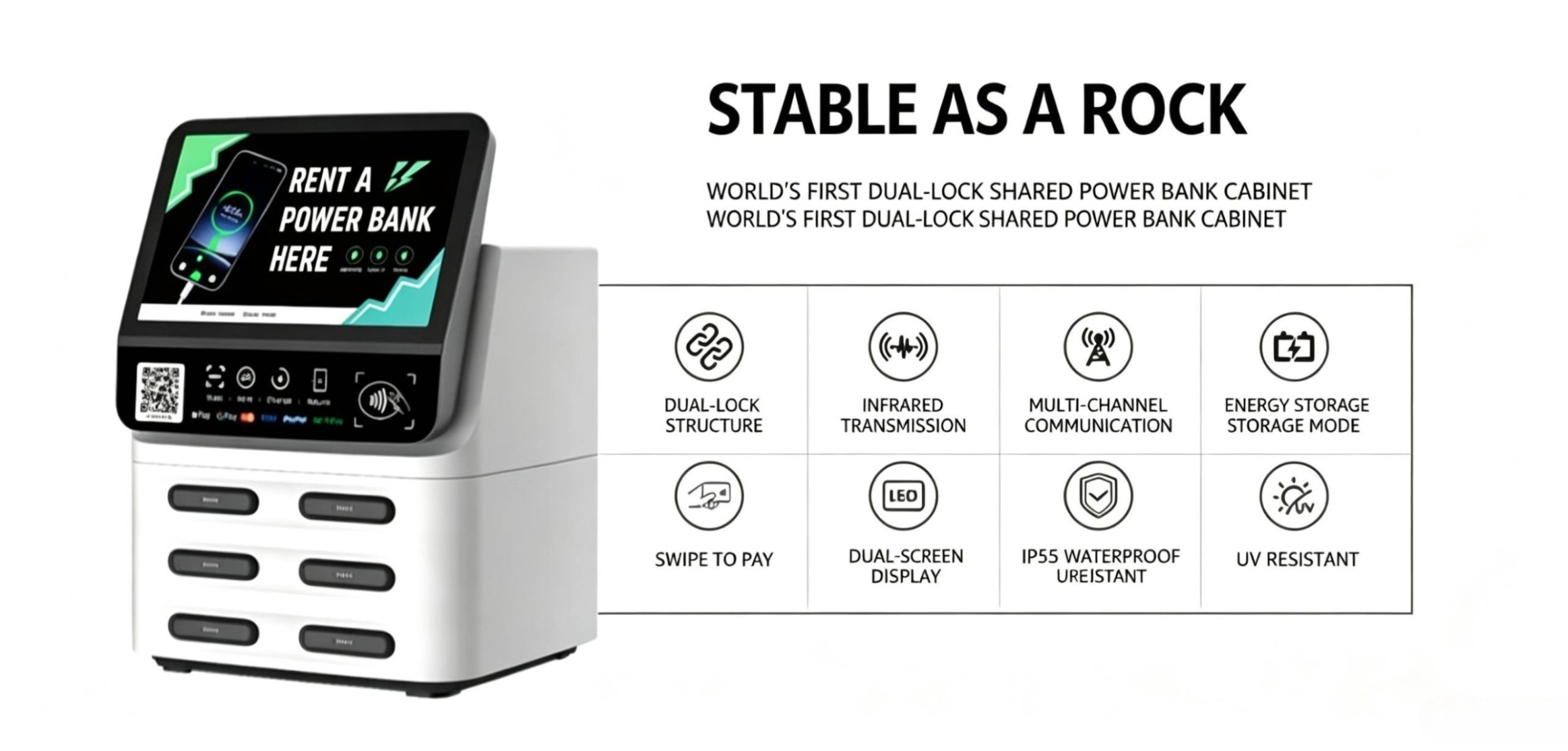
For shared power bank cabinets equipped with Bluetooth, Wi-Fi, or cellular communication modules, type approval from the Telecommunications Regulatory Commission (TRC) must also be considered. Products without the required conformity documents may be detained by customs or returned, while wireless equipment without the necessary approval cannot legally be sold in the Jordanian market.
2.1 Three Key Points About JSMO and TRC
① Scope of application — Power banks are lithium-battery electrical products and must be handled according to Jordan’s applicable electrical product conformity requirements. Import customs clearance may require a JSMO Certificate of Conformity (CoC). Shared power bank cabinets equipped with Bluetooth, Wi-Fi, or cellular communication modules are also subject to TRC wireless equipment type approval.
② Certification basis — Jordan’s Standards and Metrology Law No. 22 van 2000 provides the legal basis for relevant product conformity management. Since 2014, controlled products have been subject to testing and energy-efficiency labeling requirements. The specific requirements depend on the product category and the results of local regulatory assessment.
③ Customs clearance consequences — Products without an applicable CoC may be detained by customs or returned. Wireless devices without TRC type approval cannot be legally sold in Jordan.
2.2 Additional Considerations
Electronic waste and battery recycling — In early 2026, Jordan’s Ministry of Environment prohibited the import of used electrical equipment and used batteries for electric and hybrid vehicles. The country has established nine electronic waste collection points, eight licensed recycling plants, and 34 collection centers (information from Jordan’s Ministry of Environment, 2026).
2.3 Zhongdian Hexin’s Compliance Certifications
All shared power bank cabinets and power banks under Zhongdian Hexin Litapower have obtained market access certifications including CCC, CE, FCC, and PSE. The batteries comply with the IEC 62133 safety standard for portable lithium batteries. The products also hold CB (IECEE) mutual recognition test reports, comply with RoHS restrictions on hazardous substances, and are supplied with UN38.3 transportation test reports.
Jordanian projects involve two local requirements: JSMO Certificate of Conformity (CoC) and TRC type approval. For electrical safety compliance, the CB test report may serve as a basis for local certification conversion, subject to the final local review. Radio-frequency testing must still be conducted separately according to TRC requirements. Matters involving local importer and distributor registration are the responsibility of the customer’s local company or importing and distribution entity.
3. Payment Ecosystem: CliQ Instant Payments and Mobile Wallets Support Digital Collections
Jordan’s digital payment system is developing rapidly. Local instant payments and mobile wallets are important payment options for shared power bank operators to consider. For unattended shared power bank devices, payment methods must not only match the daily habits of local consumers but also provide convenient rental experiences for international visitors. CliQ, mobile wallets, and eFAWATEERcom form an important part of Jordan’s digital payment infrastructure.

3.1 Three Advantages of CliQ and Jordan’s Digital Payment System
① User base and transaction activity — JoPACC data shows that CliQ had 2.13 million users in 2025 and processed 167.92 million transactions throughout the year, with a transaction value of JOD 19.97 billion. The number of transactions doubled year on year (JoPACC, 2025). Instant payments have established a considerable user base, making them suitable for shared power banks, which involve small-value, high-frequency, and immediate transactions.
② Mobile payment coverage — Jordan had 2.81 million mobile wallet users (JoPACC, 2025). Mobile wallets allow consumers to pay for rentals directly through their phones, reducing dependence on cash and supporting online payment collection for shared power bank devices.
③ A mature public payment system — eFAWATEERcom processed 75.43 million transactions throughout the year, with a total value of JOD 15.99 billion and 685 billers connected to the platform (JoPACC, 2025). This demonstrates that local digital payment infrastructure already supports various everyday billing and payment scenarios, providing a solid foundation for consumers to adopt digital transactions.
3.2 Litapower’s Current Payment Integration in Jordan
For its Jordan projects, Zhongdian Hexin Litapower has worked with local operators to complete the launch and interface integration testing of CliQ and eFAWATEERcom payment collection services. Payment integration on the rental system’s app has also been completed. Customers can independently select their preferred payment service providers, and the contracts are signed under their own companies.
Through software system integration and payment interface connectivity, rental orders, payment results, and device operation data can be managed through a unified business process. Customers retain the right to choose their own payment service providers, and the relevant service agreements are signed by their own local companies.
4. Key City and Location Opportunities in Jordan
The shared power bank market in Jordan can be developed through two distinct operating routes centered on Amman and Aqaba. Amman offers opportunities driven by capital-city commercial consumption, café culture, and international airport traffic. Aqaba, on the other hand, benefits from Red Sea tourism, beach activities, and waterfront commercial locations. These two cities represent different demand profiles—business and urban consumption in Amman, and leisure and tourism in Aqaba—allowing operators to build a diversified portfolio of locations.
4.1 Amman: Consistent Rental Demand from Commercial Areas and Café Culture
Amman is Jordan’s capital and a major commercial center, with well-established shopping, dining, and café scenes. According to data released by Airport International Group (AIG), Queen Alia International Airport (QAIA) handled 9,789,900 passengers in 2025, an increase of 11.27% year on year (AIG announcement reported by Petra News Agency, 2025). International visitors and local residents together contribute to Amman’s consumer traffic, making commercial streets, Winkelcentra, and transportation hubs suitable starting points for deployment.
(1) Abdali Boulevard + Rainbow Street
Abdali Boulevard is located in the Abdali district, one of Amman’s representative upscale commercial areas. The surrounding district brings together shopping, Restaurants, and cafés. Business hours are approximately 10:00–24:00, with commercial and dining activities continuing into the evening. Consumers may need temporary charging services while walking, shopping, and dining.
Rainbow Street is located in Jabal Amman and is one of the city’s best-known café and creative cultural districts. Tourists and younger consumers visit the area for dining, social activities, and evening leisure. Opening hours vary by establishment, but the overall business period is approximately 10:00–22:00.
(2) Mecca Mall / City Mall + Queen Alia International Airport
The Sweifieh commercial district, where Mecca Mall and City Mall are located, is an important retail and dining area in Amman. Mecca Mall’s opening hours are approximately 10:00–23:00. Its concentration of shopping, dining, and leisure businesses gives consumers relatively long indoor stays.
Queen Alia International Airport (QAIA) is Jordan’s most important international aviation gateway. It handled 9,789,900 passengers in 2025. As a transportation hub operating around the clock, the airport serves departing passengers who need their phones for check-in, flight information, navigation, and contacting pickup services. Arriving passengers also rely on their phones to check transportation and hotel information.
4.2 Aqaba: Tourism Demand Driven by Red Sea Resorts and Waterfront Commercial Areas
Aqaba is an important Red Sea tourism destination in Jordan and the location of the Aqaba Special Economic Zone Authority (ASEZA). According to relevant local data, Aqaba receives approximately 850,000 overnight visitors and around 2 million visitors entering through its various border crossings each year. The city has 101 hotels and 6,560 guest rooms (ASEZA-related information reported by Jordan News, 2025). Tourism accommodation, beach activities, and waterfront consumption together form the city’s main visitor traffic scenarios.
(1) South Beach + Aqaba Marine Park
South Beach and the Aqaba Marine Park coastline are important beach and diving tourism areas in Aqaba. The area has 37 licensed diving centers (ASEZA-related information reported by Jordan News, 2025). Diving, beach recreation, and marine sightseeing encourage visitors to spend extended periods outdoors.
Visitors need their phones throughout beach activities, diving experiences, photography, and navigation. Shared power bank operators can consider deploying devices around diving centers, visitor service areas, and commercial locations near the beaches, allowing tourists to rent power banks during breaks between activities.
(2) Ayla Oasis + Marina Plaza Waterfront Marina Area
Ayla Oasis and Marina Plaza form one of Aqaba’s representative waterfront commercial areas, combining leisure, dining, accommodation, and retail activities to create a concentrated visitor destination. As a large-scale integrated development, Ayla can serve a variety of consumer groups.
The waterfront commercial environment around Marina Plaza is suitable for shared power bank deployment, particularly in dining, leisure, and visitor gathering areas. During waterfront walks, meals, and evening activities, visitors often need their phones for photography, navigation, social media sharing, and online purchases.
4.3 Deployment and Operations
Slovakia Shared Power Bank OEM Solutions | European Shared Power Bank Software and Hardware Deployment Solutions
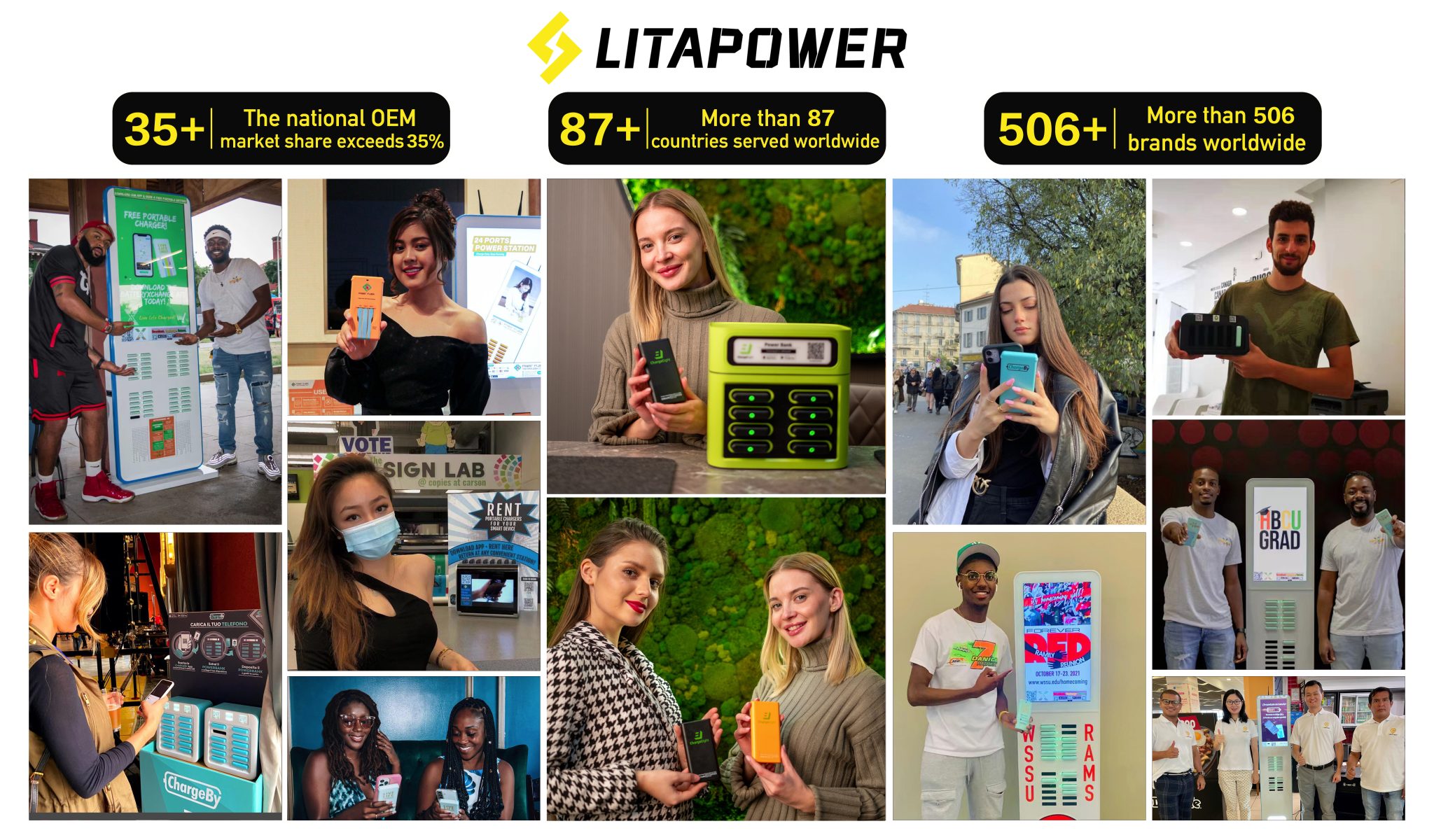
Zhongdian Hexin Litapower provides overseas brands with shared power bank software, hardware solutions, and OEM private-label customization services. Based on its experience with shared power bank projects in the Middle East, the initial Jordan deployment can begin in Amman and Aqaba, using 8-slot cabinets at locations with evening traffic and shopping mall footfall. By combining venue management, backend data analysis, and dynamic pricing, operators can improve device utilization and location revenue. The estimated project payback period is approximately 4–8 months.
FAQ
Q1. How large is the shared power bank market in Jordan?
The development potential of Jordan’s shared power bank market is primarily supported by tourism traffic, mobile internet access, and digital consumption. According to DataReportal and Jordanian tourism data, the country received 7.04 million international visitors in 2025, generating approximately JOD 5.52 billion in tourism revenue. Petra also welcomed 582,550 visitors in 2025, an increase of 27% (official PDTRA statistics, 2025). These figures indicate that Jordan has a solid user and location foundation for tourism-oriented and commercial shared power bank services.
Q2. What certifications or registrations are required to deploy shared power banks in Jordan?
Importing shared power banks into Jordan requires particular attention to the JSMO Certificate of Conformity (CoC) and TRC wireless equipment type approval. JSMO manages product conformity under Standards and Metrology Law No. 22 van 2000. Imported electrical products must meet applicable customs clearance certification requirements. Cabinets equipped with Bluetooth, Wi-Fi, or cellular communication modules must also obtain type approval according to TRC requirements.
Q3. What payment methods do local residents and tourists use to rent shared power banks in Jordan?
Shared power bank operators in Jordan can prioritize digital payment methods such as CliQ instant payments, mobile wallets, and eFAWATEERcom. According to JoPACC’s 2025 payment systems report, CliQ had 2.13 million users and processed 167.92 million transactions throughout the year. Mobile wallet users reached 2.81 million, while eFAWATEERcom processed 75.43 million transactions.
Q4. How can investors build their own shared power bank brand in Jordan?
Many local entrepreneurs and investors in Jordan use China’s supply chain to develop OEM private-label products, leveraging Chinese SaaS systems and importing equipment under their own local brands. Zhongdian Hexin Litapower has deployed shared power bank projects in multiple overseas markets, including Southeast Asia, the Middle East, and Europe. Its customers span 162 countries and regions worldwide, with more than 800 partner brands.
Q5. How long does it take to recover the investment in a shared power bank project in Jordan?
Based on Zhongdian Hexin Litapower’s experience with shared power bank projects in the Middle East, a Jordan project can start with 8-slot cabinets deployed in Amman and Aqaba, targeting shopping areas, cafés, Luchthavens, and tourist locations. The estimated project payback period is approximately 4–8 months.
References
Jordan population, internet users, and mobile connections (DataReportal, 2025)
https://datareportal.com/reports/digital-2026-jordan
Jordan’s 2025 international visitor arrivals and tourism revenue (Jordan’s Ministry of Tourism and Antiquities, 2025)
https://mota.gov.jo/En/NewsDetails/Tourism_Ministry_Celebrates_His_Majestys_64th_Birthday
Petra visitor statistics for 2025 (PDTRA, 2025)
https://petra.gov.jo/index.php/en/news/petra-visitors-rise-27-in-2025-foreign-arrivals-up-45-pdtra
Jordan’s 2025 payment system transaction and user data (JoPACC, 2025)
https://www.jopacc.com/node/647
Jordan JSMO product conformity certification requirements (TÜV NORD, 2026)
http://www.tuv-nod.com/other-coc/63.html
Ayla Oasis waterfront commercial destination in Aqaba (TourTravelWorld, 2026)
https://www.tourtravelworld.com/jordan/aqaba/ayla-aqaba.htm