 Huur powerbank,Fabrikant van gedeelde powerbanks
The Philippines shared power bank market is entering a new phase of development. The rapid adoption of digital payments, growing tourism consumption, and continued commercial activity are creating demand for mobile charging services. How can Chinese brands enter the Philippines and establish a local operating system? With a large population, a broad internet user base, active tourism consumption, and an expanding digital payment ecosystem, the Philippines offers several favorable conditions for shared power bank businesses.
- A broad digital user base: The Philippines has a population of approximately 117 million, with 98 million internet users and an internet penetration rate of 83.8% (DataReportal, Digital 2026: The Philippines, October 2025).
- Rapid payment development: Digital payments accounted for 64.7% of retail transactions in 2025, while QR Ph recorded 2.47 billion transactions throughout the year (Bangko Sentral ng Pilipinas, BSP, 2025).
- Growing tourism and transportation demand: The Philippines received 6.484 million inbound visitors in 2025, generating approximately ₱694 billion in inbound visitor spending (Philippine Bureau of Immigration and Department of Tourism, DOT, 2025).
This article examines the market data, NTC equipment certification, payment and power compatibility, key city locations, and overseas market solutions from Zhongdian Hexin Litapower to explain how to launch a Philippines shared power bank project.
1. Philippines Shared Power Bank Market: Four Key Figures
The Philippines has a large population, relatively high internet penetration, and growing demand for digital payments. For shared power bank operators, these conditions mean that users can rent, pay for, and return power banks through their mobile phones, providing a foundation for equipment deployment in commercial locations.
1.1 Population and Internet User Base
The Philippines has a population of approximately 117 million, around 98 million internet users, and an internet penetration rate of 83.8%. The country also has approximately 137 million mobile connections, equivalent to 117% of its population (DataReportal, Digital 2026: The Philippines, October 2025).
The high number of mobile connections indicates that smartphones have become essential tools in everyday life. Social networking, online entertainment, mobile payments, ride-hailing services, and online shopping all require users to keep their phones charged. Shared power banks can provide convenient, on-demand charging services in these high-frequency mobile usage scenarios.
1.2 Tourism Consumption and Inbound Visitors
The Philippines received 6.484 million inbound visitors in 2025, including 5.941 million foreign tourists and 543,000 overseas Filipinos. Inbound visitor spending reached approximately ₱694 billion (Philippine Bureau of Immigration and Department of Tourism, DOT, 2025).
Although the total number of inbound visitors fell short of the government’s target of 8.4 million, tourism spending still demonstrates the commercial value of hotels, Restaurants, shopping centers, Vervoersknooppunten, and tourist attractions. For shared power bank operators, demand comes not only from international tourists but also from local residents, business travelers, and overseas Filipinos returning home.
1.3 Digital Economy and Consumer Spending Power
The Philippines’ GDP reached approximately USD 487.1 billion in 2025, with GDP per capita at around USD 4,171 (World Bank Open Data, 2025).
This provides a broad consumer market for shared power bank businesses. Echter, project site selection should not be based solely on population size. Operators should also evaluate shopping mall traffic, customer dwell time, smartphone usage frequency, and local users’ willingness and ability to pay for rentals when assessing individual locations.
1.4 Development Stage of the Shared Power Bank Market
The Philippines shared power bank market is at a development stage with considerable room for expansion. Metro Manila has a strong commercial consumption base, while Cebu and other tourism and regional business centers also have demand for mobile charging services. As e-wallets and QR code payments become increasingly integrated into everyday transactions, shared power banks can enter shopping malls, Restaurants, Vervoersknooppunten, and tourist locations more naturally.
Market opportunities are not limited to Metro Manila. Building differentiated location networks across Cebu, Davao, Clark, and Iloilo can help operators establish local commercial partnerships early and develop regional brand recognition.
2. Philippines Shared Power Bank Equipment Compliance and Certification Requirements
Equipment certification is an essential consideration before launching a shared power bank project in the Philippines. Shared power bank stations typically contain wireless communication, network connectivity, charging control, and power supply modules. Daarom, import preparation should go beyond the requirements for ordinary electrical products.

2.1 NTC Regulatory Authority and Certification Types
The National Telecommunications Commission (NTC) of the Philippines is responsible for managing the certification of relevant telecommunications equipment. Depending on the communication functions and product structure, the following certification categories may be relevant:
- Type Approval: Applicable to wired terminal equipment connected to public networks.
- Type Acceptance: Applicable to wireless equipment such as Wi-Fi and Bluetooth devices.
- GEC: Applicable to composite equipment that meets the relevant requirements.
If a shared power bank station is equipped with Wi-Fi, Bluetooth, or cellular communication modules, its applicable certification category must be determined according to the actual product structure and wireless functions. The equipment model, communication modules, and technical documentation should be confirmed before submitting an application.
2.2 Certification Timeline and Costs
According to the Philippines NTC certification procedures published by certification service providers, the standard processing period is approximately four to six weeks. Applicants may also need to provide information about a local representative in the Philippines. Fees vary depending on equipment type, wireless modules, testing requirements, and the scope of certification services. Actual project costs should be confirmed through quotations from the relevant certification body.
Existing FCC and CE test reports can serve as supporting technical documents and testing references, but they cannot directly replace Philippine NTC certification. Companies should prepare product specifications, circuit documentation, wireless module information, test reports, and application documents in advance to reduce delays caused by additional document requests.
3. Philippines Shared Power Bank Payments and Localization Requirements
Payment convenience directly affects whether users are willing to rent a shared power bank. Digital payments are developing rapidly in the Philippines. Operators should design QR code, e-wallet, and bank card payment options according to local consumer habits and confirm payment providers’ API availability before deployment.
3.1 QR Ph and E-Wallets as Important Payment Options
In 2025, digital payments accounted for 64.7% of retail transactions in the Philippines, up from 57.4% previously. QR Ph recorded 2.47 billion transactions during the year, with a total transaction value of approximately ₱1.16 trillion. For the first time, its transaction volume exceeded the combined transaction volume of credit and debit cards (Bangko Sentral ng Pilipinas, BSP, 2025).
Major local e-wallets include:
- GCash: With approximately 94 million registered users, GCash is one of the key e-wallets worth considering for shared power bank projects.
- Maya: With more than 50 million users, Maya is another major local payment option for operators to evaluate.
- QR Ph: The Philippines’ domestic QR payment system has a broad merchant acceptance network. Shared power bank projects can plan QR payment integration based on the interfaces and merchant qualification requirements provided by payment service providers.
(Source: Bangko Sentral ng Pilipinas, BSP, 2025.)
For international visitors, Visum, Mastercard, and supported mobile wallets are also important payment options. Operators can configure an appropriate payment combination based on their target users, payment service providers, and venue requirements.
It is important to note that a large e-wallet user base does not mean every shared power bank station can connect to these services directly. Before deployment, operators must confirm the operating entity requirements, merchant accounts, payment interfaces, settlement methods, and approval procedures.
3.2 Philippine Plug Types and Power Supply Standards
Common plug types in the Philippines include Type A, Type B, and Type C. The standard power supply is 220V at 60Hz (power-plugs-sockets.com / handypowercord, long-term reference).
Before introducing shared power bank stations into the local market, operators should confirm that the power adapter and complete equipment power supply support the local voltage and 60Hz frequency. Plug compatibility, power cable configuration, grounding requirements, and long-term operating stability should also be checked according to the installation environment.
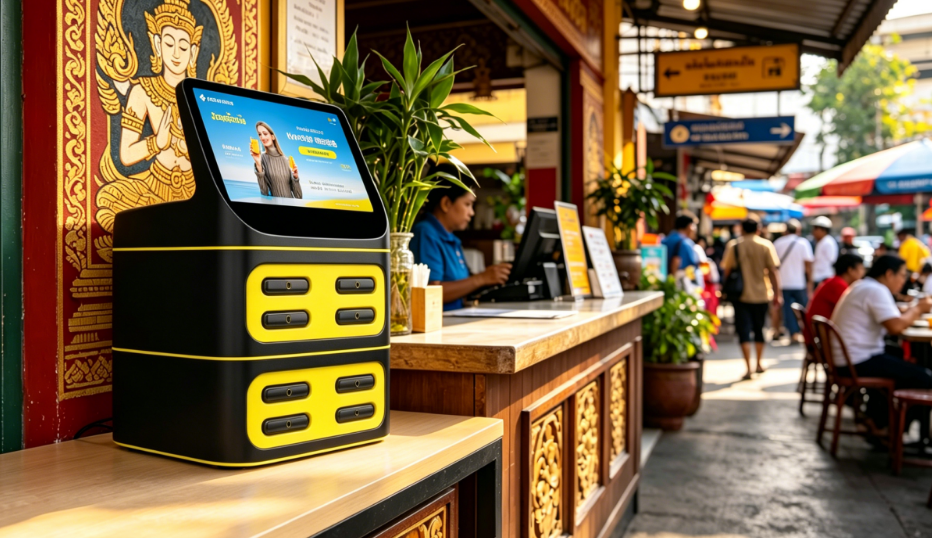
For commercial equipment, additional factors such as high temperatures, humidity, frequent plugging and unplugging, and accidental impact should be considered. Zhongdian Hexin shared power bank equipment uses a dual-card-lock design with a two-to-one structure, helping improve power bank retention and reduce the risk of devices falling out or being stolen. The equipment also emphasizes heat resistance and water resistance to support deployment in different commercial environments.
4. Key Cities and Location Strategies for Shared Power Banks in the Philippines
A Philippines shared power bank project should not focus exclusively on Metro Manila. Selecting regional tourism centers, commercial cities, and emerging transportation gateways can reduce dependence on a single city while helping operators gradually establish local channels and brand networks.

4.1 Cebu and Davao: Tourism Consumption and Regional Commercial Markets
Cebu is an important tourism and commercial gateway in the central Philippines. It offers diverse consumption scenarios, including hotels, Winkelcentra, Restaurants, and BPO office parks. With abundant tourism resources and expanding international transportation connections, Cebu is suitable for deploying shared power banks in commercial areas where visitors spend considerable time and frequently use their phones.
Potential locations include major shopping malls in Cebu, hotel lobbies, airports and transportation hubs, restaurant districts, coastal tourism areas, and BPO office parks. Locations with concentrated tourist traffic and longer customer dwell times are particularly suitable for self-service rental stations.
Davao is an important city in the southern Philippines, with active agricultural trade, commercial activities, and exhibition events. Compared with established tourism centers, Davao can serve as a regional entry point for operators expanding into the southern market. Operators can build equipment networks around local shopping malls, dining and entertainment venues, and transportation locations.
Potential locations include large shopping centers, Hotels, exhibition venues, restaurant districts, Vervoersknooppunten, and areas near universities. Operators can first establish partnerships with local venues and then gradually expand equipment coverage based on actual rental performance.
4.2 Clark and Iloilo: Emerging Transportation Gateways and Regional Consumption Centers
Clark, located in northern Philippines, offers diverse commercial resources, including economic zones, office parks, and resort tourism facilities. The expansion of international flight routes creates potential demand for shared power banks among business travelers and tourists.
Potential locations include areas around Clark International Airport, office parks in economic zones, Winkelcentra, Hotels, resorts, and restaurant districts. In areas serving both office workers and tourists, equipment placement can be planned according to customer dwell time and foot traffic.
Iloilo is a commercial and educational center in the Western Visayas region. Its urban commercial sector continues to develop, with universities, Winkelcentra, Restaurants, and regional transportation facilities concentrated in the city. Operators can enter the market through younger consumers and everyday local consumption scenarios, gradually building shared power bank usage habits.
Potential locations include shopping malls, areas around university campuses, Hotels, restaurant districts, Vervoersknooppunten, and commercial event venues. Operators should prioritize locations with frequent smartphone usage and longer customer dwell times, then determine equipment placement according to venue partnership conditions.
At the national level, Ninoy Aquino International Airport (NAIA) handled 52.02 million passengers in 2025, ranking fifth among Southeast Asia’s busiest airports (Seasia Stats, citing ACI data, 2025). Bovendien, the Philippines launched 19 new international direct flight routes in 2025, involving destinations such as Manila, Cebu, Clark, Iloilo, and Kalibo (Philippine Department of Tourism, DOT, 2025). These developments indicate that operators can adopt a multi-hub deployment strategy, building a complementary network across regional transportation gateways and commercial centers.
5. Zhongdian Hexin’s Philippines Shared Power Bank Solutions: Hardware and Software Customization
Launching a shared power bank project in the Philippines requires solutions for equipment supply, software systems, payment integration, compliance certification, and local operations. Simply purchasing charging stations is not enough to establish a complete shared power bank business. Operators also need to build a local brand, secure venue partnerships, and develop ongoing maintenance capabilities.

Litapower, the overseas brand of Zhongdian Hexin’s shared power bank manufacturing business, has served eight Southeast Asian countries and deployed more than 4,800 terminal devices. With capabilities in hardware R&D, software systems, and OEM/ODM customization, Litapower can provide comprehensive support for Philippine projects, covering both equipment and operating systems.
5.1 Choose an OEM/ODM Manufacturer with Hardware and Software Delivery Capabilities
Philippine projects should prioritize shared power bank manufacturers with production capabilities, technical teams, and experience delivering overseas projects. Zhongdian Hexin can provide shared power bank stations, Powerbanks, rental management software, operation management systems, and OEM/ODM private-label customization services, helping partners establish their own brands and independent operating systems.
For payment integration, Litapower can plan solutions involving GCash, Maya, QR Ph, and other payment methods according to the Philippine project entity, the interface conditions of local payment service providers, and merchant approval requirements. If a customer already has its own software system, API interfaces and technical integration support can also be provided according to actual project needs.
For compliance, the manufacturer can assist in preparing equipment specifications, wireless module information, and existing test reports, while coordinating with local representatives or certification service providers on relevant NTC certification procedures. International certification documents can support the application, but the project must still complete the applicable procedures under Philippine requirements.
A successful project also needs a comprehensive five-chain support system:
- Supply Chain: Ensures equipment production, component supply, bulk delivery, and subsequent replenishment.
- Operations Chain: Supports independent brand operations, venue partnerships, rental rule configuration, and backend revenue management.
- Compliance Chain: Assists with NTC certification documentation and planning for local payment and merchant entity requirements.
- Service Chain: Provides software training, equipment maintenance, remote technical support, and system upgrades.
- Funding Chain: Helps develop a project financial plan covering equipment investment, venue revenue sharing, payment processing fees, and operating costs.
5.2 Equipment Deployment: Start with Pilot Projects in Key Locations
Before deploying equipment, operators should confirm the local operating entity, payment accounts, venue partnerships, and certification progress. Having a local company or a stable local operating team can help with merchant agreements, payment settlements, equipment imports, venue maintenance, and daily operations.
Venue expansion can be carried out through partnerships with local channel providers, commercial property owners, hotel groups, restaurant brands, and entertainment venues. Revenue-sharing arrangements can be negotiated according to the resources, customer traffic, and operational responsibilities provided by each venue. Operators can also deploy equipment directly through locations they already control.
It is advisable to begin with small-scale pilot deployments in representative shopping malls, Hotels, Vervoersknooppunten, and dining and entertainment venues. Operators should monitor rental frequency, equipment turnover, payment success rates, and venue partnership costs before expanding the number of devices and locations based on actual operating performance.
5.3 Management and Operations: Build a Long-Term Profit Model
The key to operating a shared power bank business is not simply the number of devices deployed, but whether each device can continuously generate effective orders. Operators should use the management backend to monitor device connectivity, power bank inventory, rental orders, payment records, and location performance.
Daily operations can focus on the following areas:
- Adjust rental prices and billing rules dynamically: Develop pricing strategies based on local spending levels, venue characteristics, and competition.
- Promote the local brand: Use social media, short-form videos, influencer partnerships, and commercial events to increase brand awareness.
- Analyze location performance monthly: Review revenue, equipment utilization, venue revenue sharing, payment processing fees, and maintenance costs, and make timely adjustments to underperforming locations.
- Select suitable network configurations: Choose communication modules according to local network conditions and prioritize equipment supporting 4G to ensure reliable remote management and order synchronization.
Through hardware, software, and technical support, Zhongdian Hexin Litapower helps partners establish independent brand operating systems. For the Philippines market, a strategy of piloting first, reviewing performance, and then expanding can help control initial investment and improve long-term operating efficiency.
FAQ: Frequently Asked Questions About Shared Power Bank Projects in the Philippines
Q1: How large is the shared power bank market in the Philippines?
The Philippines shared power bank market has a favorable user base and payment environment. The country has a population of approximately 117 million, around 98 million internet users, and an internet penetration rate of 83.8% (DataReportal, October 2025). In 2025, digital payments accounted for 64.7% of retail transactions (Bangko Sentral ng Pilipinas, BSP, 2025). Projects can focus on commercial and tourism areas in Manila, Cebu, Davao, Clark, and Iloilo, using pilot deployments to validate local demand.
Q2: What certifications are required to deploy shared power banks in the Philippines?
Shared power bank equipment must be evaluated according to its communication functions to determine the applicable Philippine NTC certification category, including Type Approval, Type Acceptance, or GEC. Equipment with Wi-Fi, Bluetooth, or other wireless functions should be assessed particularly carefully for Type Acceptance and other applicable requirements. Information about a local representative in the Philippines may also be required. The certification process typically takes around four to six weeks, according to Philippine NTC certification service providers (2025).
Applications for equipment supporting only 2G/3G networks have no longer been accepted since August 28, 2025. The Philippines plans to shut down its 2G/3G networks nationwide by December 31, 2026 (Philippine NTC, 2025–2026). Daarom, operators should prioritize equipment with 4G communication capabilities.
Q3: Which payment methods are commonly used by tourists and local residents in the Philippines?
Digital payments accounted for 64.7% of retail transactions in the Philippines, while QR Ph recorded 2.47 billion transactions with a total value of approximately ₱1.16 trillion in 2025 (Bangko Sentral ng Pilipinas, BSP, 2025). Local projects can prioritize evaluating GCash, Maya, and QR Ph, while also configuring Visa, Mastercard, and mobile wallet payments for international visitors. Actual integration depends on payment provider interfaces, merchant accounts, and project entity approval requirements.
Q4: How long does it take for a shared power bank project in the Philippines to recover its investment?
Based on Zhongdian Hexin Litapower’s experience managing shared power bank projects in Southeast Asia, the estimated payback period for a Philippines shared power bank project is approximately four to six months. Echter, the actual payback period should be calculated according to location traffic, rental frequency, rental pricing, equipment investment, venue revenue sharing, payment processing fees, and maintenance costs.
Q5: What project experience do Chinese shared power bank brands have when entering the Philippines?
Zhongdian Hexin Litapower has served eight Southeast Asian countries and deployed more than 4,800 terminal devices. The company has capabilities in shared power bank hardware manufacturing, software systems, OEM/ODM private-label customization, and overseas project technical support. When entering the Philippines, Litapower can combine local NTC certification requirements, the GCash, Maya, and QR Ph payment ecosystem, and regional commercial scenarios to provide equipment, software, API integration, and brand customization support, helping local operating teams establish independent shared power bank businesses.
References
- DataReportal, Digital 2026: The Philippines: https://datareportal.com/reports/digital-2026-philippines
- Philippine Bureau of Immigration and Department of Tourism (DOT), via Philippines Information Agency / SunStar: https://pia.gov.ph/news/dot-ph-tourism-tells-story-of-resilience-amid-headwinds
- Bangko Sentral ng Pilipinas (BSP), via Mobile Payment Network: https://m.mpaypass.com.cn/news/202608/21102407.html
- Philippine National Telecommunications Commission (NTC) certification information, via Huayu Testing: http://huayutest.com/zixun/108481.html
- Philippine plug types, voltage, and power standards, handypowercord: https://www.handypowercord.com/news/southeast-asia-plug-types-and-voltage-standards
- Southeast Asia airport passenger statistics, Seasia Stats, citing ACI data: https://seasiastats.com/statistic/southeast-asias-busiest-airports-hxBud
- Philippines shared power bank market industry insights, Litashared: https://www.litashared.com/blog/detail/index40.html
- World Bank Open Data, Philippines GDP: https://api.worldbank.org/v2/country/PHL/indicator/NY.GDP.MKTP.CD?format=json&mrnev=1
- Philippine telecommunications equipment imports and NTC requirements, Carra Globe: https://carraglobe.com/importer-of-record-philippines/