 Alquiler de power bank,Fabricante de bancos de energía compartidos
Introduction: Why Iraq Is an Emerging Market Worth Watching for Shared Power Bank Expansion
Iraq’s shared power bank market has several distinctive characteristics: a large young population, high mobile internet penetration, extremely hot weather, and an unstable electricity supply. Together, these factors make mobile device charging a practical everyday need. For investors planning to enter the Middle Eastern market, Iraq offers not only commercial consumption scenarios but also concentrated passenger flows generated by major religious events.
The answer is Iraq. According to DataReportal’s Digital 2026: Iraq, the country has a total population of 47.3 million, 39.6 million internet users, an internet penetration rate of 83.8%, y 50.8 million mobile connections (DataReportal, 2025). Además, el 2025 Arbaeen pilgrimage attracted 21,103,524 participants, according to the AI-based electronic counting system at the Holy Shrine of Imam Abbas (1447 AH), creating an exceptionally large concentration of visitors.
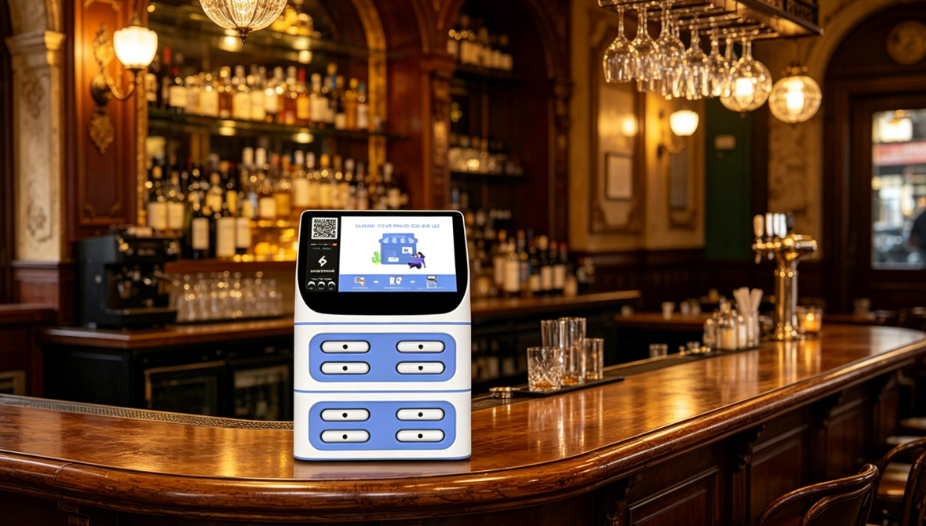
This article focuses exclusively on Iraq. It examines the market from four perspectives: three key market advantages, the dual access requirements of COSQC and CMC, the payment ecosystem’s transition from cash to electronic payments, and commercial deployment opportunities in Baghdad and Erbil.
1. Iraq’s Shared Power Bank Market: Three Key Advantages
Iraq has three notable advantages for the development of its shared power bank market.
Advantage 1 | A Young Population and High Mobile Internet Penetration
Iraq has a median age of 20.8. The country has 39.6 million internet users, representing an internet penetration rate of 83.8%, y 50.8 million mobile connections, equivalent to 108% of the total population (DataReportal, 2025). Its young population and high mobile connection rate indicate that smartphones have become essential tools for daily communication, social interaction, and consumption, providing a clear potential user base for shared power bank services.
Advantage 2 | Concentrated Visitor Flows During Major Religious Events
The 2025 Arbaeen pilgrimage attracted 21,103,524 participants, including more than four million Arab and international pilgrims (IQNA, 2025; Daxue Consulting, 2025). During these major religious events, tens of millions of people gather in concentrated areas and continuously rely on mobile communication, navegación, online contact, and digital payments. This creates charging demand and makes transportation hubs, commercial facilities, and visitor gathering areas suitable locations for shared power bank deployment.
Advantage 3 | Essential Charging Demand Driven by Extreme Heat and Unstable Electricity Supply
In August 2025, temperatures in some parts of Iraq exceeded 50°C. On August 11, a large-scale power outage affected the national electricity grid, resulting in an instantaneous loss of more than 6,000 MW (Xinhua News Agency/Xinhua Finance, 2025). Iraq’s total power generation capacity is approximately 28 GW, while meeting peak electricity demand requires around 55 GW. In an environment with an unstable power supply, managing smartphone battery levels becomes even more important. Shopping malls, Aeropuertos, restaurantes, and indoor commercial spaces therefore have clearer demand for charging services.
2. Market Compliance: COSQC and CMC Are Key Requirements
The importation and deployment of shared power bank equipment in Iraq mainly involve two regulatory requirements: the COSQC Certificate of Conformity (CoC) and CMC wireless type approval.
The former concerns import conformity and customs clearance for electronic and electrical products. The latter determines whether equipment containing wireless communication modules, such as Bluetooth or 4G, can be legally imported and sold. These approvals are administered by different regulatory authorities. International product certifications should not be treated as equivalent to local Iraqi market access approvals.
2.1 Three Key Points About COSQC and CMC
① Scope of Application
The Central Organization for Standardization and Quality Control (COSQC) is responsible for Iraqi national standards and conformity management. Imports of regulated electronic and electrical products generally require a Pre-Shipment Certificate of Conformity (CoC). Shared power bank cabinets and related electrical equipment should be assessed against these requirements.
② Wireless Equipment Approval
The Communications and Media Commission (CMC) of Iraq regulates type approval for telecommunications, wireless, and radio-frequency equipment. If a shared power bank cabinet is equipped with Bluetooth or a 4G communication module, it falls within the scope of CMC regulation and must obtain the relevant type approval before importation and sale.
③ Timeline and Costs
The reference certification timeline for COSQC-regulated electrical and wireless products is approximately 3–6 weeks (GMA Labs, 2025–2026). Certification costs vary depending on the product model, testing requirements, and reviewing organization. Available information does not provide a standardized USD quotation that can be directly applied to all products.
2.2 Other Compliance Considerations
For projects in Iraq, the main compliance considerations are equipment importation and wireless communication approval. Regarding EPR, battery recycling, municipal permits for outdoor installations, and dedicated commercial insurance for shared power bank operations, the available information does not provide verifiable regulatory authorities or quantified requirements. These matters are therefore not presented as confirmed mandatory market access conditions.
2.3 Zhongdian Hexin’s Compliance Certifications

All shared power bank cabinets and power banks from Zhongdian Hexin Litapower have obtained market access certifications such as CCC, CE, FCC, and PSE. The batteries comply with the IEC 62133 safety standard for portable lithium batteries. The company also holds CB (IECEE) mutual recognition test reports, its products meet RoHS restrictions on hazardous substances, and UN38.3 transport test reports are provided with shipments.
For projects in Iraq, two local requirements need to be addressed: the COSQC Certificate of Conformity (CoC) and CMC type approval. The CB report may serve as a basis for transferring or supporting the safety certification process, subject to the final review by local authorities. Radio-frequency components still need to undergo separate testing in accordance with CMC requirements. Matters involving local importer and distributor registration are the responsibility of the customer’s local company or importing and distribution entity.
3. Payment Ecosystem: A Rapid Transition from Cash to Electronic Payments
Iraq has traditionally relied heavily on cash transactions. Sin embargo, as the government promotes electronic payments, bank cards, digital wallets, and government-backed electronic payment systems are becoming increasingly widespread. For shared power bank services, which involve small-value, high-frequency, and unattended transactions, FIB (FastiPay), ZainCash, and Qi Card are local payment solutions worth considering.
3.1 Three Advantages of Iraq’s Electronic Payment Development
① An Expanding Electronic Payment User Base
Starting July 1, 2025, the Iraqi government promoted the comprehensive adoption of electronic payments across government institutions. The number of government electronic payment cards exceeded 25 million (Iraq Observer, 2025). This indicates that electronic payments are expanding beyond selected commercial scenarios into public services and everyday transactions.
② Growth in POS Infrastructure
The number of POS terminals in Iraq increased from fewer than 10,000 in 2022 Para 62,000 in 2025 (Dinar Chronicles, 2025), representing more than a sixfold increase in three years. The continued expansion of payment acceptance networks provides a stronger payment infrastructure for shopping malls, retail businesses, and unattended devices.
③ Rapid Growth in Electronic Payment Transaction Value
In May 2025, the value of electronic payments in Iraq reached 1.37 trillion Iraqi dinars, an increase of approximately 1,400% compared with 90 billion dinars at the end of 2022 (Dinar Chronicles, 2025). For shared power bank services, digital wallet and bank card payments can reduce cash collection and manual management, making them more suitable for small-value rental transactions.
3.2 Litapower’s Payment Integration in Iraq
For projects in Iraq, Zhongdian Hexin Litapower has worked with local operators to launch and integrate three payment solutions: FIB (FastiPay), ZainCash, and Qi Card. The company has completed payment interface adaptation and integration testing, as well as payment integration on the rental system’s app. Customers independently select their payment service providers, and the agreements are signed by their own companies.
The Litapower rental system and cabinet terminals connect to payment services through APIs. Customers can select payment providers according to local operating requirements and establish a collection system suited to their own businesses.
4. Key City Opportunities for Shared Power Bank Deployment in Iraq

Baghdad and Erbil are two priority cities for shared power bank projects in Iraq. Baghdad offers opportunities around the capital’s commercial districts, cultural consumption areas, and international transportation hubs. Erbil combines tourism landmarks, shopping centers, and international airport traffic. Together, the two cities provide complementary opportunities across cultural tourism and commercial hub scenarios.
4.1 Baghdad: The Capital’s Cultural and Commercial Hub
As Iraq’s capital, Baghdad concentrates commercial activities, cultural events, and business travel demand. Baghdad International Airport handles approximately 6.5 million passengers annually (BigAirports, 2025, third-party media estimate; another estimate for a normal year puts the figure at 4–5 million), providing a steady flow of potential customers for airport commercial services.
(1) Cultural Districts and Shopping Malls
Al-Mutanabbi Street is one of Baghdad’s best-known cultural book-market districts, featuring bookstores, stationery shops, cafés, and other commercial businesses. It is generally open from around 9:00 Para 18:00, with Friday being the main peak traffic day (Open Travel Guide, 2026). Visitors typically walk around the district, browse books, and enjoy leisure activities. They frequently use their phones for navigation, photography, and social media, making nearby cafés and commercial service areas suitable locations for shared power bank cabinets.
Baghdad Mall is located in the Karkh district of Harthiya. It is a comprehensive shopping mall featuring international and local brands, restaurantes, and a cinema. Its operating hours are approximately 10:00–23:00 (Open Travel Guide, 2026). Visitors often spend extended periods shopping, dining, and watching movies, creating continuous indoor consumption scenarios. Suitable rental locations include entrances, dining areas, and spaces near the cinema.
(2) Large Indoor Shopping Malls and International Transportation Hubs
Mansour Mall is one of Baghdad’s major shopping complexes, with more than 170 stores and a total area of approximately 32,000 square meters. It includes a cinema and food court, and generally operates from 10:00 Para 23:00 (Audiala, 2025–2026). The mall provides ATMs, Wi-Fi, and backup generators, allowing it to maintain a certain level of commercial operations even during external power outages. For shared power bank services, dining areas, cinemas, and public seating areas can serve customers throughout different consumption periods.
Baghdad International Airport (BGW) is an important international gateway to Iraq. It operates 24 hours a day and handles approximately 6.5 million passengers annually (BigAirports, 2025, third-party media estimate). Business travelers, oil industry professionals, and international passengers need mobile navigation, comunicación, and online payment services while waiting for flights, transferring, or arriving. Airport waiting areas, dining zones, and passenger service areas are suitable locations for shared power bank equipment.
4.2 Erbil: Tourism Landmarks and High-Density Commercial Consumption
Erbil is the capital of the Kurdistan Region of Iraq and one of the region’s active commercial centers. Its international airport handles approximately 2.1 million passengers annually, with an official design capacity of 4.5 million passengers per year (Masscom Global, 2025–2026; Erbil International Airport, 2025–2026). International travelers, business visitors, and returning members of the diaspora generate ongoing consumption demand around the airport and shopping centers.
(1) Historical and Cultural Landmarks and Family Entertainment
Erbil Citadel is a UNESCO World Heritage Site and one of the city’s major tourist attractions. It generally opens from around 9:00 Para 19:00 (Evendo, 2025). With a history of more than 6,000 years of continuous habitation, the citadel attracts visitors who use their phones for sightseeing, photography, and navigation while walking around the site. Shared power banks can be deployed at nearby visitor service points, cafés, and leisure venues.
Family Mall is a major shopping complex in Erbil, with more than 130 stores, including a cinema, indoor amusement park, and ice-skating rink. Its operating hours are approximately 10:00–24:00 (Wanderlog, 2025). Compared with ordinary shopping areas, family entertainment facilities encourage longer visitor stays. Suitable locations for shared power bank cabinets include dining areas, cinema entrances, and spaces near entertainment facilities.
(2) Major Shopping Centers and the International Airport Hub
Majidi Mall is one of Erbil’s prominent shopping and entertainment centers. It opened in 2009 and is one of the large shopping malls in Iraq. Its operating hours are approximately 10:00–24:00 (Majidi Mall official website; Fastlink, 2025). The mall brings together branded retail stores and everyday consumer services. Shared power bank cabinets can be placed near main entrances, dining areas, and customer seating areas to meet temporary charging needs during shopping and entertainment activities.
Erbil International Airport (EBL) is an important international gateway for the Kurdistan Region. It operates 24 hours a day, handles approximately 2.1 million passengers annually, and has an official design capacity of 4.5 million passengers per year (Masscom Global, 2025–2026; Erbil International Airport, 2025–2026). Serving international travelers, business visitors, and members of the diaspora, the airport is suitable for shared power bank deployment in departure lounges, dining areas, and passenger service zones.
4.3 Deployment and Operations
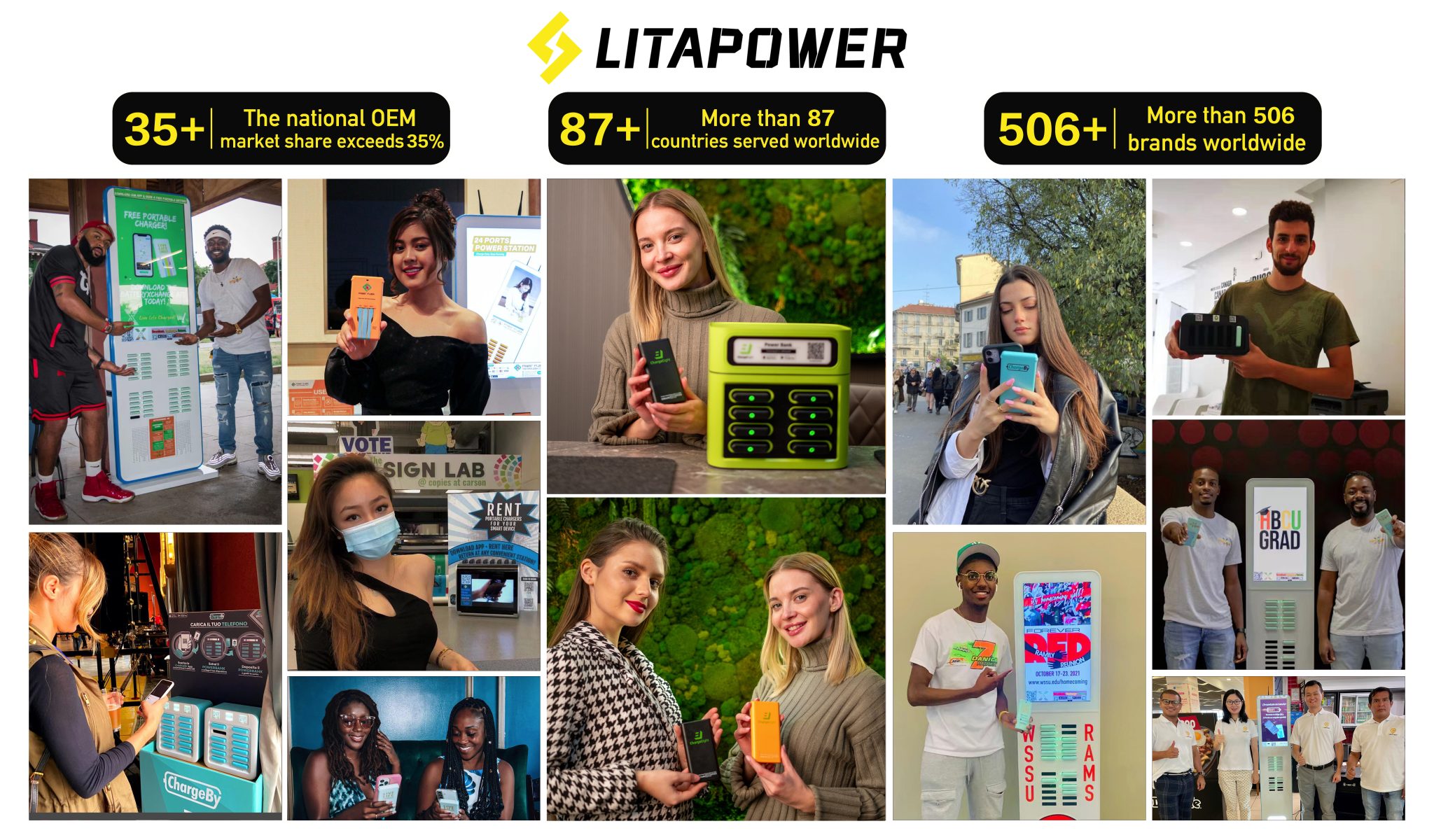
Zhongdian Hexin Litapower provides overseas brands with shared power bank software and hardware solutions, as well as OEM and private-label customization services. Based on its experience with shared power bank projects in the Middle East, an initial Iraq deployment can start in Baghdad and Erbil, using 8-slot cabinets at locations selected around evening visitor traffic and shopping mall activity in both cities.
Operations can combine venue management, backend data analysis, and dynamic pricing to improve equipment utilization and venue revenue. The estimated project payback period is approximately 4–8 months.
FAQ
Q1. How large is the shared power bank market in Iraq?
Iraq has a substantial potential user base for shared power bank services. Demand is mainly driven by its young population, mobile internet users, and concentrated tourism traffic. According to DataReportal’s Digital 2026: Iraq, the country has a total population of 47.3 million, 39.6 million internet users, an internet penetration rate of 83.8%, y 50.8 million mobile connections (DataReportal, 2025).
Q2. What certifications or registrations are required to deploy shared power banks in Iraq?
Importing and deploying shared power banks in Iraq mainly involves the COSQC Certificate of Conformity (CoC) and CMC wireless type approval. COSQC manages conformity requirements for electronic and electrical products. Regulated products generally need to obtain a pre-shipment CoC before importation; otherwise, they may face customs detention. The reference certification timeline for relevant electrical and wireless products is approximately 3–6 weeks (GMA Labs, 2025–2026). Shared power bank cabinets equipped with Bluetooth or 4G communication modules must also obtain wireless type approval in accordance with CMC requirements.
Q3. Which payment methods do local residents and tourists use to rent shared power banks in Iraq?
Iraq’s payment system is transitioning from a cash-dominated model toward electronic payments. Suitable payment solutions for shared power bank services include FIB (FastiPay), ZainCash, and Qi Card. In July 2025, the number of government electronic payment cards exceeded 25 million.
Q4. How can investors build their own shared power bank brand in Iraq?
In Iraq, many local entrepreneurs and investors use China’s supply chain to develop OEM and private-label products. China’s SaaS systems are highly competitive globally, allowing investors to import equipment, apply their own local brand, and operate independently. Zhongdian Hexin Litapower serves shared power bank customers in 162 countries and regions worldwide, with more than 800 partner brands.
Q5. How long does it take to recover the investment in an Iraqi shared power bank project?
Based on Zhongdian Hexin Litapower’s shared power bank project experience in the Middle East, an Iraq project deploying 8-slot cabinets in Baghdad and Erbil has an estimated payback period of approximately 4–8 months. The project can focus on shopping malls, tourism and consumption areas, and airport transportation hubs. Venue management, backend data analysis, and dynamic pricing can help improve equipment utilization.
References
Iraq population, internet, and mobile connection data (DataReportal, 2025)
https://datareportal.com/reports/digital-2026-iraq
Iraq COSQC and CMC equipment access requirements (GMA Labs, 2025–2026)
https://www.gmalabs.com/typeapproval/iraq
Iraq electronic payment and government electronic payment card development data (Iraq Observer, 2025)
https://dinarrecaps.com/early/iraq-economic-news-and-points-to-ponder-friday-morning-8-8-25
Iraq POS terminal and electronic payment transaction data (Dinar Chronicles, 2025)
https://dinarchronicles.com/2025/09/24/wed-am-tnt-news-articles-from-iraq-9-24-25/
Iraq GDP and GDP per capita data (World Bank, 2025)
https://api.worldbank.org/v2/country/IRQ/indicator/NY.GDP.MKTP.CD?format=json&per_page=3
Development of Iraq’s digital payment infrastructure (GIZ, 2025)
https://www.giz.de/en/regions/asia/iraq/news/supporting-central-bank-iraq-enhancing-framework-conditions-and-promoting