 Banco de energia de aluguel,Fabricante de banco de energia compartilhado
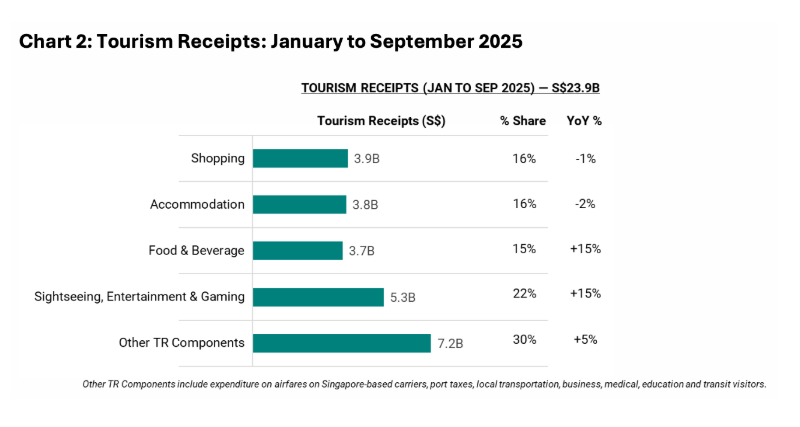
Singapore may be a city-state, but its high consumer spending power, mature digital payment infrastructure, and growing international tourism create strong opportunities for the shared power bank business. According to official Singapore Tourism Board statistics, Singapore welcomed 16.912 million international visitor arrivals in 2025, while tourism receipts reached SGD 32.8 billion, creating a wide range of potential commercial applications for shared power banks.
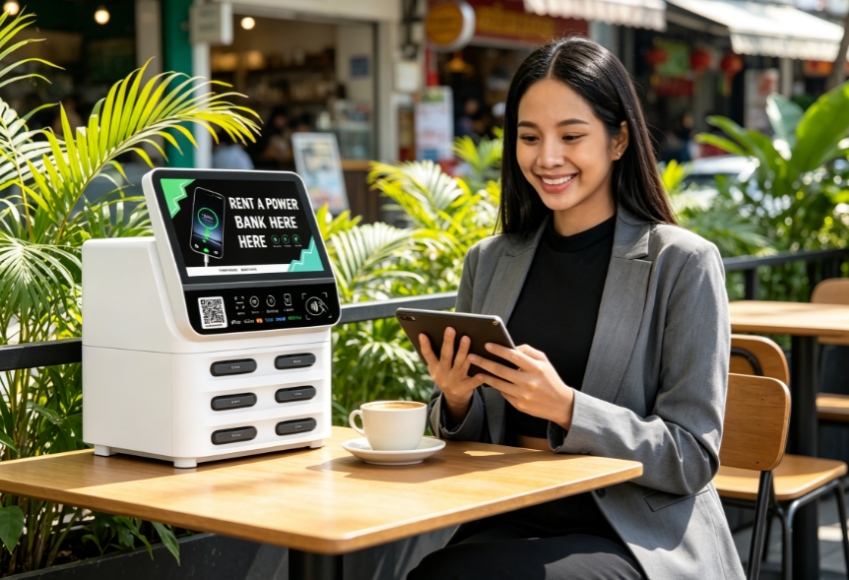
Singapore’s shared power bank market has three major advantages:
Market Demand: Singapore recorded 16.912 million international visitor arrivals in 2025, while Changi Airport handled nearly 70 million passenger movements. (Source: Singapore Tourism Board and Changi Airport statistics, 2025)
Mature Payment Infrastructure: PayNow registrations reached 11 million, while SGQR provides a unified QR payment framework and supports cross-border QR payment connections with multiple Asian markets. (Source: Monetary Authority of Singapore and Association of Banks in Singapore, 2025)
Convenient Compliance: Eligible short-range wireless devices, including Bluetooth and Wi-Fi equipment, can use the ESER self-declaration registration process, which is free and automatically approved immediately after submission. (Source: IMDA official guidelines, 2026)
This article examines Singapore’s shared power bank market opportunities from several perspectives, including market size, IMDA equipment registration, payment methods, regional location planning, and OEM manufacturer solutions.
1. Singapore Shared Power Bank Market: 4 Key Data Points
Singapore’s market advantage does not come from a large population. Instead, it benefits from strong consumer spending power, concentrated commercial facilities, stable transportation traffic, and continuous international tourist arrivals. For shared power bank operators, this creates opportunities to establish branded service networks around high-value commercial locations.
1.1 Population and Internet Penetration: A Mature Mobile Internet Market
According to DataReportal’s Digital 2026: Cingapura report, Singapore has a population of approximately 5.88 million, with 5.78 million internet users and an internet penetration rate of 98.4%. The country also has 9.79 million mobile connections, equivalent to 166% of its population. Social media users reached 5.33 million, accounting for 90.6% of the population. (Source: DataReportal, Digital 2026: Cingapura, October 2025)
These figures indicate that Singaporean consumers have widespread access to smartphones, mobile applications, and online services. Shared power banks can provide convenient temporary charging services through QR code rentals, electronic payments, and online order management.
1.2 International Tourism: 16.91 Million Visitor Arrivals
According to official statistics from the Singapore Tourism Board and SingStat, Singapore welcomed 16.912 million international visitor arrivals in 2025, representing year-on-year growth of 2.3%. Tourism receipts reached SGD 32.8 billion, setting a new record.
Major visitor source markets included China, Indonesia, Malaysia, Austrália, and India. Chinese visitor arrivals reached 3.1 million, while Indonesian arrivals reached 2.4 million. The average visitor stay was 3.48 days. (Source: Singapore Tourism Board annual reports and SingStat official statistics, 2025)
International tourists frequently use their smartphones for navigation, mobile payments, social media, and digital tickets at airports, Shoppings, Atrações turísticas, Restaurantes, and transportation hubs. Shared power banks can provide temporary charging services across these locations.
1.3 Tourism and Events Economy: Consistent Visitor Traffic Throughout the Year
According to relevant Singapore Tourism Board statistics, the average hotel occupancy rate reached 81.9% em 2025.
Singapore’s tourism market does not have a particularly pronounced nationwide low season or peak season. Instead, visitor traffic is influenced by international conferences, exhibitions, concerts, and major sporting events.
Por exemplo, the 2025 Singapore Grand Prix attracted more than 300,000 spectators, demonstrating how major events can generate concentrated commercial traffic over a short period. (Source: Singapore Tourism Board, 2025)
These events often create concentrated demand for smartphone usage. Shared power bank operators can develop temporary or long-term partnerships around race venues, exhibition centers, Hotéis, and surrounding commercial districts.
1.4 GDP and GDP per Capita: Strong Consumer Spending Supports Branded Operations
According to World Bank Open Data, Singapore’s GDP reached USD 603.9 billion in 2025, with GDP per capita reaching USD 98,814. This places Singapore among the higher-income markets in Southeast Asia. In 2024, the number of mobile connections reached 170.8 per 100 people. (Source: World Bank Open Data, 2025)
High income levels and a mature commercial service sector provide opportunities for branded shared power bank operations. Rather than focusing solely on the number of devices deployed, operators in Singapore should pay greater attention to location quality, user experience, equipment reliability, and brand image.
Overall, Singapore is well positioned to become a flagship market and brand-building hub for shared power banks in Southeast Asia. Operators can establish brand awareness through premium shopping districts, centros de transporte, and major event venues, then replicate successful operating models in other Southeast Asian markets.
2. Compliance and Certification Requirements for Shared Power Banks in Singapore
When entering the Singapore market, operators should pay particular attention to the registration requirements for wireless communication equipment.
If a shared power bank station is equipped with Bluetooth, Wi-Fi, or other wireless communication modules, its IMDA requirements should be assessed according to the actual functions and specifications of the equipment.
Singapore’s telecommunications regulator is the Infocomm Media Development Authority (IMDA). Compared with some Southeast Asian markets that require more complicated local certification procedures, Singapore offers simplified registration options for certain eligible short-range wireless devices.
2.1 IMDA Equipment Registration: ESER Self-Declaration
According to IMDA’s official equipment registration guidelines, eligible short-range wireless devices, including Bluetooth and Wi-Fi equipment, can use the ESER (Enhanced Simplified Equipment Registration) self-declaration process.
Its main features include:
(1) Registration Method: Eligible equipment can be registered through the ESER self-declaration process.
(2) Approval Speed: Registration is automatically approved immediately after submission.
(3) Applicant Requirements: Applicants must hold the applicable Telecommunication Dealer’s Licence before registration.
(4) Equipment Restrictions: Applicants must confirm that the equipment does not fall within IMDA’s prohibited or restricted equipment categories.
Equipment that is not eligible for ESER must be evaluated under other applicable registration schemes according to its product category.
The data page lists GER registration fees of approximately SGD 350–500 per model, with a validity period of five years. (Source: IMDA official Equipment Registration Guide, 2026)
Portanto, it is incorrect to assume that every shared power bank station can be registered for free. Whether a device includes wireless communication functions, which communication modules it uses, and whether the applicant holds the required licence will all affect the applicable registration process.
2.2 Cost Advantages of Singapore’s Equipment Registration Process
For Chinese OEM manufacturers and operators planning to enter Singapore, it is advisable to confirm the equipment’s wireless communication modules and applicable registration category before placing bulk orders.
If the equipment qualifies for ESER, its free and immediately approved registration process can reduce certain compliance costs.
If another registration scheme is required, the relevant fees, licence requirements, and validity periods should be included in the project budget.
Singapore offers relatively simplified registration procedures for certain wireless devices, but this does not mean that other requirements relating to product safety, imports, and commercial operations can be ignored.
3. Payment Integration and Localization Requirements for Shared Power Banks in Singapore
Singapore has one of the more developed digital payment infrastructures in Southeast Asia. Consumers are familiar with QR code payments, digital wallets, and bank cards, while cash payments account for a relatively small proportion of transactions.
Portanto, shared power bank operators should prioritize establishing a cashless rental system.
3.1 Mainstream Payment Methods: PayNow and SGQR
Major payment methods in Singapore include:
PayNow: A mainstream instant payment and transfer system in Singapore, widely used by individuals and businesses.
SGQR: A unified QR code framework that integrates different payment services, making QR code payments more convenient for consumers.
Bank Card Payments: International bank cards, including Visa and Mastercard, are suitable for local consumers and international tourists.
Digital Wallets: Appropriate digital wallet channels can be integrated according to the support provided by local payment service providers.
Cross-Border QR Payments: Singapore has established cross-border payment connections with systems such as Thailand’s PromptPay, Malaysia’s DuitNow, and India’s UPI.
According to relevant data from the Monetary Authority of Singapore (MAS) and the Association of Banks in Singapore (ABS), PayNow registrations reached 11 million, covering more than 90% of the population and 350,000 businesses.
In 2025, the relevant payment systems processed 752 million transactions, with a total transaction value of SGD 300.5 billion. (Source: MAS and ABS payment statistics, 2025)
Além disso, cash payments in Singapore account for less than 5% of transactions. This means that shared power bank operators should prioritize QR code payments and electronic payment methods rather than relying on cash transactions.
Litapower can plan PayNow, SGQR, and bank card payment integration according to the Singapore operator’s payment accounts, payment service providers, and interface authorization. The specific integration method must be confirmed based on local merchant qualifications and payment institution approval requirements.
3.2 Power Supply Specifications: British-Type Plugs and Equipment Compatibility
Singapore mainly uses Type G three-pin British-style power sockets, with a standard voltage of 230V and a frequency of 50Hz. (Source: People’s Daily Online / Popular Science China, long-term reference)
When exporting shared power bank stations to Singapore, operators should pay attention to the following details:
Power Cables: Use Type G British-style power cables that comply with local usage requirements.
Power Adapters: Confirm that the equipment’s input voltage range is compatible with Singapore’s electrical supply.
Charging Interfaces: Configure commonly used interfaces such as USB-C and Lightning according to user requirements.
Equipment Stability: For long-term operation in shopping malls, centros de transporte, and public spaces, ensure proper heat dissipation, power protection, and structural safety.
Singapore has a mature indoor commercial environment. Shopping malls, office buildings, centros de transporte, and entertainment venues are all potential locations for shared power banks.
Equipment selection should prioritize appearance, screen display capabilities, operational stability, and maintenance convenience.
4. Shared Power Bank Market in Singapore: 4 High-Potential Regional Areas
Singapore is a city-state, so its market should not be divided in exactly the same way as larger countries with multiple major cities.
For operators entering the market, commercial districts can be used as individual deployment areas. Key locations worth evaluating include Jurong East, Punggol, Woodlands, and Paya Lebar.
These areas have different characteristics, including commercial development, community consumption, cross-border commuting, and transportation connections. They provide opportunities to explore different shared power bank applications.
4.1 Jurong East and Punggol: Emerging Commercial and Community Markets
Jurong East: Office, Commercial, and Transportation Hub Opportunities
Jurong East is an important commercial area in western Singapore, combining office buildings, retail facilities, and transportation connections.
With the continued development of the Jurong Lake District, office workers, commuters, and shopping visitors create potential demand for shared power bank services.
Compared with focusing exclusively on traditional tourist areas, Jurong East offers opportunities to develop local office and everyday consumer markets.
Recommended Deployment Locations:
- Jurong East MRT Station and surrounding transportation interchanges
- Shopping malls such as JEM and Westgate
- Office buildings, restaurant areas, and leisure facilities
- Commercial facilities and public activity spaces around the Jurong Lake District
Punggol: Young Families and New-Town Community Markets
Punggol is a developing new-town area in northeastern Singapore. Its main consumer groups include residents, young families, and commuters.
Community retail facilities, Shoppings, and public transportation infrastructure can provide everyday usage scenarios for shared power banks.
Recommended Deployment Locations:
- Waterway Point shopping mall
- Punggol MRT Station and surrounding transportation areas
- Community shopping centers and dining districts
- Public recreational facilities and family entertainment areas
4.2 Woodlands and Paya Lebar: Cross-Border Commuting and Regional Commercial Markets
Woodlands: Cross-Border Transportation and Northern Commercial Services
Woodlands is located in northern Singapore and serves as an important connection between Singapore and Malaysia.
Cross-border commuters, local residents, and shopping visitors generate relatively consistent daily traffic.
Shared power banks can be deployed around transportation interchanges, shopping facilities, and dining locations, providing convenient charging services for consumers who need to use their phones for navigation, communication, and payments.
Recommended Deployment Locations:
- Woodlands Checkpoint and surrounding transportation service areas
- Woodlands MRT Station and nearby commercial facilities
- Causeway Point shopping mall
- Woodlands community shopping centers, Restaurantes, and hotels
Paya Lebar: Office, Shopping, and MRT Interchange Market
Paya Lebar is an important commercial center in eastern Singapore, with a concentration of office buildings, shopping facilities, and public transportation services.
Compared with traditional tourist districts, this area is more suitable for building a stable equipment network around local consumers, office workers, and everyday shoppers.
Recommended Deployment Locations:
- Paya Lebar MRT Station and surrounding interchange areas
- Paya Lebar Quarter commercial complex
- PLQ Mall and nearby shopping areas
- Office buildings, dining districts, and leisure venues
For these four areas, operators should conduct on-site research before deployment. This includes checking existing brand coverage, venue partnership conditions, and local user demand.
The priority should be locations with stable customer traffic and relatively manageable competition.
5. Zhongdian Hexin’s Shared Power Bank Solutions for Singapore: 4,800+ Devices Deployed Across 8 Southeast Asian Countries
Litapower Private-Label Shared Power Bank Solutions in Singapore: Profitable Deployment Across Restaurants, Bars, and Other Commercial VenuesThe Singapore shared power bank market places particular importance on brand image, equipment experience, compliance efficiency, and commercial location quality.
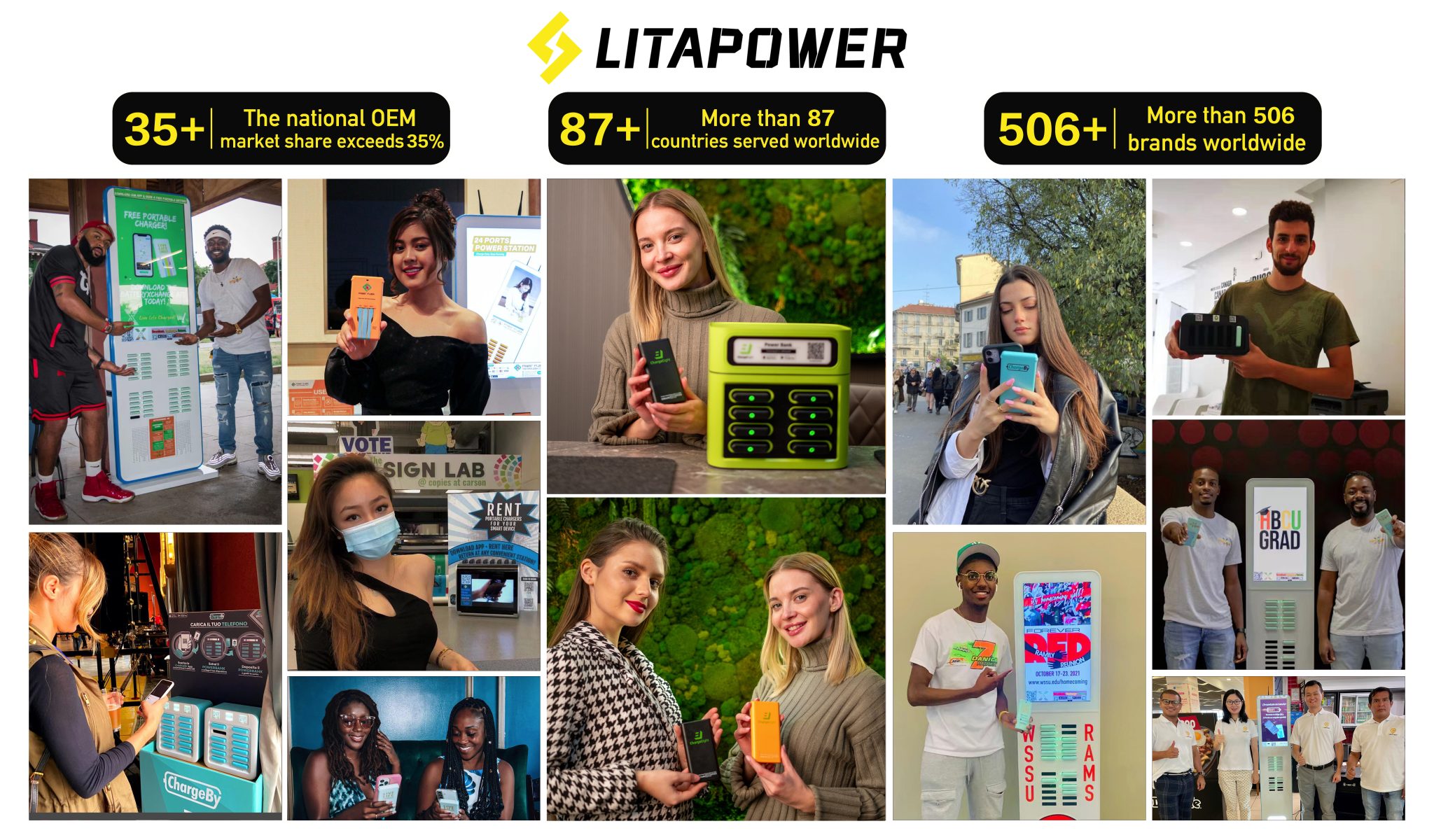
For local operators looking to establish their own brands, working with a partner that has international manufacturing experience, software development capabilities, and a comprehensive OEM/ODM service system can reduce coordination costs between equipment procurement and business operations.
Litapower, the overseas brand of Zhongdian Hexin’s shared power bank manufacturing business, has served 8 Southeast Asian countries and deployed more than 4,800 terminal devices. It provides Singapore customers with shared power bank hardware, software systems, payment integration, and OEM/ODM private-label customization solutions.
Singapore projects can be developed through the following steps.
5.1 Choose an OEM/ODM Manufacturer with International Project Experience
Entering the Singapore market requires operators to consider equipment manufacturing, IMDA registration, payment systems, management software, and ongoing maintenance at the same time.
When selecting an OEM/ODM partner, operators should focus on the following capabilities:
Manufacturing Capabilities: Whether the manufacturer has independent production facilities, quality inspection systems, and reliable bulk delivery capabilities.
Compliance Support: Whether the manufacturer understands IMDA equipment registration procedures and can help determine whether ESER or another applicable registration method is required.
Payment Solutions: Whether the manufacturer can plan PayNow, SGQR, and bank card payment integration according to local payment service provider requirements.
Software Systems: Whether the manufacturer provides mobile apps, device management backends, Gerenciamento de pedidos, data analytics, and API interfaces.
Brand Customization: Whether the manufacturer supports equipment logos, appearance customization, screen UI, app interfaces, and independent management backends.
Through the manufacturing capabilities of Zhongdian Hexin, Litapower provides overseas operators with hardware production, software systems, API integration, and OEM/ODM private-label services.
For customers who already have their own software systems, Litapower can also provide API interfaces and technical integration support according to project requirements.
When selecting equipment for Singapore, operators should consider the local indoor commercial environment, Type G power sockets, POS card payment preferences, and brand presentation requirements. Suitable cabinet sizes and screen configurations should be selected accordingly.
Zhongdian Hexin’s shared power bank equipment adopts a dual-card locking design with two locking points, improving power bank retention while helping prevent accidental drops and theft.
The equipment structure also takes into account heat dissipation, high waterproof protection, and long-term operation in public environments. It is suitable for shopping malls, Hotéis, centros de transporte, entertainment venues, and other commercial applications.
5.2 Equipment Deployment: Build a Network Around High-Quality Commercial Locations
Singapore’s market is not necessarily best approached through large-scale equipment deployment alone. Instead, operators should prioritize locations with stable customer traffic, strong consumer spending power, and favorable venue partnership conditions.
Recommended locations include:
Shopping and Commercial Locations: Shopping malls in Jurong East, Punggol, and Paya Lebar.
Transportation Locations: MRT stations, interchange areas, and cross-border transportation service areas in Woodlands.
Office and Business Locations: Office buildings, business complexes, and dining and leisure districts.
Tourism and Entertainment Locations: Hotels, exhibition venues, event spaces, and areas attracting large numbers of visitors.
Operators can establish partnerships with shopping malls, Hotéis, restaurant businesses, property management companies, and local channel partners. Revenue-sharing arrangements can be negotiated according to customer traffic, venue resources, and operational responsibilities.
If a customer already has a local company, merchant resources, and venue partnerships, equipment deployment can move forward directly.
If local channels are not yet established, building a partnership network should be the priority. This helps prevent equipment investments from being made without access to suitable operating locations.
5.3 Operations Management: Focus on Brand Experience and Location Revenue
Singapore is a high-income market, so equipment operations should prioritize brand image, service experience, and equipment reliability.
Operators can focus on the following areas:
Brand Promotion: Increase brand awareness through social media, short videos, local influencer partnerships, and commercial events.
Dynamic Pricing: Develop rental pricing strategies according to actual consumer demand in shopping malls, transportation areas, and event venues.
Equipment Management: Use the management backend to monitor device connectivity, power bank inventory, orders, and equipment faults.
Revenue Analysis: Review monthly orders, venue revenue sharing, payment processing fees, and maintenance costs.
Channel Management: Maintain long-term partnerships with shopping malls, Hotéis, and property management companies to improve equipment utilization and service stability.
Litapower’s Five-Chain Support System covers the supply chain, operations chain, compliance chain, service chain, and funding chain, providing overseas customers with comprehensive project support.
For Singapore customers, Zhongdian Hexin’s hardware manufacturing and software development capabilities can help establish an independent brand, management backend, and local operating system. Singapore can then serve as an important market for brand development and business expansion across Southeast Asia.
6. Frequently Asked Questions About the Singapore Shared Power Bank Market (FAQ)
Q1: How large is the shared power bank market in Singapore?
Currently, there is no verifiable data on the overall size, market penetration rate, or market shares of major players in Singapore’s shared power bank industry. Portanto, it is not appropriate to provide an estimated industry market value without reliable supporting data.
Contudo, Singapore has a strong potential user base. According to Singapore Tourism Board statistics, the country welcomed 16.912 million international visitor arrivals in 2025, with tourism receipts reaching SGD 32.8 billion. DataReportal also reported an internet penetration rate of 98.4%.
These figures indicate that Singapore has favorable market conditions for developing a shared power bank business.
Q2: What certifications are required to deploy shared power banks in Singapore?
Wireless communication equipment in Singapore is primarily regulated by IMDA.
Eligible short-range wireless devices, including Bluetooth and Wi-Fi equipment, can use the ESER self-declaration registration process. Registration is free and automatically approved immediately after submission, but applicants must hold the applicable Telecommunication Dealer’s Licence.
Equipment that does not qualify for ESER must be assessed under other applicable registration schemes according to its product category.
According to IMDA’s official guidelines, GER registration costs approximately SGD 350–500 per model, with a validity period of five years.
Q3: Which payment methods are commonly used by tourists and local consumers in Singapore?
Consumers in Singapore commonly use PayNow, SGQR, bank cards, and electronic payment services.
According to relevant data from the Monetary Authority of Singapore and the Association of Banks in Singapore, PayNow registrations reached 11 million in 2025, covering more than 90% of the population and 350,000 businesses. The relevant payment systems processed transactions worth SGD 300.5 billion during the year.
Singapore has also established cross-border QR payment connections with Thailand’s PromptPay, Malaysia’s DuitNow, and India’s UPI.
Q4: How long does it take to recover the investment in a shared power bank business in Singapore?
According to the payback model for shared power bank projects in Singapore, the investment recovery period is typically 3–5 months.
Actual returns depend on equipment procurement costs, venue partnership conditions, rental orders, payment processing fees, and equipment maintenance costs.
For Singapore projects, operators should prioritize shopping malls, centros de transporte, office complexes, and major event venues. Actual order data should be used to evaluate location performance before expanding the deployment network.
Q5: Are there any successful Chinese shared power bank brands operating in Singapore?
Currently, there is insufficient verifiable data on the market shares and complete operating performance of shared power bank brands in Singapore.
Industry information indicates that INFORICH’s ChargeSPOT business has a presence in Singapore, demonstrating that international shared power bank brands have entered the local market.
As a Chinese manufacturing partner, Litapower, the overseas brand of Zhongdian Hexin’s shared power bank manufacturing business, has served 8 Southeast Asian countries and deployed more than 4,800 terminal devices.
It can provide Singapore operators with hardware manufacturing, software systems, payment integration, and OEM/ODM private-label customization services.
References
DataReportal, Digital 2026: Cingapura (October 2025)
https://datareportal.com/reports/digital-2026-singapore
Singapore Tourism Board / SingStat: Tourism Statistics (2025)
https://www.singstat.gov.sg/find-data/explore-data-themes/industry/tourism
TTR Weekly: Singapore’s Tourism Receipts Make Steady Gains (2025)
https://www.ttrweekly.com/site/2026/02/singapores-tourism-receipts-make-steady-gains
Monetary Authority of Singapore (MAS) and Association of Banks in Singapore (ABS): Relevant Payment Statistics (2025)
https://www.zaobao.com.sg/finance/singapore/story20260809-9483875
IMDA: Equipment Registration Guide (2026)
https://iris.imda.gov.sg/guide/equipment-registration-guide
People’s Daily Online / Popular Science China: Singapore Power Plug and Voltage Specifications (Long-term Reference)
https://kpzg.people.com.cn/BIG5/n1/2016/1003/c404214-28755593.html
The Straits Times: Singapore Transport Ridership Statistics (2025)
http://straitstimes.com/singapore/transport/more-people-used-mrt-in-2025-as-lrt-ridership-falls-bus-numbers-still-below-pre-covid-levels
SGPJBG: Shared Power Bank Industry Resources (2025–2026)
https://www.sgpjbg.com/searchtag/27136188.html
World Bank Open Data: Singapore GDP (NY.GDP.MKTP.CD, 2025)
https://api.worldbank.org/v2/country/SGP/indicator/NY.GDP.MKTP.CD?format=json&mrnev=1
Xinhua News Agency: Reports on Singapore’s Tourism 2040 Strategy (2026)
http://chinaview.cn/20260508/7f198bbfd6dd43beb7230872b95aaf6a/c.html