 Banco de energia de aluguel,Fabricante de banco de energia compartilhado
I. Market Overview of Shared Power Banks in Macedonia
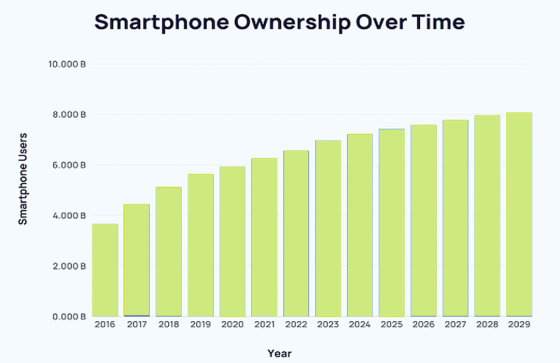
With the steady growth of the digital economy and the recovery of tourism, Shared Power Banks in Macedonia are moving from niche convenience services to essential urban infrastructure. The market is currently in an early blue ocean stage: high smartphone penetration, a young population, and rich tourism resources exist, yet local Shared Power Bank supply is limited, and international brands have minimal presence. Early entrants can secure prime locations, capture user mindshare, and generate long-term stable revenue.
Europe’s Shared Power Bank market grows over 25% annually, with projections exceeding €3.5 billion by 2028. Within this trend, Macedonia stands out for its low competition, low costs, and high adaptability, making it an ideal expansion point in Central and Eastern Europe.
II. European Trends and Profit Models of Shared Power Banks
European Development
Europe’s Shared Power Banks market follows a clear gradient: mature in Western Europe, growing in Southern Europe, and underdeveloped in Central and Eastern Europe, offering useful insights for Macedonia.
- Western Europe (Alemanha, França, UK, Netherlands): Mature markets with dense networks and high user retention. Berlin and Munich have established Shared Power Bank networks; Paris focuses on commercial districts and tourist areas, enhancing revenue via advertisements; the Netherlands features high digital adoption and cashless payments, with rental rates of €1–3/hour.
- Southern Europe (Spain, Italy, Portugal): Tourism-driven and fast-growing, with concentrated deployments. Barcelona and Madrid prioritize tourist sites and nightlife zones; Rome and Milan cover monuments and commercial areas with convenient QR-code rentals.
- Northern Europe (Sweden, Finland, Denmark): Advanced payment systems, high ticket value, and precise location targeting. Sweden sees high cashless adoption, ideal for QR-code rentals; Switzerland targets premium commercial and transportation hubs.
- Central and Eastern Europe (Macedonia, Bosnia, Serbia): Underdeveloped, strong demand, low costs. Smartphones are widespread, tourism is rich, yet local Shared Power Bank brands are rare, and international giants are scarce. Rental costs are roughly one-third of Western Europe, making Macedonia highly cost-effective for Shared Power Banks.
Macedonia offers the optimal entry window: adopting Western European operational standards, replicating Southern European tourist deployments, and leveraging CEE cost advantages for rapid scale-up.
III. Profit Models and ROI for Shared Power Banks in Macedonia
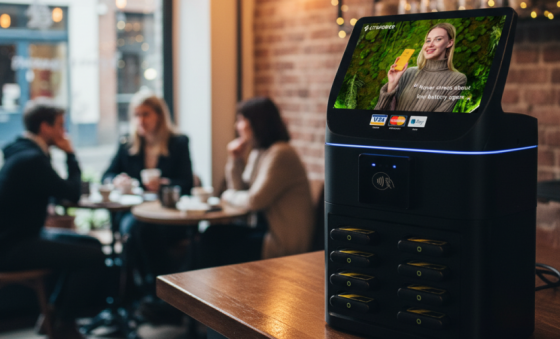
Core Revenue Streams
The profit model for Shared Power Banks in Macedonia follows established European standards:
- Hourly Rentals: Users scan and rent Shared Power Banks, paying by usage time for instant revenue.
- Venue Revenue Sharing: Partnerships with restaurants, cafés, malls, and hotels enable proportional revenue sharing, encouraging deployments.
- Advertising & Brand Value: Device screens, enclosures, or app interfaces can display ads, generating additional income.
ROI by Scenario
- High-traffic locations (tourist sites, Aeroportos, commercial centers): 3–5 rentals/day, €100–150 per unit/month, ROI in 4–6 months.
- Medium-traffic locations (chain restaurants, standard hotels): 2–3 rentals/day, €70–100 per unit/month, ROI in 6–8 months.
- Low-traffic locations (convenience stores, small shops): 1–2 rentals/day, €40–70 per unit/month, ROI in 8–12 months.
Macedonia’s low rental and labor costs mean ROI is generally 1–2 months faster than Western Europe, resulting in higher returns.
IV. Litapower’s Integrated Solutions for Shared Power Banks in Macedonia
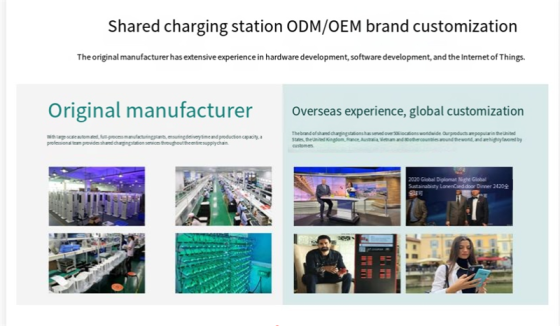
Deployment success for Shared Power Banks in Macedonia depends on 70% hardware/software localization and 30% operational capability. Litapower, a ZTE Core brand, has delivered customized solutions in over 20 Países. For Macedonia, Litapower provides an integrated package: hardware, software, operational support, and flexible customization, fully adapting to local payment methods, languages, regulations, and usage habits.
Hardware:
- EU-compliant, multiple models (6-port desktop, 8–12-port wall-mounted, 24-port freestanding with screens) certified by CE, RoHS, FCC, UN38.3.
- Supports 230V/50Hz, with moisture and dust protection for the Balkan climate.
- OEM/ODM customization allows color, logo, cabinet material, and port count adjustments to create a distinct Shared Power Bank brand.
Software:
- Supports all major local payment methods: Visto, Mastercard, Apple Pay, Google Pay, local e-wallets, deposit-free rentals, automatic billing, and refunds.
- Multi-language interface supports Macedonian and other international languages, completing rentals in three simple steps.
Management Platform:
- Real-time device monitoring, order tracking, and revenue reporting ensure stable, sustainable operations.
Entrepreneurs, city agents, or corporate partners can leverage Litapower’s solution to enter the Macedonia Shared Power Bank market efficiently, avoid localization pitfalls, and shorten ROI cycles.
The Macedonia Shared Power Bank market is poised for rapid growth with low competition and high demand. Mastering core technology, selecting high-value deployment locations, and applying precise operations with Litapower’s full-service solutions allows businesses to capture a significant share of the CEE shared economy.