 Bank tal-enerġija tal-kiri,Manifattur tal-bank tal-enerġija kondiviż
As the global digital transformation enters uncharted waters, the Philippines is emerging as the most dynamic growth hub in Southeast Asia’s shared power bank market, driven by its remarkable digital vitality. Comprising more than 7,000 islands and home to over 120 million people, the country is one of the world’s most active social media markets and one of the most mobile-dependent. Here, “always online” is not just a slogan—it’s a way of life for the entire nation.

I. Why Is the Philippines a “Supermarket” for Shared Power Banks?
1. The “Ceiling” of Global Digital Connectivity
The Philippines is solidifying its position as the market with the highest global digital connectivity and deepest mobile penetration. According to the “Digital 2026: Philippines Report” jointly released by Meltwater and We Are Social, the Philippines has 98 million internet users and 95.8 million social media users, with an annual growth rate as high as 10.3%.
2. Maturing Digital Behavior and a Well-Developed E-commerce and Payment Ecosystem
The Philippine digital market has shifted from being “entertainment-driven” to “omnichannel coverage.” Meltwater’s Vice President for Asia-Pacific noted: “The most notable trend this year is the maturation of digital behavior, expanding from streaming and social engagement to e-commerce and digital finance.”
What does this mean for portable charger sharing? Users are already accustomed to the “scan-and-pay” process, requiring no market education. Filipinos’ digital financial literacy is rapidly improving alongside the widespread adoption of mobile payments: 88.5% of Filipinos conduct online banking, investment, or insurance transactions monthly. In this environment, the portable charger rental process—scanning, paying, picking up, and returning—is a natural extension of users’ daily routines.
3. “One Card per Country” Transportation Payment Revolution Opens New Scenarios
The Philippines is undergoing a profound “war on cash,” with the transportation sector serving as the main battleground. The Department of Transportation (DOTr), in collaboration with GCash and Kentkart, has launched an open, automated cashless fare collection system on the MRT-3 line. This is the Philippines’ first system allowing users to enter stations by directly tapping debit/credit cards, GCash, Maya, QR codes, or NFC-enabled mobile devices.
II. How to Seize the Initiative in the “Archipelago Nation” of the Philippines?
The Philippines has a highly concentrated urban landscape—Metro Manila, with a population exceeding 13 million, serves as the nation’s commercial, financial, and cultural hub. We recommend prioritizing the following scenarios:
Tier 1: Transportation Hubs—Ninoy Aquino International Airport (NAIA) handles over 45 million passengers annually; Stations along the MRT-3, LRT-1, and LRT-2 lines. With the rollout of the PAFCS system, transit stations will become daily must-visit destinations for commuters, making them the most valuable locations for portable chargers
Second Tier: Large Shopping Malls—SM Mall of Asia (one of Asia’s largest shopping malls), SM Megamall, Ayala Malls, and Greenbelt. These malls see hundreds of thousands of daily visitors, and consumers spend significant time there
Second Tier: Large Shopping Malls — SM Mall of Asia (one of Asia’s largest shopping malls), SM Megamall, Ayala Malls, and Greenbelt. These malls attract hundreds of thousands of visitors daily, with consumers spending extended periods of time on-site.
In core commercial districts of Metro Manila and tourist destinations such as Boracay, the payback period for a single unit is estimated at 5–7 months, a figure that holds significant appeal in the Southeast Asian market.
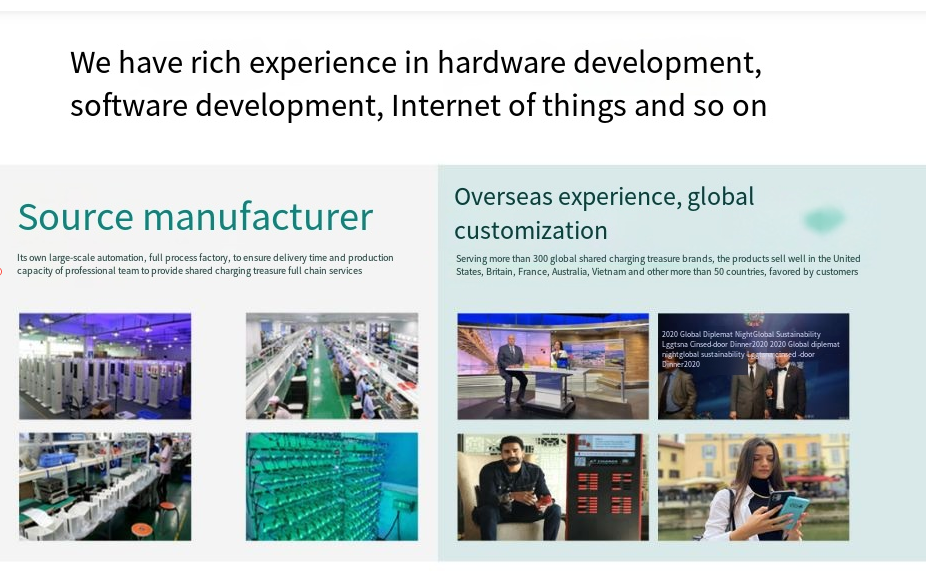
As the sharing economy continues to deepen, portable chargers are evolving from convenient tools into indispensable infrastructure for digital living. In the Philippine sharing economy market, Litapower—a brand under Zhongdian Core—is rapidly emerging as a major player in the country’s portable charger sector. Leveraging mature software and hardware systems, stable and reliable product quality, and extensive experience in overseas market operations, the company has quickly adapted to local payment systems, consumer habits, and the business environment, gradually achieving large-scale deployment across multiple scenarios in Laos.