 レンタルパワーバンク,共有パワーバンクメーカー
How promising is the Southeast Asian market for shared power bank businesses, and how can operators develop a successful project in Vietnam? With the rapid recovery of international tourism, the growing popularity of mobile payments, and the continued development of commercial consumer scenarios, Vietnam is becoming an emerging market worth watching for shared power bank businesses in Southeast Asia.
According to data from Vietnam’s National Statistics Office, the country welcomed 21.2 million international visitors in 2025, representing a year-on-year increase of 20.4% and setting a new record.
Vietnam offers several key market advantages:
(1) Market Size: Vietnam has a population of approximately 102 million, with 85.6 million internet users and an internet penetration rate of 84.2%. (Source: DataReportal, Digital 2026: Vietnam, October 2025)
(2) Payment Maturity: VietQR merchant coverage reached 85%, while digital wallets accounted for 38% of e-commerce payments. (2025 data cited by organizations including vnmarketinsights)
(3) Manageable Compliance Requirements: Certification for ordinary short-range wireless devices typically takes approximately 4–8 weeks, with certificates valid for around three years. (Source: GMA Certification, 2025–2026)
同時に, equipment certification requirements under Vietnam’s telecommunications authorities, integration with VietQR and digital wallets, and location selection in major tourist cities are important issues that need to be addressed before launching a project.
This article examines the development opportunities in Vietnam’s shared power bank market, covering market data, certification, payments, city-level business scenarios, and manufacturer solutions.
1. Vietnam Shared Power Bank Market: 4 Key Figures
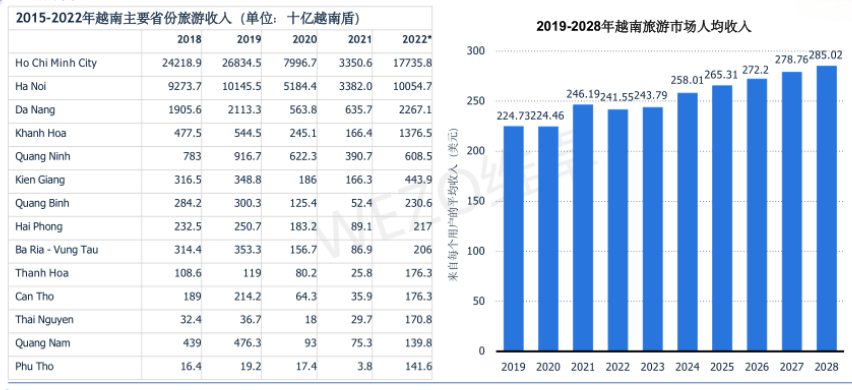
Vietnam tourism data table and Zhongdian Hexin’s Vietnam shared power bank market research.
1.1 Population of 102 Million and 85.6 Million Internet Users
According to DataReportal’s Digital 2026: Vietnam, as of October 2025, Vietnam had a population of approximately 102 million and 85.6 million internet users, representing an internet penetration rate of 84.2%.
The country had 137 million mobile connections, equivalent to 134% of its population. Social media users reached 79 million, accounting for 77.6% of the population.
(Source: DataReportal, Digital 2026: Vietnam, October 2025)
These figures indicate that Vietnam has developed a relatively mature mobile internet infrastructure. Smartphones are widely used for daily consumption, social networking, transportation, and online payments. Shared power bank services based on QR code rentals, モバイル決済, and online management therefore have a solid potential user base.
1.2 International Tourist Arrivals Reach 21.2 Million, Up 20.4%
According to data released by Vietnam’s National Statistics Office through the Vietnam Government News website, Vietnam welcomed 21.2 million international visitors in 2025, an increase of 20.4% year over year. This was a record high and 17.8% above the 2019 level.
Air arrivals reached 17.8 million, accounting for 84.3% of all international visitors. China was Vietnam’s largest source market, with 5.3 million visitors, representing a year-on-year increase of 41.3%. South Korea ranked second, with 4.3 million visitors, accounting for 20.5% of total international arrivals. Asian markets accounted for 78.6% of all international visitors.
(Source: Vietnam National Statistics Office, via Vietnam Government News, 2025)
The large number of international tourists creates potential demand for mobile charging services at airports, ホテル, ショッピングモール, レストラン, and tourist attractions. Visitors rely on their phones for navigation, social media, photography, and online payments, creating ongoing potential demand for shared power banks.
1.3 Vietnam’s GDP Reaches USD 514.7 Billion, Supporting Economic and Consumer Growth
According to World Bank Open Data, Vietnam’s GDP reached USD 514.7 billion in 2025, with a GDP per capita of USD 5,066.
(Source: World Bank Open Data, 2025)
Economic development in Vietnam is driving continuous improvements in urban commerce, レストラン, shopping, transportation, and tourism services.
Cities such as Hanoi and Ho Chi Minh City, together with Da Nang and Nha Trang, offer a wide range of consumer scenarios and different market opportunities for shared power bank operators.
Rather than focusing exclusively on international tourists, operators can also include local young consumers, university students, and long-term foreign residents in their target user groups.
1.4 The Shared Power Bank Industry Is Still Developing, Leaving Room for Regional Expansion
According to industry information compiled by SGPJBG, Cxxx, a brand under Japan’s Ixxx, signed an exclusive franchise agreement with Vietnamese company Cxxx in January 2024, officially entering the Vietnamese market.
Related industry sources indicate that common shared power bank rental prices in Vietnam range from VND 5,000 to VND 10,000 per hour.
A general industry reference benchmark suggests daily revenue of USD 1–2 per device and a typical investment payback period of approximately 4–8 months. Actual operating performance depends on location quality, rental frequency, equipment costs, and venue revenue-sharing arrangements.
(Source: SGPJBG industry report compilation, 2025–2026)
Vietnam’s shared power bank market is still developing. International brands have already entered the country, but opportunities remain for regional expansion and localized operations.
2. Compliance and Certification Requirements for Shared Power Banks in Vietnam
Shared power banks entering Vietnam must meet applicable electronic product safety requirements. さらに, the required telecommunications certification category needs to be determined according to whether the equipment includes wireless communication modules.
For smart shared power bank cabinets equipped with Bluetooth, Wi-Fi, or 4G communication functions, certification planning should be completed before bulk exports.
2.1 MIC Certification Requirements Under Vietnam’s Telecommunications Regulatory Framework
Wireless communication equipment certification in Vietnam has traditionally been associated with the technical regulatory framework administered by the former Ministry of Information and Communications (MIC).
Following government restructuring in Vietnam, the relevant responsibilities have been incorporated into the reorganized regulatory authorities. Companies applying for certification should therefore follow the latest regulations and requirements of the competent authorities.
According to certification information provided by GMA Certification, Vietnamese communication equipment may involve the following categories:
(1) Category I Equipment: Cellular communication and other higher-risk wireless equipment, which generally requires Type Approval.
(2) Category II Equipment: Bluetooth, Wi-Fi, and short-range wireless communication equipment, which may require a Declaration of Conformity (DoC) depending on the applicable regulations and product category.
(3) Technical Regulations: Depending on the device’s functions and communication modules, applicable QCVN technical regulations must be identified, including QCVN 18 and QCVN 117.
For shared power bank cabinets, certification requirements cannot be determined by the product name alone. They must be assessed according to the communication modules, wireless functions, product classification, and intended import use.
2.2 Certification Timeline and Validity
According to relevant information from GMA Certification and Huayu Testing, certification for ordinary short-range wireless communication devices typically takes approximately 4–8 weeks. The validity period of relevant certificates is generally around three years.
The available Vietnam certification information does not provide a reliable, standardized certification fee. Therefore, certification costs from other countries should not be used directly as a reference for Vietnamese quotations.
Actual costs depend on the product model, wireless modules, testing requirements, document preparation, and local representative service fees.
さらに, some certification procedures require the involvement of a local Vietnamese representative or importer as the certificate holder. Overseas manufacturers should clarify the certification applicant, importer, and responsibilities associated with certificate usage in advance.
2.3 Lithium Battery and Specific Requirements for Shared Power Banks
Shared power banks are electronic products containing lithium batteries. Battery safety is therefore an important part of export compliance for Vietnam.
According to the available certification information, relevant lithium battery products need to be assessed to determine whether they fall under the technical requirements of QCVN 101:2016/BTTTT.
Products may also need to prepare relevant testing documentation and confirm whether ICT labels and other documents are required for customs clearance.
When purchasing equipment, Vietnamese operators should prioritize manufacturers that can provide battery specifications, product test reports, wireless module information, and certification support. This helps reduce the risk of import or deployment delays caused by incomplete documentation.
3. Payment and Localization Requirements for Shared Power Banks in Vietnam
Payment systems are an essential foundation for shared power bank projects in Vietnam.
Unlike markets that rely primarily on bank card payments, Vietnam has developed a payment ecosystem in which QR code payments, bank transfers, and digital wallets operate alongside one another.
For overseas operators, integrating payment methods familiar to local consumers can reduce the barrier to renting shared power banks.
3.1 VietQR: An Important QR Payment Channel for Shared Power Banks in Vietnam
VietQR is an important QR code payment system in Vietnam. Supported by local banks and the NAPAS payment network, it provides convenient transfer and payment services for consumers and merchants.
According to data from the State Bank of Vietnam (SBV) and NAPAS cited by vnmarketinsights, VietQR merchant coverage reached 85% in 2025, while annual NAPAS 247 transaction volume reached 8.9 billion.
さらに, Vietnam’s cashless payment transaction value was approximately 28 times its GDP, and the number of payment accounts reached 232 million. QR payment transaction volume increased by 51% year over year.
These figures indicate that Vietnamese consumers have developed relatively mature QR code payment habits. If shared power bank devices can connect VietQR payments with rental orders automatically, operators can provide a more convenient experience for local users.
3.2 MoMo and ZaloPay: Digital Wallet Payments Should Not Be Overlooked
Vietnam’s digital wallet market has a substantial user base, particularly among younger consumers and urban mobile internet users.
According to relevant information about Vietnam’s payment ecosystem:
MoMo: User penetration is approximately 68%–69%, with around 31 million users. It is one of Vietnam’s major digital wallets.
ZaloPay: User penetration is approximately 44%–53%, supported by the local digital communication and mobile payment ecosystem.
Bank Transfers: Account for 28% of e-commerce payments in Vietnam.
Digital Wallets: Account for 38% of e-commerce payments.
Cash on Delivery (COD): Accounts for 16% of e-commerce payments.
For shared power bank operators, a combination of VietQR and MoMo is worth prioritizing. ZaloPay and bank card payments can then be added according to target customer groups and the capabilities of payment service partners.
3.3 China–Vietnam QR Payment Connectivity: An Additional Advantage for Chinese Tourists
Cross-border QR payment connectivity between Vietnam and China is a market feature worth considering for shared power bank projects in Vietnam.
According to information from Vietnam’s payment industry, two-way QR payment connectivity between China and Vietnam was launched in December 2025, covering approximately 30,000 merchants.
This development is particularly relevant to Vietnam’s tourism market, which receives a large number of Chinese visitors. で 2025, China was Vietnam’s largest international source market, with 5.3 million visitors.
Shared power bank operators can explore working with payment service providers that support cross-border payments to offer Chinese tourists a more familiar QR payment experience.
It is important to note that cross-border QR connectivity does not automatically qualify every shared power bank merchant for access. Operators still need to confirm actual support from payment institutions, merchant accounts, and technical interfaces.
4. Vietnam Shared Power Bank Market: Business Opportunities in Da Nang, Hue, Nha Trang, and Da Lat
Shared power bank deployment in Vietnam should not focus exclusively on competition in Hanoi and Ho Chi Minh City.For operators entering the local market, selecting cities with rich tourism resources, established commercial infrastructure, and room for regional development can help build an initial operating network.

This section focuses on Da Nang, Hue, Nha Trang, and Da Lat, covering central coastal tourism, historic cultural tourism, seaside resorts, and highland leisure consumption.
4.1 Da Nang and Hue: Central Coastal Tourism and Historic Cultural Markets
Da Nang: A Central Coastal Tourism and Commercial Center
Da Nang is an important tourist city in central Vietnam, with extensive seaside resort resources, international hotels, ショッピングモール, and restaurants and entertainment facilities.
Visitors from South Korea, 中国, and Japan are important international customer groups to consider. Coastal tourism and urban commerce together create diverse consumer scenarios.
For shared power bank operators, Da Nang offers opportunities not only around tourist attractions but also in shopping malls, ホテル, レストラン, and transportation hubs.
Priority deployment locations:
- My Khe Beach, Son Tra Peninsula, Marble Mountains, and Ba Na Hills
- Han Market, Vincom Plaza Da Nang, and local shopping centers
- Areas around Dragon Bridge, the Han River, restaurant districts, and nighttime commercial areas
- Da Nang International Airport, ホテル, resorts, and tourist service centers
The operating strategy in Da Nang can focus on international tourists and local young consumers, with particular attention to network coverage between coastal areas, commercial districts, and hotels.
Hue: An Ancient Capital with Cultural Tourism and University Consumers
Hue is one of Vietnam’s representative historical and cultural tourism cities. It features the Imperial City of Hue, historical sites, traditional cultural districts, and university resources.
Compared with major international tourism cities, Hue may be better suited to developing a regional equipment network through tourist attractions, universities, and local commercial venues.
Students, backpackers, and cultural tourists can generate different types of usage demand.
Priority deployment locations:
- Imperial City of Hue, Thien Mu Pagoda, Khai Dinh Tomb, and surrounding tourist areas
- Hue University and nearby student commercial streets
- Dong Ba Market, pedestrian streets, restaurant districts, and shopping areas
- Hotels, guesthouses, railway stations, and tourist service centers
Hue can combine tourist locations with campus-related commercial venues. This approach allows regular consumer activity to complement seasonal tourism traffic.
4.2 Nha Trang and Da Lat: Seaside Resorts and Highland Leisure Markets
Nha Trang: An International Seaside Resort and Nighttime Consumption Market
Nha Trang is an important seaside tourism city in Vietnam, offering beaches, resort hotels, night markets, shopping venues, and a wide range of marine tourism activities.
Russian, South Korean, and Chinese tourists, as well as long-term foreign visitors, are important customer groups to consider.
During beach visits, hotel stays, night market shopping, and island tours, tourists frequently use their phones for navigation, photography, social media, and online payments. These activities create clear usage scenarios for shared power banks.
Priority deployment locations:
- Nha Trang Beach, Po Nagar Cham Towers, and Hon Chong Promontory
- Nha Trang Night Market, Nha Trang Center, and Vincom Plaza
- Seaside restaurant streets, バー, and tourist service centers
- Resort hotels, guesthouses, and commercial areas around the airport
Nha Trang is suitable for prioritizing seaside commercial areas, ホテル, and nighttime consumption venues. Payment solutions can be adjusted according to the habits of Russian, South Korean, and Chinese tourists.
Da Lat: Highland Getaways and a Young Consumer Market
Located in Vietnam’s Central Highlands, Da Lat is known for its cool climate, natural scenery, coffee culture, and leisure tourism.
The city attracts young travelers, couples, and weekend visitors. Nighttime dining, cafés, and tourist streets offer commercial development opportunities.
Compared with seaside tourist cities, shared power bank projects in Da Lat can place greater emphasis on cafés, night markets, tourist attractions, and leisure venues popular with younger consumers.
Priority deployment locations:
- Xuan Huong Lake, Da Lat Flower Garden, Crazy House, and surrounding attractions
- Da Lat Night Market, local commercial streets, and shopping venues
- Cafés, specialty restaurants, バー, and tourist streets
- Hotels, guesthouses, tourist reception centers, and transportation stations
Da Lat is suitable for establishing an equipment network through cafés, レストラン, and tourist accommodation providers. Operators can also adjust their deployment strategy according to changes in tourism demand.
Together, these cities offer different types of market opportunities. Operators can prioritize locations with stable customer traffic and clear rental demand according to their local channel resources and venue partnership conditions.
5. Zhongdian Hexin’s Vietnam Expansion Solution: OEM Private-Label Customization
For businesses preparing to enter Vietnam’s shared power bank market, equipment procurement is only one part of launching a project.Other factors that influence successful implementation include communication certification, payment systems, local channels, device management, and ongoing operations.
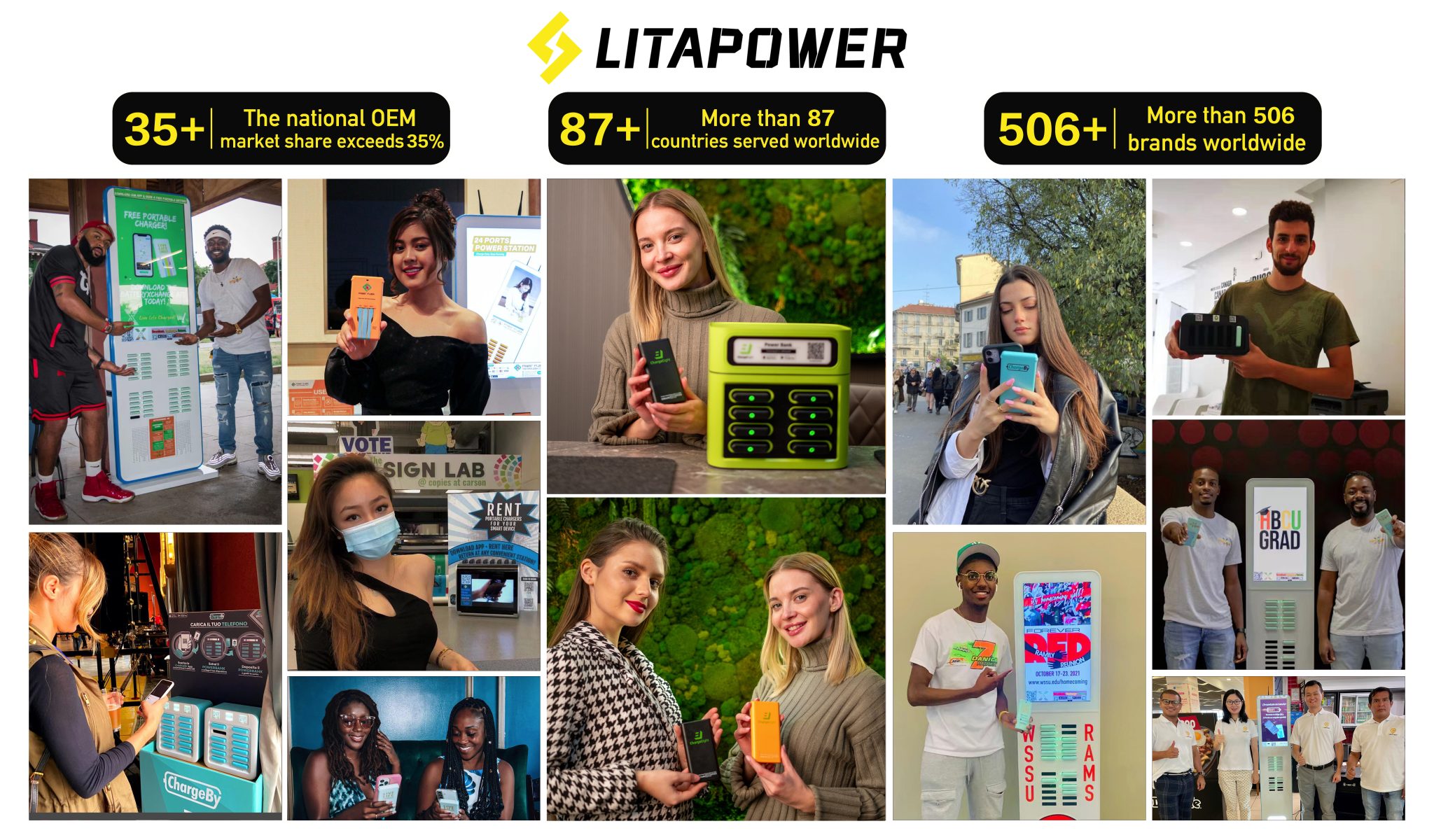
Litapower, the overseas brand under Zhongdian Hexin’s shared power bank manufacturing business, has completed shared power bank deployments in Vietnam, with more than 700 terminal devices deployed to date.
It provides overseas operators with shared power bank hardware, software systems, payment integration, and OEM/ODM brand customization services.
For the Vietnamese market, projects can be developed through the following steps.
5.1 Choose an OEM/ODM Manufacturer with Overseas Project Experience
Shared power bank projects involve hardware manufacturing, software systems, payment interfaces, communication certification, and equipment operations.
Choosing a manufacturer with a complete product and technical system can reduce initial development work and supply chain coordination.
Relying on Zhongdian Hexin’s manufacturing capabilities, Litapower can provide:
Hardware Manufacturing: Shared power bank cabinets and portable power banks with different capacities, slot configurations, and screen options.
Software Systems: User apps, operations management backends, device management systems, order management, and revenue reporting.
Payment Integration: Payment interface planning for VietQR, MoMo, ZaloPay, and international bank cards according to the requirements of the Vietnamese market.
Brand Customization: OEM/ODM private-label services, including LOGO customization, device appearance, app UI, and backend system customization.
Technical Support: API interfaces, independent backend deployment, software integration, device installation guidance, and operational training.
For product compliance, operators should carefully review the relevant MIC certification requirements under Vietnam’s telecommunications regulatory framework, together with applicable QCVN technical regulations and lithium battery safety standards.
For shared power bank cabinets with wireless communication functions, the required certification category should be confirmed according to the actual product configuration. International certifications such as CE and FCC should not be treated as automatic substitutes for Vietnamese local certification.
5.2 Device Deployment: Establish a Local Commercial Partnership Network
Shared power bank projects in Vietnam rely on local venue resources to build an effective equipment network.
Operators can establish partnerships with local shopping malls, レストラン, ホテル, entertainment venues, and tourist attractions, expanding their locations through rental revenue sharing or other venue cooperation arrangements.
Recommended areas to prioritize include:
Tourism Scenarios: Coastal attractions, ホテル, and tourist service centers in Da Nang and Nha Trang.
Commercial Scenarios: Shopping malls, restaurant streets, cafés, and night markets.
Leisure Scenarios: Cafés, specialty restaurants, and venues popular with young consumers in Da Lat.
Operators that already have a local company and commercial channels can use their existing resources to deploy equipment directly.
Investors without established local channels can develop locations through local partners.
Before signing cooperation agreements, operators should clarify equipment ownership, venue revenue sharing, maintenance responsibilities, revenue settlement procedures, and contract duration to support stable long-term operations.
5.3 Management and Operations: Improve Revenue Through Data Analysis
A shared power bank business is not simply a one-time equipment sales project. It requires continuous management and operational optimization.
After equipment deployment, operators should use the backend system to monitor rental orders, device online rates, power bank inventory, and location revenue.
Vietnamese operators should focus on the following activities:
Brand Promotion: Increase brand awareness through local social media, short videos, influencer partnerships, and commercial events.
Dynamic Pricing: Adjust rental prices according to consumer spending patterns in different cities, tourist attractions, commercial districts, and hotels.
Equipment Maintenance: Respond promptly to device disconnections, low power bank inventory, charging problems, and equipment damage.
Revenue Analysis: Regularly review rental frequency, revenue, venue revenue sharing, and maintenance costs at each location.
Regional Expansion: Optimize deployment according to actual operating data before expanding into nearby commercial areas.
6. Frequently Asked Questions About the Vietnam Shared Power Bank Market
Q1: How large is the shared power bank market in Vietnam?
目下, authoritative statistics on the overall size of Vietnam’s shared power bank market remain limited. しかし, the market has a strong foundation and a positive tourism growth trend.
According to Vietnam’s National Statistics Office, the country welcomed 21.2 million international visitors in 2025, an increase of 20.4% year over year and a new record.
DataReportal’s Digital 2026: Vietnam reports that Vietnam has a population of approximately 102 million and 85.6 million internet users.
Industry information indicates that CHARGESPOT entered the Vietnamese market in 2024, demonstrating that international brands are beginning to establish a presence in the local shared power bank industry.
Q2: What certifications are required to deploy shared power banks in Vietnam?
Certification requirements for shared power banks in Vietnam depend on the communication functions of the equipment.
Devices with cellular communication functions need to be assessed for applicable Type Approval requirements. Devices with Bluetooth, Wi-Fi, or other short-range wireless functions may need to complete the relevant Declaration of Conformity procedures according to their product categories.
Operators should also verify whether lithium batteries are subject to QCVN 101:2016/BTTTT.
According to information from GMA Certification, certification for ordinary short-range wireless devices typically takes approximately 4–8 weeks, with certificates valid for around three years.
Actual requirements should be confirmed against the latest Vietnamese regulations and the requirements of the competent authorities.
Q3: Which payment methods are commonly used by tourists and local consumers in Vietnam?
Major payment methods in Vietnam include VietQR, MoMo, ZaloPay, bank transfers, and bank card payments.
According to 2025 payment industry information, VietQR merchant coverage reached 85%, digital wallets accounted for 38% of e-commerce payments, and bank transfers accounted for 28%.
さらに, two-way QR payment connectivity between China and Vietnam was launched in December 2025, covering approximately 30,000 merchants.
Shared power bank operators can prioritize VietQR and MoMo integration, then add other payment methods according to their customer demographics.
Q4: How long does it take to recover the investment in a shared power bank business in Vietnam?
According to industry information compiled by SGPJBG, the general reference payback period for shared power bank projects in Vietnam is approximately 4–8 months, with estimated daily revenue of USD 1–2 per device.
These figures are industry benchmarks based on case studies and supplier information. They do not represent guaranteed results for every project.
The actual payback period depends on equipment costs, rental frequency, venue revenue sharing, payment processing fees, certification expenses, and maintenance costs.
Operators are advised to calculate potential returns based on actual rental orders and the performance of individual locations.
7. References
- DataReportal, Digital 2026: Vietnam (October 2025)
https://datareportal.com/reports/digital-2026-vietnam - Vietnam National Statistics Office, Foreign Arrivals Soar to Record High in 2025 (via Vietnam Government News, 2025)
http://en.baochinhphu.vn/print/foreign-arrivals-soar-to-record-high-in-2025-111260106100233228.htm - vnmarketinsights, Accept Payments in Vietnam (citing SBV/NAPAS, 2025)
https://vnmarketinsights.com/accept-payments-in-vietnam - GMA Certification, Vietnam MIC Certification (2025–2026)
https://www.gmacert.com/vietnam-mic-certification/ - People’s Daily Online, Science China, Vietnam Power Plug and Voltage Specifications (Long-term reference information)
https://kpzg.people.com.cn/BIG5/n1/2016/1003/c404214-28755593.html - Vietnam News Agency (VNA), Information on Hanoi Airport and Transportation Passenger Traffic (2025)
https://vnanet.vn/Frontend/TrackingView.aspx?IID=8530577 - SGPJBG, Vietnam Shared Power Bank Industry Information Compilation (2025–2026)
https://www.sgpjbg.com/searchtag/27136188.html - World Bank Open Data, Vietnam GDP (NY.GDP.MKTP.CD) (2025)
https://api.worldbank.org/v2/country/VNM/indicator/NY.GDP.MKTP.CD?format=json&mrnev=1 - Xinhua News Agency, Vietnam Tourism Development and China–Vietnam QR Payment Updates (2026)
https://english.news.cn/20260331/27f2ea36bea04201a7cac3188f63fa0c/c.html